
![Scaling technical manual translation across Southeast Asia with local linguists and terminology management.]](https://speequal.com/wp-content/uploads/2026/09/image-9.jpeg)
Southeast Asia has become one of the world’s busiest manufacturing floors, with Singapore and Vietnam leading the region in electrical and electronic exports. Every unit leaving those factories ships with a manual attached.
For a documentation team, one English source becomes Thai, Vietnamese, Indonesian, and Tagalog, four languages with unrelated grammar, distinct scripts, complex line-break rules, and separate regulatory standards. Handled ad hoc per market, cost per launch climbs while consistency erodes, and CSA Research found roughly 75 percent of buyers abandon a journey when content is not in their language.
Companies that scale cleanly in the region rely on technical manual translation services that pair in-country linguistic depth with translation memory and terminology management. Below is how that system works and what to demand from a partner.
The Unique Challenges of Scaling Technical Translations in SEA
Southeast Asia is not one linguistic market the way German-speaking Europe can be. Its main documentation languages belong to separate language families and use different writing systems, so a European workflow breaks on arrival.
How to Translate Complex User Manuals at Scale
Knowing how to translate complex user manuals at scale starts with treating a manual as structured content, not a document. Once every warning, part name, and procedure step is a reusable segment, localizing into a fifth language costs a fraction of the first.
Formatting Constraints in Asian Language Technical Translation
Asian language technical translation carries a layout cost that most budgets miss. Because Thai uses script without spaces between words, line breaks must follow strict syllable rules, meaning an incorrect break in a safety warning can distort critical operator instructions. Similarly, the Indonesian language frequently pushes callouts beyond diagram borders, turning desktop publishing into a core localization step rather than a quick formatting cleanup.
Translating Safety Manuals for Southeast Asia Compliance
Translating safety manuals for Southeast Asia compliance means clearing ten regulators, not one. ASEAN harmonizes standards through a consultative committee, but adoption still happens nationally, so each market can demand its own wording and local-language documentation. A manual cleared in Malaysia can still be sent back to Vietnam.
Why Terminology Management is Crucial for ASEAN Markets
![Terminology management for Southeast Asian markets ensures that the same technical terms are clear throughout each chapter.]](https://speequal.com/wp-content/uploads/2026/09/image-12-1024x683.jpeg)
Terminology management involves locking in every technical term, abbreviation, and interface string in each target language before translation starts. Without an agreed-upon glossary, a single component often gets translated three different ways across chapters, leaving technicians to guess which part the manual actually refers to.
Technical Document Translation Needs a Living Glossary
The risk sharpens in ASEAN, where neighboring languages look deceptively similar. While Indonesian and Malay share vocabulary, their technical terminology diverges sharply, as professional translation for Malay-market automotive manuals shows. A maintained glossary keeps technical document translation repeatable so that the tenth manual matches the quality of the first, with SpeeQual appointing native terminologists per country rather than per region.
Leveraging Translation Memory (TM) to Control Costs in Emerging Markets
Consider a machinery refresh rolling out across five SEA countries at once. Most of that content already exists in last year’s manual. A translation memory stores every approved segment and proposes the match when the same sentence appears again, so linguists only handle what changed.
Why Translation Memory Reduces Localization Costs
How translation memory reduces localization costs comes down to arithmetic: a 60 percent match rate on a revision means paying full translation rates on only 40 percent of the texts. Across five markets, that difference keeps a product launch budget flat instead of scaling linearly. It also holds legacy and new products to identical wording, and refining it with post-launch data keeps it accurate.
Bridging the Gap: TEP Workflows for Complex Asian Scripts
Automation delivers volume, not judgment. CAT tools and translation memory must be paired with a structured TEP workflow, translation followed by editing and independent proofreading, because a memory match can be grammatically correct yet wrong for its context.
Where Engineering Manual Localization Needs Humans
Engineering manual localization fails where a machine cannot see: an ambiguous pronoun in a torque sequence, a measurement convention that varies by market, or a warning whose urgency softens in translation. Human expertise in technical translation remains decisive across Southeast Asia because these languages carry meaning in context rather than syntax, which makes raw machine output too risky here.
Certified Translation Services for User Manuals
For medical devices, automotive, and industrial machinery, certified manual translation services provide regulators with a documented chain of accountability. Standard IEC/IEEE 82079-1 defines the requirements for safety-critical instructions for use, and a certified TEP record proves to an auditor that the translated version remains fully compliant.
Choosing the Right Partner for SEA Localization

Vendor selection is where most technical manual translation services programs succeed or fail, because the true constraint is rarely price per word. Rather, it is whether a localization partner can handle a 400-page manual across nine languages without quality deteriorating by month three.
What to Look For in SEA Localization Services
Credible SEA localization services show you three things: in-country linguists per market rather than one regional pool, a QA process with named checkpoints, and an in-house DTP team that has set Thai and Vietnamese types before. SpeeQual has been doing Asian language localization since 1998, long enough to build terminologists who know the local register.
Professional Translation Services for User Manuals at Volume
Professional translation services for user manuals prove themselves at volume, not on a sample. Ask how a partner handles a simultaneous multi-market release, who signs off when terminology changes mid-project, and what happens when a regulator returns a document.
Conclusion: Scale Across ASEAN Seamlessly With SpeeQual’s Proven Technical Localization
Expanding your product footprint across Southeast Asia does not have to be a linguistic obstacle course. With a maintained glossary, a translation memory that grows with every release, and a TEP workflow staffed by in-country linguists, you can add markets without adding proportional cost or compliance risk.
Ready to introduce your products to the ASEAN market? Get in touch with SpeeQual to see how our technical manual translation services can help you scale across Southeast Asia with accuracy and cost efficiency.


![Prepare a smart software localization checklist before briefing with a localization partner.]](https://speequal.com/wp-content/uploads/2026/08/image-21.jpeg)
![Automotive translation services support manufacturers expanding into diverse SEA markets.]](https://speequal.com/wp-content/uploads/2026/08/image-20.jpeg)

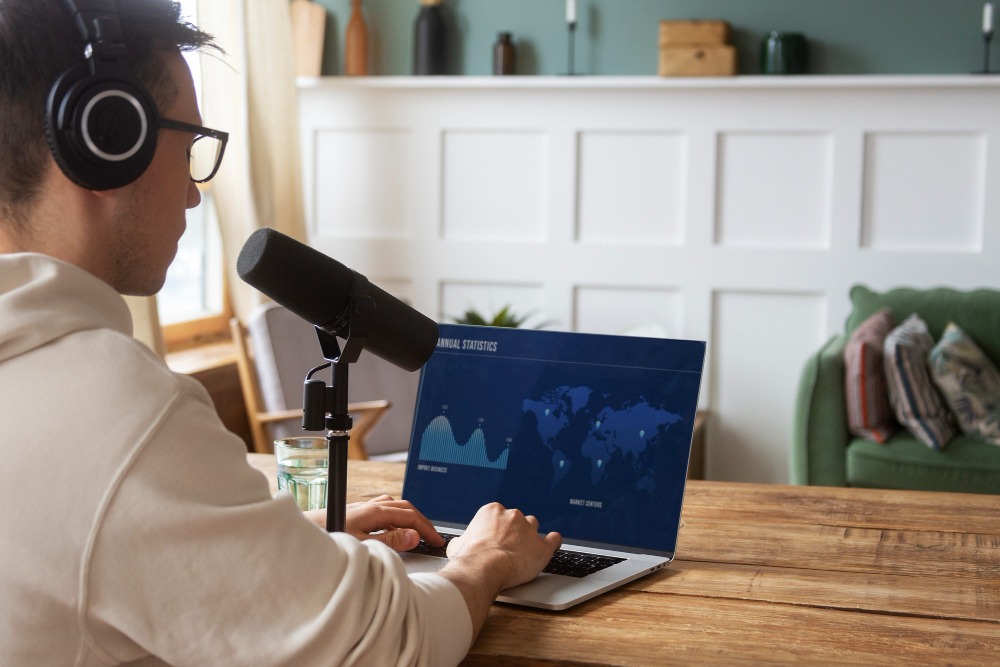
![Preparing technical manuals for the Malaysian market.]](https://speequal.com/wp-content/uploads/2026/09/image-20.jpeg)