
Many software products struggle to scale internationally, not because they lack quality, but because they are not designed to meet the needs of diverse markets. Reaching users across different countries requires a flexible and scalable codebase from the very beginning. Applications need to support multiple languages, local formats, currencies, and user preferences without compromising performance.
However, the most common reason for this challenge is overlooking software localization during development. When localization is treated as an afterthought, adapting a product for a new market typically requires significant technical changes, which slow deployment and increase the risk of system errors. It can also negatively impact the user experience, as the product may feel disconnected from local expectations and preferences. In fact, CSA Research found that 66% of business users are willing to pay up to 30% more for products that have been properly localized.
Given these realities, companies need to understand the common mistakes that can impede successful international growth.
In the global software race of 2026, a rigid codebase is a commercial dead-end. Discover how integrating software localization best practices early eliminates catastrophic post-launch rework.
Mistake 1: Hardcoding Strings directly into the Core Source Code
Many companies only realize the challenges of localization when their applications begin serving users across different countries. One of the most common mistakes is embedding user interface text directly into the core source code. This practice makes translation much more complicated because every language update requires developer involvement. In software localization, this approach creates unnecessary dependencies between translators and developers, as all content remains tied to the application logic. As a result, even minor text updates take longer to implement and may introduce risks to system stability.
The problem becomes even more apparent when a business expands into new markets. Imagine a company from Japan planning to launch its application in Malaysia and other Southeast Asian countries. If all text is hardcoded, developers must revisit and modify multiple parts of the application to support new languages. This process consumes valuable time, increases development costs, and can delay the product launch. Such an approach goes against software localization best practices, which prioritize efficiency, scalability, and faster market adaptation.
Hardcoding strings directly into your core source code weaponizes minor typo fixes into deployment bottlenecks. Isolate your UI text into decoupled resource files from day one.
In addition to simplifying multilingual management, this approach makes it easier to add new languages in the future. A well-structured system reduces errors, streamlines maintenance, and helps companies expand into international markets more efficiently.
Mistake 2: Ignoring UI Layout Flexibility for Text Expansion
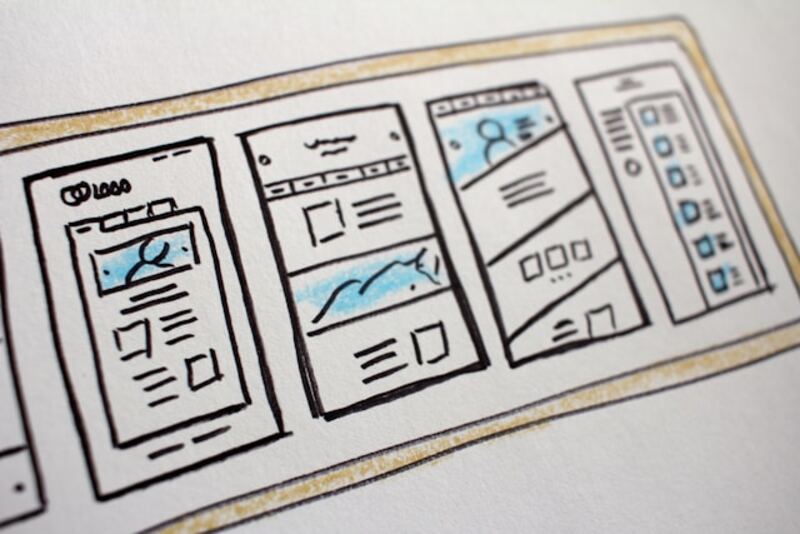
A user interface that looks perfect in one language may not deliver the same experience after translation. Many organizations overlook the fact that translated content often requires more space than the original text. For example, German translations are typically longer than English versions. Meanwhile, languages such as Arabic use a right-to-left writing system, which significantly affects interface structure and alignment. This is a critical consideration in software localization because language-specific differences directly influence user experience.
When UI layouts are too rigid, several issues can occur. Text may be truncated, overflow its designated space, or overlap with other interface elements. In some cases, buttons and navigation menus shift from their intended positions, making the application more difficult to use. These problems not only reduce usability but also create an unprofessional impression of the product.
For this reason, layout flexibility should be considered from the earliest stages of development. Designers and developers need to provide enough space to accommodate text expansion and support different language formats.
Rigid UI boundaries invite text truncation. SpeeQual optimizes your layout fluidities, ensuring your active interfaces adapt dynamically to regional character expansions without breaking usability. We understand that software localization is not just about translating content. It is about creating an intuitive, inclusive, and natural experience that resonates with users across different markets.
Mistake 3: Neglecting Context and Visual Quality Assurance Testing
A single translation mistake can damage both user experience and brand reputation. This often happens when content is translated without considering its visual, cultural, or social context. A well-known example involved WeChat. According to The Guardian, the Mandarin phrase hei laowai, meaning “black foreigner,” was translated into a highly offensive racial slur in English. The issue was not simply a vocabulary error. It occurred because the system failed to understand the phrase’s intended meaning and social context. This case highlights that software localization requires much more than word-for-word translation.
Context also plays an important role in application usability. Even if the translation itself is accurate, poorly positioned menus, buttons, or interface elements can create confusion for users. When navigation becomes difficult, users spend more time completing simple tasks, resulting in a frustrating experience.
Dictionaries lack socio-cultural context. Rigorous Visual LQA and functional runtime testing function as an emotional firewall, protecting your system from tone-deaf automated translation failures.
Regular functional testing is equally important to verify that all features continue to work properly after localization updates. By following this approach, companies can identify issues early, maintain application quality, and deliver a more consistent user experience across different languages and regions.
The Strategic ROI of Early Localization Integration
Global growth often depends on decisions made long before a product reaches the market. Implementing software localization best practices during the earliest stages of development creates a framework that supports long-term efficiency and scalability. User interface elements, content structures, date formats, currencies, and language resources can be organized from the start to accommodate future market requirements. This reduces the need for extensive rework after launch, when changes are typically more complex and expensive. Shift-left your internationalization (I18n). Engineering a localization-ready architecture before code-freeze permanently eliminates the compounding interest of technical debt.
These advantages become even more valuable as the product evolves. When new features are introduced, teams can integrate updates into existing localization workflows without redesigning processes for each market. Development cycles become faster, collaboration improves, and releases can be delivered with greater consistency across regions.
This readiness also supports faster international expansion. Products can enter new countries with fewer technical barriers and shorter preparation periods. Therefore, businesses can reach global audiences more efficiently while maintaining a reliable and consistent user experience.
Conclusion: Building Scalable Software for the World

Building software for a global audience requires more than delivering a functional product. It demands a development strategy that can adapt to different languages, cultures, and market expectations without creating unnecessary complexity. Incorporating software localization best practices from the beginning helps establish a scalable foundation that supports sustainable growth. Rather than treating localization as a separate task, organizations can integrate it into core development processes and prepare their products for international success from the start.
This approach improves operational efficiency and simplifies future expansion efforts. Teams can launch new features across multiple regions with fewer delays because localization requirements are already built into the product architecture. At the same time, users receive a more consistent experience regardless of their language or location, strengthening trust and engagement.
Companies that invest in localization readiness position themselves for long-term growth. With fewer technical obstacles and greater flexibility, they can enter new markets faster, scale more effectively, and remain competitive in an increasingly global digital landscape.