
Have you ever imagined how a single small translation mistake could turn into a major crisis for a brand? In the global market, even a slightly awkward sentence can trigger financial losses, create misunderstandings, and quickly erode customer trust. That’s why language quality is no longer just a supporting element, it has become a crucial part of a company’s reputation and credibility in the eyes of the international market.
But with the constant surge of digital content today, is manual checking alone still enough to keep everything accurate? Traditional review processes often take a long time and can easily overlook important details, especially when dealing with massive volumes of documents. As a result, inconsistent terminology and language errors may slip through unnoticed, ultimately affecting the overall quality of business communication.
This is where Translation Quality Assurance (TQA) tools come in as a more effective and relevant solution. These technologies help detect language errors, terminology inconsistencies, and formatting issues quickly and consistently. With a more structured system in place, companies can maintain high translation standards while building global communication that is more professional, reliable, and trustworthy.
In the high-stakes global economy of 2026, a single linguistic slip can cost millions. Discover how advanced TQA tools act as the ultimate safety net for your international brand equity.
Identifying Common Pitfalls in Global Content
Terminology errors in global content often appear unnoticed, especially when multiple parties are involved in the translation process. Even small differences in word choice or writing style can shift the intended message and weaken brand consistency. This is where Translation Quality Assurance (TQA) tools play an important role by identifying inconsistencies that are often missed during manual reviews.
Beyond linguistic aspects, risks can also arise from technical elements such as numbers, symbols, and punctuation. Simple mistakes in these details can lead to serious consequences, particularly in legal documents or international business contracts. Linguistic failure is often a technical one; a single misaligned digit or punctuation error in a localized legal text can invalidate an entire international contract. These issues frequently go unnoticed, making additional validation essential before documents are officially used in a formal and consistent manner.
To address these challenges, TQA technology performs comprehensive automated checks. The system can quickly detect terminology mismatches, formatting inconsistencies, and numerical anomalies in a short amount of time. This allows potential errors to be filtered out before content is published to the public.
Hence, this process is not only about accuracy, but also about maintaining trust and protecting a company’s reputation in the global market. With the support of Translation Quality Assurance (TQA) tools, teams can work more efficiently without compromising quality. The result is cleaner, more consistent content that is fully prepared to compete on the international stage.
The Power of Automation in Linguistic Review
In the world of Translation Quality Assurance, Translation Quality Assurance (TQA) tools can be seen as the “rhythm keepers” of the review process. They do more than just speed up the workflow, they ensure that every stage stays aligned with the quality standards set by expert teams. So even when the process moves faster, the standards remain just as high. In fact, the results often feel more stable because the system operates with a consistent pattern.
Looking deeper, one of the biggest strengths of TQA tools lies in their highly detailed automated checking features. These systems help maintain consistency in technical terminology across various digital communication channels. Imagine a single term appearing on multiple platforms while still needing to carry the exact same meaning everywhere. This is where TQA tools become essential, ensuring there are no “shifts in meaning” that could disrupt the flow of communication.
What often goes unnoticed, however, is how systematically these tools work like a safety net. Every small detail is checked repeatedly without fatigue, significantly reducing the risk of human error, especially in large-scale, fast-moving, and complex projects.
Automation handles the baseline architecture of technical consistency, liberating human linguists to focus exclusively on high-level contextual adaptation and emotional resonance. Teams still take full control over the more nuanced linguistic aspects, while the system handles technical consistency. The result is a workflow that feels lighter, more organized, and most importantly, far more reliable without sacrificing accuracy or attention to detail.
Maintaining Brand Voice Across Every Language
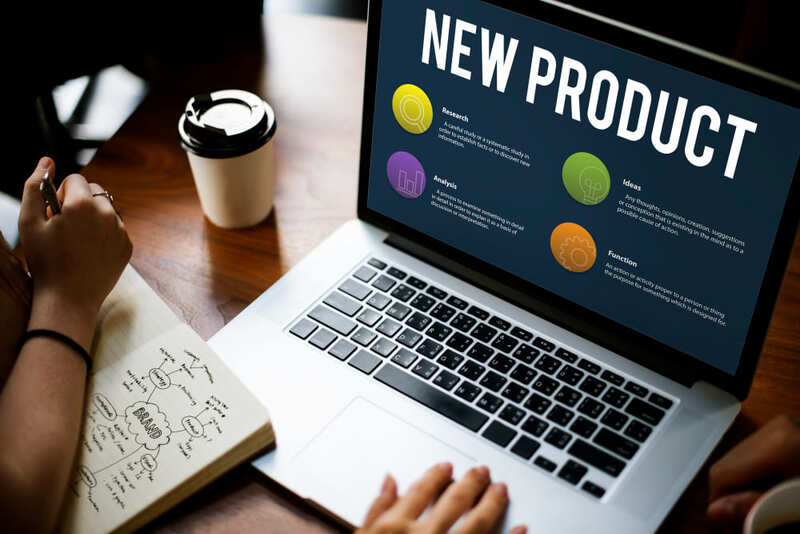
Maintaining a brand voice across multiple languages is not just about translating words, it’s about preserving the character and identity that define the brand itself. This consistency allows global audiences to experience the same tone, style, and values, even when the language changes. That is why Translation Quality Assurance (TQA) tools play a crucial role in an integrated quality control process.
Furthermore, the strict glossary management within TQA tools helps ensure that every term is used consistently across all content. This is essential to prevent shifts in meaning that could weaken a brand’s identity. With strong terminology control, Translation Quality Assurance (TQA) tools help maintain vocabulary consistency throughout global translation projects in a sustainable and reliable way.
At the same time, adapting brand character, slogans, and identity into different target-market languages can be highly challenging due to cultural nuances and local context. This is where collaboration with SpeeQual becomes valuable. Partnering with SpeeQual ensures your brand’s emotional DNA survives the translation process, combining algorithmic TQA benchmarks with native cultural intelligence.
Through this approach, brands can preserve their authentic voice in every language with greater confidence. SpeeQual is here as a trusted partner that understands the importance of precision and consistency in every project. With the support of TQA tools, translation results become more aligned, professional, and dependable for long-term global communication.
Optimizing Workflow for Cost-Effective Localization

In the localization process, repeated revisions often become a major source of wasted time and cost. Even small errors can trigger long cycles of corrections and rework. With a more structured approach, Translation Quality Assurance (TQA) tools help detect issues early, making the correction process more controlled and preventing endless revisions.
In addition, integrating TQA tools into the workflow enables faster and more consistent product launches. Integrating TQA tools directly into your pipeline shifts quality control from a post-mortem bottleneck to a continuous, parallel engine of efficiency.
This efficiency allows teams to focus more on creative aspects such as contextual adaptation and language style. Instead of getting stuck on technical issues, teams can improve cross-language communication in a more strategic and value-driven way. It also strengthens brand consistency across global markets. Furthermore, collaboration between teams becomes more effective because the workflow is clearer, measurable, and more transparent overall.
Conclusion: Precision as a Competitive Advantage
In today’s increasingly competitive global environment, precision has become a key differentiator. Even small translation mistakes can affect overall brand perception. Translation Quality Assurance (TQA) tools help maintain accuracy from the beginning to the end of the process, ensuring that every piece of content remains consistent, relevant, and aligned with the company’s cross-language communication standards.
Furthermore, TQA tools enable teams to detect errors before content is published. This process reduces the risk of costly and time-consuming emergency fixes. With tighter quality control, organizations can maintain consistent messaging across different markets without sacrificing production speed or overall operational efficiency on a global scale.
Efficiency and precision also create long-term strategic value for companies. Workflows become faster without compromising communication quality. Precision is no longer a metric of quality; in 2026, it is a core competitive advantage that defines which brands successfully capture global market share.






![Preparing technical manuals for the Malaysian market.]](https://speequal.com/wp-content/uploads/2026/09/image-20.jpeg)