
Many companies are now adopting MTPE services due to the efficiency gains AI offers. The translation process becomes faster and costs more controllable, making automation seem like a practical solution. However, at the enterprise level, the decision to use MTPE goes beyond tool adoption; it is part of translation governance that ensures quality, consistency, and compliance.
On the other hand, automation without clear controls can create new risks, such as contextual errors or translation bias. Therefore, companies need to focus on strategic control, positioning MTPE as a tool that supports strategic decisions rather than focusing solely on efficiency.
In this article, we will take an in-depth look at MTPE services. The discussion covers MTPE adoption, governance for quality assurance, risks introduced by automation, strategic MTPE control, and MTPE’s role in supporting business outcomes.
The Governance Gap in AI-Assisted Translation
Many organizations today have developed AI strategies to improve operational efficiency, including in the translation process. However, many organizations still lack clear translation governance. Without a structured framework, the use of AI in translation often proceeds without consistent guidelines, so the technology’s potential is not fully utilized to maintain the quality and accuracy of cross-language communication.
In practice, MTPE services are often delivered without established quality benchmarks. The post-editing process often prioritizes speed and volume, while clear linguistic guidelines are often overlooked. As a result, translation results can vary between projects, even when using the same AI system, making it difficult to ensure the consistency of the message and tone desired by the company.
Meanwhile, the lack of ownership over linguistic decisions exacerbates this problem. Without anyone responsible for verifying word choice and sentence structure, business meaning can be altered or even lost. Linguistic decisions that should be strategic become overly dependent on AI systems, causing companies to lose control over important messages conveyed to global audiences.
Hence, establishing solid translation governance is crucial for MTPE services. With quality standards, clear ownership, and continuous monitoring, organizations can not only maintain consistency and accuracy in translations but also ensure that every message accurately reflects business values and strategies.
What Translation Governance Actually Means

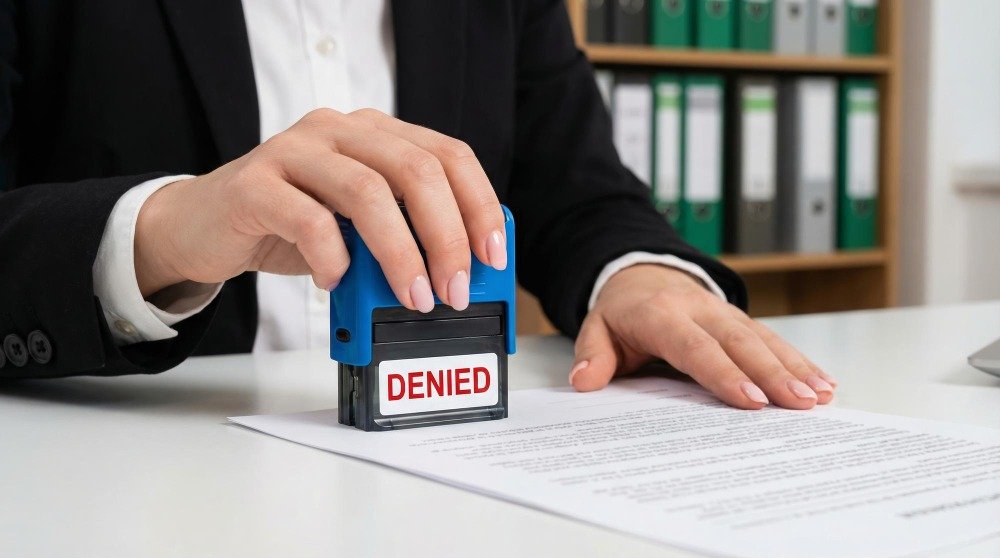
Source: Freepik.com
In an increasingly interconnected world, the quality of cross-language communication is crucial. Translation governance is not just about supervising translations; it is a framework that ensures every company message remains consistent, accurate, and contextually appropriate across different markets. Implementing proper governance is particularly relevant for organizations that use MTPE services, as the role of humans in polishing machine translations must be clearly defined to ensure professional, reliable results. This concept establishes the foundation for the processes, standards, and accountability that support every translation output.
- Governance ensures consistency across languages, teams, and markets. Without clear guidelines, translation teams across locations can produce different versions of the same message, risking confusion or damaging brand identity. In governance, every team follows the same standards, ensuring the quality and tone of communication remain consistent across the organization.
- Terminology control is the foundation of communication stability. Consistently managing key vocabulary and technical terms makes messages easier to understand and reduces the possibility of misinterpretation. It also reinforces professionalism, as audiences perceive consistency and clarity across all communication materials.
- A clear workflow defines when MTPE services should be used. With detailed guidelines, teams know when machine translation is sufficient and when human intervention is necessary, making the process more efficient without sacrificing accuracy or linguistic nuance.
- Accountability ensures that every translation output is traceable and properly reviewed. Every revision, terminology decision, and approval is documented, allowing companies to trace errors, audit processes, and sustain quality standards over time.
Where MTPE Creates Value, and Where It Introduces Risk
MTPE services are highly effective for repetitive, low-risk content. For example, product guides, FAQs, or standard marketing content can be translated more quickly by machine, then edited by human editors to ensure linguistic fluency and terminological consistency. This allows companies to save time and money while maintaining reliable baseline quality.
However, for high-stakes documents, this approach is often insufficient. Legal documents, contracts, financial reports, and medical materials demand extreme precision, as minor errors can significantly impact compliance and reputation.
In these cases, MTPE risks misinterpretation without expert oversight, making full human translation or rigorous proofreading essential for accuracy. Furthermore, over-reliance on machines can damage brand voice. Machine translation systems often fail to capture linguistic nuances, communication style, and tone that define a company’s identity. As a result, messages that should be persuasive or warm can sound stiff, generic, or even confusing to the audience. This shows that MTPE cannot be used mechanically without creative and tonal evaluation from a human team.
A well-known example is KFC’s campaign in China; their iconic slogan “Finger lickin’ good” was literally translated into Mandarin as “Eat your fingers off,” changing the original humorous tone into an inappropriate message that confused local consumers. Incidents like this show that a strong brand message can be lost if the translation does not take into account cultural nuances and communication tone.
Hence, the decision to use MTPE services must always be based on risk assessment, not just content volume. Risk analysis helps determine where MTPE can improve efficiency and where human intervention is necessary, so companies remain efficient while protecting their reputations.
How Governance-Driven MTPE Works in Enterprise Environments
In governance-driven models, MTPE acts as an added translation layer, accelerating workflows without replacing essential human expertise. Machines manage scale and speed, while human experts ensure accuracy, contextual understanding, and appropriate linguistic nuance across translated content. Thus, MTPE becomes a collaborative capability where technology and linguists work together efficiently without sacrificing overall translation quality.
In addition to translation accuracy, localization is an important aspect of maintaining cultural relevance. A European company entering Indonesia must adjust communication to local norms while preserving its accurate core message. Localization within MTPE ensures content is linguistically accurate, culturally relevant, and resonates more effectively with the intended audience. This approach builds confidence in MTPE use, minimizing risks of lost nuances while maintaining consistency across global communications.
Recognizing this need, SpeeQual Translation supports companies in determining when MTPE can be safely implemented while maintaining global quality control and consistency. This approach ensures that all content remains compliant with international standards without sacrificing efficiency. This approach allows companies to focus on expansion and strategic communication. MTPE is a smart solution that combines the speed of technology with the accuracy of human translators.
Conclusion: MTPE Delivers Efficiency Only When Governance Comes First

Source: Freepik.com
MTPE services have become a preferred solution for achieving faster and more scalable translations. However, technology alone is not enough; without clear governance, the results can be less than optimal. The efficiency promised by MTPE is realized only when rules and processes guide every step of editing and proofreading.
Governance in MTPE services includes revision guidelines, quality checks, and coordination between editors. With a structured framework, potential errors can be minimized while maintaining a smooth workflow. A controlled process ensures that efficiency is not just a claim, but a reality in daily practice.
Hence, MTPE services are only truly effective when governance is the primary foundation. The efficiency promised by MTPE is realized only when structured rules and processes guide every stage of editing and review.





![Preparing technical manuals for the Malaysian market.]](https://speequal.com/wp-content/uploads/2026/09/image-20.jpeg)