In the context of cross-border business, the quality of business document translation is often overlooked.
Inaccurate document translations can delay deals because legal and compliance teams have to go back and forth clarifying clauses, definitions, and contractual obligations. This process slows down decision-making, prolongs negotiations, and even causes opportunities to shift competitors.
At the same time, trust erodes when partners or investors encounter inconsistent terminology, an ambiguous tone, or unprofessional legal structures, thereby calling the company’s credibility into question.
The ultimate impact is revenue leakage, as translation errors lead to misinterpretations, potential claims, penalties, or the loss of monetizable commercial rights.
Unfortunately, many companies still view business document translation as a cost center. The focus is only on reducing costs, not managing risk. However, the risks of mistranslating business documents are enormous. For instance, legal terminology errors can derail the compliance process, force renegotiation, and add much greater costs.
As a result, vendors are selected without adequate understanding of the business and legal context, compromising quality. In fact, translation serves as a conversion layer that keeps transaction values intact across languages and jurisdictions.
Accurate translations accelerate closings, maintain trust, and protect business margins from the outset.Hence, entering the era of legal-grade document translation in 2026, the “sufficiently accurate” standard is already outdated.
Companies need legal-grade certainty to ensure that every word has the same legal force as the source document.
Business Document Translation: The Revenue Layer No One Audits Until It’s Too Late
Nowadays, business documents are not merely administrative tools but key drivers of deal-closing speed. Language accuracy influences a brand’s professional perception, builds trust, and ensures smooth cross-border commercial value transfer.
This is where business document translation plays a strategic role that is often overlooked, even though it has a direct impact on revenue. Given this urgency, each type of document has a different level of sensitivity.
Proposals determine the attractiveness of an offer, MOUs bind initial commitments, tenders demand legal and technical precision, while reports and SOPs maintain operational consistency. Financial statements even concern compliance and credibility. All of this requires business document translation that is not only linguistically accurate but also contextually relevant to the business.
However, many companies are still unaware of this professional translation practice. It’s not just about the cost; the real challenge arises when translation errors occur. Translation errors not only change the meaning of words but can also shift intentions, expectations, and legal interpretations.
One incorrect term can delay an agreement, trigger renegotiation, or even cancel a valuable collaboration.
Reflecting on this issue, business document translation is a key determinant of business outcomes. Small mistakes can have a significant impact on reputation, trust, and financial results.
Therefore, viewing translation as a strategic investment, not just an expense, is key to maintaining the sustainability and growth of cross-border businesses.
Legal Translation as a Compliance Firewall for Cross-Border Documents

Source: Freepik.com
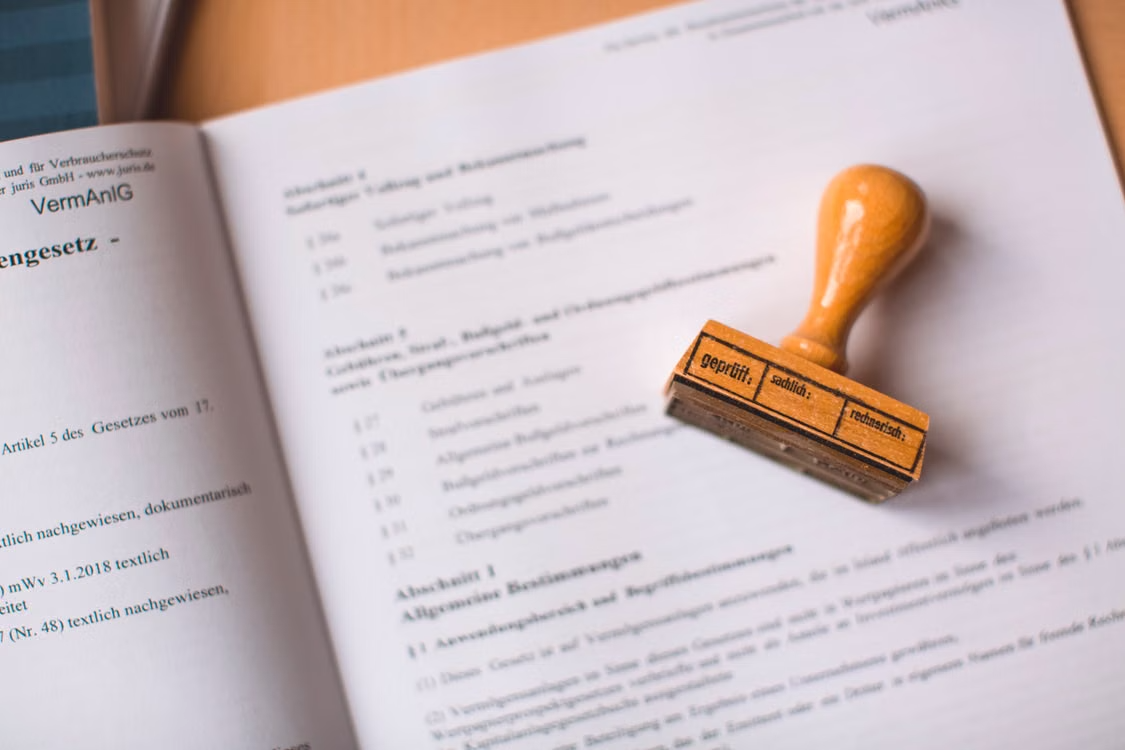
Legal document translation serves as a compliance layer, ensuring that every cross-border document is in compliance with applicable regulations. In this case, legal translation serves as a risk mitigator for disputes because legal meanings are conveyed precisely and in an accountable manner.
Additionally, it safeguards deal scope, enforceable rights, and ensures that party limitations remain consistent despite differences in language or legal systems. In line with this role, it is essential to recognize that the challenges in legal documents are complex.
One of the main issues is jurisdiction-specific terminology, where a single legal term can have different implications in other countries. Without accurate legal document translation, incorrect terminology selection can lead to non-compliance or serious interpretation conflicts.
Meanwhile, linguistic ambiguity is often a hidden trap. Sentences that appear neutral in language can change legal obligations if translated without sensitivity to context. This is where legal translation serves as a compliance firewall, ensuring that the original legal intent remains intact and does not give rise to additional, unintended obligations.
Furthermore, cross-border standards of evidence and interpretation also demand a high degree of precision. Each legal system has different expectations regarding structure, terminology, and evidence.
Therefore, professional legal document translation not only transfers language but also bridge legal systems with enforceable equivalence, maintains certainty, and protects the parties’ interests on an ongoing basis.
The 2026 Advantage: Legal-Grade Business Document Translation as Market Entry Strategy

Source: Freepik.com.
In 2026, companies no longer win based on market predictions alone, but on the standards of document readiness they set.
Cross-border regulations are becoming stricter, audits are becoming faster, and due diligence processes demand greater accuracy. In this context, legal-grade business document translation becomes the foundation of operational readiness, not just a supporting function, because documents are the official language of business trust.
This readiness raises an important question: why is legal-grade translation a real differentiator? The answer lies in risk mitigation and credibility. Non-legal-grade translations can lead to ambiguity, legal loopholes, and even rejection by authorities.
Conversely, legal-grade business document translation ensures consistency in terminology, regulatory compliance, and evidentiary strength, which directly increases a company’s competitiveness. This advantage is even more relevant as market expansion in 2026 demands speed without sacrificing accuracy.
Companies that are prepared with legal-grade documents can move faster in negotiations, licensing, and strategic partnerships. Thus, translation is no longer an expense, but a strategic investment for market entry.
With legal-grade business document translation services, SpeeQual Translation helps companies build credible and scalable document readiness. This approach ensures that every business document is translated with legal precision, terminological consistency, and cross-border regulatory sensitivity, enabling a structured, and sustainable market entry.
Legal Translation Bottlenecks That Kill Business Velocity (and How to Remove Them)
In legal translation practice, the first bottleneck that often arises is the need for repeated legal reviews due to inconsistent terminology.
Differences in terminology across contracts, vendors, or regions necessitate that legal teams focus on clarifying the meaning rather than the substance.
This situation is exacerbated when approvals are delayed because documents do not fully meet local regulatory standards, increasing compliance risks and wasting business time.
The problem then continues with the fragmentation of document versions between teams and regions.
Without a single source of truth, each region works with different versions that are difficult to synchronize.
At the same time, traditional translation vendor SLAs are often too slow, even though the 2026 business cycle demands speed, accuracy, and scalability simultaneously. As a result, global expansion momentum can be hampered.
To overcome this pattern, a strategic approach is needed. Terminology governance is the foundation for ensuring that all legal documents use consistent, standardized terminology across jurisdictions.
Furthermore, a legally aware QA layer ensures quality not only linguistically but also in line with the legal context and local regulations from the outset of the process.
SpeeQual Translation comes as an integrated solution. With localization memory for cross-border legal documents, we significantly reduce the risk of inconsistency.
In addition, with a human-verified MTPE pipeline for large volumes, SpeeQual provides an integrated, compliance-aware translation pipeline that removes review drag, version fragmentation, and SLA latency in one stack.
Conclusion — The Only Translation That Scales Is the One Business & Legal Teams Trust Without a Second Pass
In global operations, business translation is the foundation for efficient cross-border communication.
Accurate translations ensure the company’s strategic messages are conveyed without ambiguity, enabling business teams to make quick, accurate decisions. This accuracy also minimizes the risk of miscommunication, which can directly impact the company’s growth.
Equally important, legal translation ensures that all legal documents, from contracts to international agreements, are free from enforceability-breaking errors.
When these two types of translation are integrated, companies gain the full trust of their internal teams, as every word has been professionally checked and is ready for use without further revisions. That is why only translations that business and legal teams can trust without a second pass are truly scalable.
With this approach, companies not only save time and money but also build consistent, secure, and efficient global communication. To achieve translations that don’t require a second pass, you need a professional and experienced translation partner.
At SpeeQual Translation, we are accustomed to handling various business and legal documents with multi-layered quality control.
Let SpeeQual help you become relevant on the global stage through our business and legal document translation services.