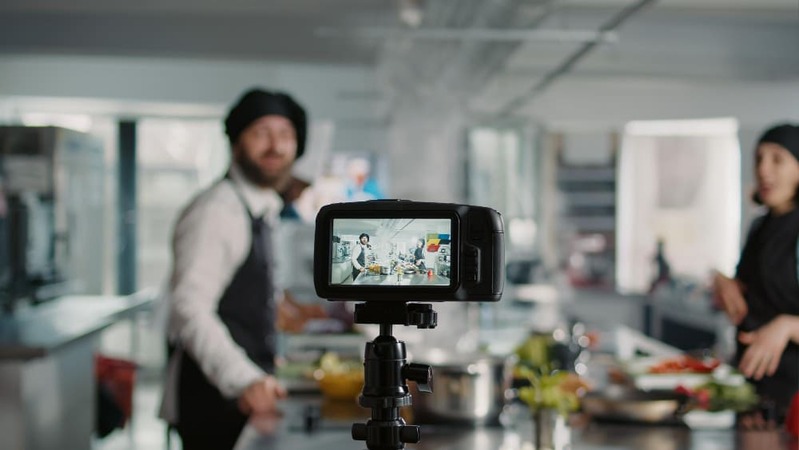
By 2026, brands will increasingly rely on video content as a core tool for business communication, including across social media platforms such as Instagram Reels and TikTok. Many companies now use video not only for promotional purposes but also to present company profiles and explain their services, as it is widely regarded as more effective than print media in delivering messages with emotional impact. In addition, digital video platform algorithms provide a clear advantage, allowing brands to reach organic audiences without the need for paid print advertising, while also offering measurable outcomes such as view counts and purchase conversions.
According to Teleprompter, 94.6% of online adults watch at least one video within a 30-day period. Meanwhile, Wyzowl reports that 93% of businesses incorporate video into their marketing strategies. While subtitles provide access, they often fail to bridge the emotional gap, leaving the core brand message ‘lost in translation’ for global viewers.
Therefore, a more comprehensive approach is needed to turn passive viewers into loyal customers. Businesses require multimedia localization strategies to remain relevant and effectively connect with their audiences. To understand this service, we’ll discuss it in more detail in this article.
Voice-Over vs. Dubbing: Choosing the Right Audio Strategy

Have you ever watched a dubbed video, or do you prefer voice-over? At first glance, the two may seem similar, but they differ in approach. Voice-over typically functions as narration and is not lip-synced, making it common in documentaries or informational content.
In contrast, dubbing requires precise synchronization between audio and visuals, where each line must match the character’s expressions and movements. Within a multimedia localization strategy, this choice significantly shapes how audiences perceive the content.
So, when should each technique be used? This is an important question before selecting an approach. Dubbing is generally more suitable for films, entertainment, or commercials that rely on emotional impact, while voice-over works better for tutorials, presentations, or educational materials. The choice between dubbing and voice-over should be a strategic pivot based on whether your objective is emotional resonance or functional information.
The effectiveness of audio also depends heavily on who delivers it. Native voice talent plays a crucial role in ensuring natural pronunciation, intonation, and nuance, making the message more relatable. Moreover, an authentic voice helps build trust and fosters a stronger connection with audiences. Therefore, in a multimedia localization strategy, selecting voice actors is not merely a technical step but an essential part of establishing long-term credibility.
On-Screen Text and Visual Adaptation: The Often Forgotten Element
Localizing visual elements is often overlooked in multimedia localization strategies. Yet, on-screen text, such as graphics, titles, and lower thirds that plays a crucial role in conveying the message. This process involves not just translation, but also contextual adaptation to ensure relevance to the target audience. If neglected, visual messages can feel jarring and diminish the clarity of the information. Therefore, consistency between audio and visuals is key to a cohesive experience.
Furthermore, this process poses significant technical challenges. One major issue is text expansion, which occurs when the translated text becomes longer than the original. This can disrupt the design composition and compromise the video’s visual aesthetics. Consequently, the localization team must balance linguistic accuracy with design space constraints. This approach demands close collaboration between translators and designers.
On the other hand, design decisions also directly affect audience perception. When visual text remains in English while the audio has been localized, a jarring mismatch arises. TForcing viewers to decode on-screen English while listening to localized audio creates a ‘cognitive split’ that dilutes the overall brand impact.
This situation underscores the importance of a comprehensive approach to multimedia localization strategies. Harmonizing audio and visuals is not merely a matter of aesthetics, but also of the audience’s cognitive comfort.
Culturalization of Video Content: Aesthetics and Sensitivities

In the context of multimedia localization strategy, non-verbal aspects are a crucial element that is often overlooked. Hand gestures, for instance, can carry very different meanings across cultures, while color choices often evoke specific emotional associations that vary by region. Visual symbols are also not always universal and may lead to misinterpretation if used without careful consideration.
Additionally, adapting local references is essential to ensure the message feels relevant. Content that is overly Western-centric can be difficult for other audiences to relate to or accept. Therefore, case studies, examples, and settings should be tailored to reflect the local context. The Dolce & Gabbana case in China, according to ITV, clearly illustrates how a seemingly minor cultural misstep can escalate into significant public backlash.
Moreover, this approach goes beyond aesthetics and extends into cultural sensitivity. In the practice of multimedia localization strategy, adapting or replacing visual elements must take local social norms into account. Culturally synchronized visuals prevent ‘aesthetic friction,’ ensuring your brand is perceived as a local participant rather than a foreign intruder.
For this reason, conducting a cultural audit is a critical step that should not be overlooked. This process helps identify potential risks before content is published, enabling companies to avoid unnecessary backlash. Thus, this strategy ensures that messages are delivered accurately while respecting cultural diversity.
Technical Synchronization: Metadata and Global SEO for Video
Doesn’t global visibility start with getting the small details right? Video optimization should begin with localizing titles, descriptions, and tags. Titles need to reflect the local audience’s language and search behavior, while descriptions should remain concise yet enriched with relevant contextual keywords. Meanwhile, tags help search engines understand the video’s specific topic. Within a multimedia localization strategy, these three elements work together to expand cross-market reach, making videos easier for global audiences to discover.
Furthermore, Closed Captions (CC) play a crucial role in both accessibility and SEO. CC enables audiences to understand content without audio, including those with hearing impairments. In addition, caption text can be indexed by search engines, significantly improving search relevance. To achieve this, accuracy in language and precise timing are essential. As a result, a multimedia localization strategy not only broadens accessibility but also enhances search performance.
SpeeQual helps businesses integrate more effectively through a multimedia localization strategy, bringing brands closer to global audiences. Consistent content quality also builds public trust, while a well-targeted approach supports sustainable business growth over time.
Measuring Impact: Higher Retention and Better Conversions
Videos that are fully localized—both in audio and visuals—have been shown to significantly increase average view duration. This approach is a key component of an effective multimedia localization strategy. Data from Vmeg indicates that 73% of viewers leave a video within 30 seconds if they do not understand the content. This suggests that subtitles alone are often insufficient to sustain audience attention. With precise technical synchronization, however, the message becomes easier to understand and more engaging.
Moreover, increased retention contributes directly to stronger brand trust. When a brand can effectively “speak” the audience’s language, it fosters a deeper emotional connection and signals a genuine understanding of local needs. In this sense, a multimedia localization strategy goes beyond translation to include meaningful cultural adaptation.
This impact is ultimately reflected in purchasing decisions. Audiences are more likely to choose brands that feel familiar and relatable, and trust built through effective communication increases the likelihood of conversion. This highlights the strategic value of delivering personalized experiences.
Hence, investing in multimedia can generate a more efficient return on investment. Well-localized content educates audiences more effectively, helping reduce customer acquisition costs by ensuring the message is clearly understood from the very first interaction.
Conclusion: Crafting a Seamless Global Experience
A global experience largely depends on how communication is structured and delivered consistently across different markets. Video has become a primary communication tool because it conveys messages more clearly and with greater emotional impact. Many brands use it to introduce their identity and explain their services in ways that are easier to understand, allowing messages to resonate more effectively than through conventional media.
However, effective communication cannot rely on video and subtitles alone. Differences in language and culture often prevent the full meaning of a message from being conveyed. For this reason, a more comprehensive approach through a multimedia localization strategy is essential. This strategy ensures that messages remain relevant by adapting both content and delivery to the local context.
Through this approach, brands can maintain consistency in their global communication while still connecting with local audiences. In the 2026 digital landscape, global viewers don’t just consume content; they inhabit localized experiences that feel native to their cultural identity. Thoughtful adaptation strengthens engagement and builds trust over time. Ultimately, a multimedia localization strategy becomes the foundation for creating a global experience that is clear, cohesive, and meaningful in every market.