
Nowadays, digital economic growth in Southeast Asia has skyrocketed. According to the e-Conomy report compiled by Bain & Company, Temasek, and Google, the region’s revenue is projected to reach US$100 billion by 2025.
This year’s report includes contributions from Laos, Myanmar, Cambodia, and Brunei Darussalam.
Without these four markets, the 2025 digital economy revenue in Southeast Asia is estimated to be US$99 billion. This figure reflects a 1.4% increase from 2024.
This growth has encouraged innovators to build local startups with solutions tailored to current market needs.
Examples include AgriTech in the Philippines, HealthTech in Vietnam, AI and e-Commerce in Indonesia, and CleanTech in Malaysia.
According to weforum.org, in 2022, the Philippines and Malaysia were the top two countries in e-commerce growth, with growth rates of 25% and 23% per year, respectively. This shows that technology has impacted the economy since the COVID-19 pandemic.
Unfortunately, with highly competitive products and services on offer, many startups are complacent about patent documentation.
In fact, they often translate their patent documents without adhering to international standards. Many founders believe that stellar products are the key to attracting global investors.
In reality, global investors assess patent documentation, not just advanced technology development.
Investors Don’t Just Invest in Technology, They Invest in Documents
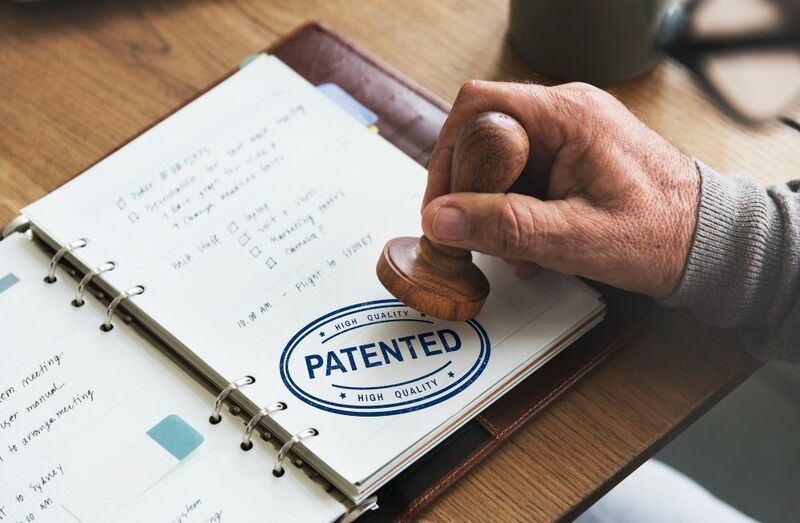
Source: Freepik.com
In cross-border investment, investors care about more than just how startups use the latest technology. Investors are willing to invest only after completing due diligence.
Certified translation services bridge language gaps, ensuring technical and legal documents are readable and legally verified. Global capital demands rigorous document verification, especially in patent evaluation, to ensure accuracy, consistency, and legal certainty before funding decisions.
According to WIPO, patent documents are territorial in nature, so the legal status, ownership, and scope of patent claims must be clearly verifiable in each jurisdiction to avoid potential cross-border litigation.
In addition, the OECD, also explains that a lack of transparency and adequate IP documentation increases the risk of legal disputes, thus becoming a significant barrier to foreign investment.
Thus, even strong AI research in Indonesian startups becomes unverifiable to investors from Japan, Europe, or the U.S. when patents are issued only in local languages. This is what causes their investment feasibility to decline.
The Real Barrier Isn’t Innovation — It’s Language
Many global investors not only assess technological potential but also examine the documents that underpin intellectual property rights protection.
Certified translation services ensure that all documents—including patents—are presented in a legally recognized language across international jurisdictions.
Meanwhile, the challenge faced in ASEAN is not technological backwardness. Innovation is actually developing rapidly in universities, laboratories, and small startups that are becoming increasingly competitive.
However, the biggest obstacle arises when patent documentation is only available in the local language. Without accurate translation, claims may change, technical terms lose precision, and legal structures can stray from international standards.
WIPO guidelines stress that patents are territorial, so international protection requires descriptions and claims in a language accepted by the destination authorities.
The issue arises when patent documents are translated carelessly, especially by uncertified translators, they can become invalid or misleading.
As a result, poorly translated patents risk international rejection and potential disputes, making translation quality crucial to protecting intellectual property rights.
Patent Translation Isn’t Like App Translation
Many startup founders often mistakenly assume that translating patents is the same as translating applications or websites.
However, patent experts emphasize that patent translation requires dual expertise: mastery of language, technical terminology, and intellectual property law.
One mistranslated term can change the meaning of a patent claim, weaken legal protection, or even invalidate the claim.
In addition, the Journal of International Business Policy emphasizes that patent translators must maintain sentence structure, syntax, and the technical and pragmatic contexts so that the interpretation of the claims remains equivalent to the original document.
Terminology errors or stylistic inconsistencies can weaken the value of a patent and trigger legal disputes in international jurisdictions. For example, a patent translation error by a European company.
The original patent document submitted mentioned ‘median particle diameter.’ However, when translated into English for the PCT phase, it became ‘average particle diameter.’
Although the meaning is similar, the company was sued, and the court ultimately invalidated the patent.
Relying on professional translators with technical and patent law expertise is crucial to ensure accurate, internationally styled, and legally robust patent translations.
SpeeQual Translation combines technical knowledge and legal expertise to ensure patent translations remain accurate, enforceable, and globally accepted.
When ASEAN Startups Compete Globally, Their Patents Collapse
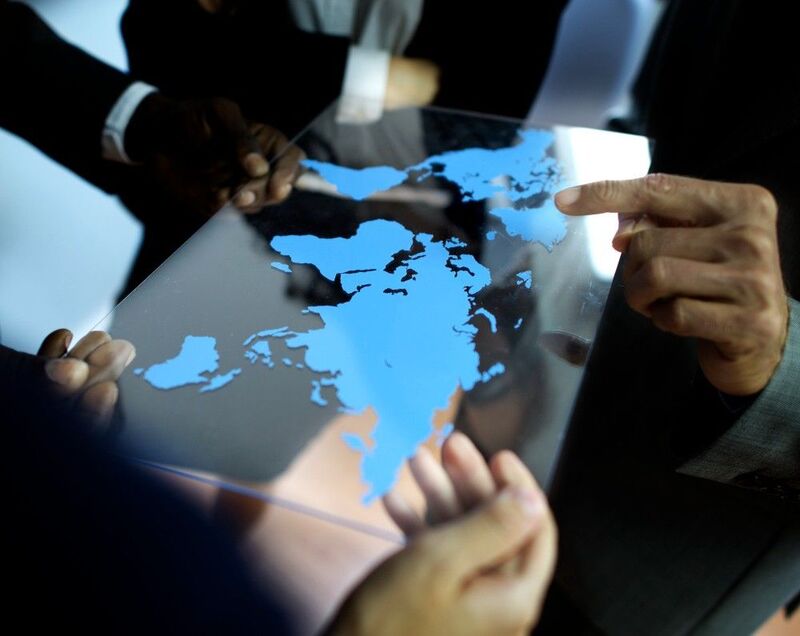
Source: Freepik.com
When ASEAN startups try to compete in global markets such as Japan, Europe, China, or the United States, they face significant challenges with their patent documents.
Each patent application must pass a series of rigorous legal tests: novelty, clarity, accuracy, and enforceability.
Many patents fail not because the technology is less innovative, but because the documents and their translations do not meet high international standards.
One of the main causes of this failure lies in ASEAN’s patent examination practices. According to ERIA‘s research, many member countries still have problems with patent examination guidelines, especially those related to new technologies, which weaken the strength of patents in international applications.
Translation errors in applications to countries such as the United States can render patent claims ambiguous, making it difficult to enforce legal rights.
In addition, the quality of patent documents significantly affects the value and scope of intellectual property protection in the global market.
The impact of this failure is not just about registration costs, but also the loss of an up-and-coming global market. ASEAN startups whose patents are rejected could lose licensing opportunities, investment, and even technological dominance abroad.
In fact, international mechanisms can be a strategic path, provided that patent documents meet global standards.
Patent Documentation Builds Trust Across Borders
Amid increasingly fierce economic competition, ASEAN countries need a reputation as a ‘serious and trustworthy’ market. One of the most effective ways to build this reputation is through accurate and professional patent documentation.
Patent documents that are written and translated correctly not only protect innovation but also open doors for global investors seeking legal certainty and clarity on intellectual property rights.
The quality of the documentation presented often determines the level of trust international investors place in it.
Neat, linguistically accurate documents enable cross-border collaboration, facilitate certification, and strengthen legal protections across jurisdictions.
This creates a healthy innovation ecosystem, where companies and innovators can feel secure in sharing ideas, developing new products, and forming strategic partnerships.
Recognising this need, SpeeQual provides patent translation solutions that meet international legal standards.
Understanding the context and translating patent documents with precision are two keys to assisting startups to go the extra mile.
This is done by ensuring that every document meets international standards and applicable legal language.
Through accurate, precise translation, ASEAN startups can build a credible reputation, expand collaboration opportunities, and secure legal protection for their innovations in the global market.
With the support of professional patent documentation, trust across national borders is no longer just a hope, but an achievable reality.
A Better Future Depends on Translators Who Understand Technology
If ASEAN wants to catch up with Japan and Korea in technological innovation, startups cannot rely solely on talented engineers.
They also need translators who understand both technology and legal perspectives. In the AI era, modern patents are not just about ordinary hardware or software; they cover topics such as machine learning interpretability, data ethics, biometrics, and IoT safety.
Being bilingual alone is not enough; in-depth technical expertise is required to bridge innovative ideas with complex regulations.
Such translators ensure accurate communication among engineering, legal, and investor teams, enabling technology to be commercialised safely and efficiently.
This is where SpeeQual comes in: providing translation services that are not only linguistic but also technical and legally minded, supporting startups in competing on the global stage.
The future of ASEAN innovation depends on translators who understand technology, not just words.
Ready to protect your innovation globally? Let’s secure your patent translation with precision.






![Preparing technical manuals for the Malaysian market.]](https://speequal.com/wp-content/uploads/2026/09/image-20.jpeg)