
Tag: Apps Localization

  • The Role of App Localization in Creating a Local Feel for Global Users

    The Role of App Localization in Creating a Local Feel for Global Users

    Global app trends in 2026 indicate that users are seeking not only advanced features but also experiences that feel intimate and personal. Many major apps have failed to gain traction in certain markets despite having solid functionality. This is because they lack an understanding of the culture, customs, and ways users interact in their daily lives. According to Freya Fine, founder at & Fine, cited by Business of Apps, in the 2026 digital economy, connectivity is a commodity; cultural resonance is the real currency of user retention. 

    Therefore, app localization for global markets is a crucial step for digital companies. Localization is not merely about translating language, but also about adapting communication, design, and the overall user experience to feel more familiar. When an app can create an emotional connection, users feel more comfortable and are more likely to remain loyal in the long term.

    Through app localization, companies can build stronger cultural relevance across various countries. This article will explore in greater depth how app localization helps apps remain relevant and well-received in global markets.

    Beyond Words: The Visual Language of Localization

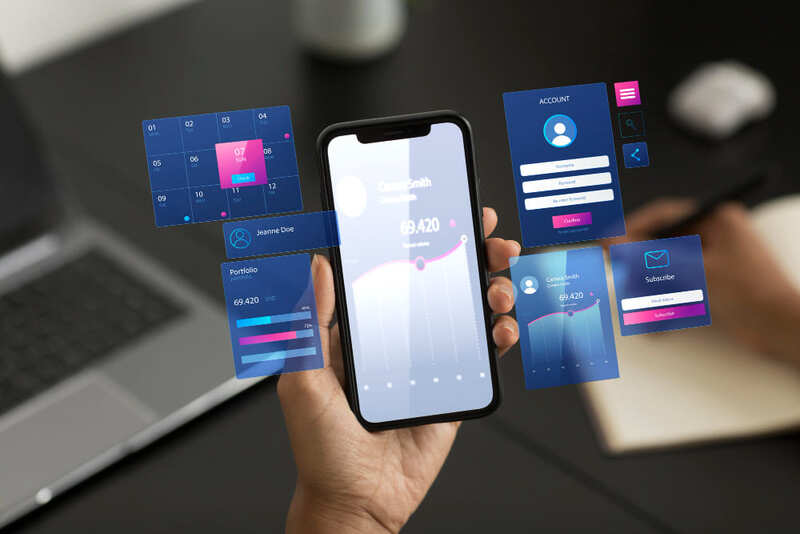
    App localization relies on visuals that align with market target.
    App localization relies on visuals that align with market target. [Source: magnific.com]

    In app localization strategies for global markets, visuals are a key element in shaping users’ first impressions. Colors, icons, and illustrations function as a nonverbal language that connects apps with audiences across cultures. Therefore, design cannot merely be aesthetically appealing; visuals must also be sensitive to local cultural values, customs, and symbols so that the app feels relatable and can be readily accepted in various markets.

    This issue becomes even more critical because many apps still rely on stock photos or Western-style illustrations for Eastern markets. Using Eurocentric stock imagery in a Southeast Asian market creates a ‘visual friction’ that subconsciously tells the user the app wasn’t built for them. Furthermore, Western illustrations frequently portray Eastern societies in traditional and stereotypical ways. This perspective aligns with Edward Said’s concept of Orientalism, which explains how the East is often represented through a biased Western lens that oversimplifies cultural identities.

    Beyond visuals, UI layout adjustments are also a crucial part of app localization. Differences in reading directions, such as RTL and LTR, affect navigation structures, icon placement, and user comfort while using the app. Text length in each language must also be considered to ensure the interface remains clean and easy to understand. With the right adaptations, the user experience can feel more natural, consistent, and aligned with local customs across various countries.

    Tone of Voice: Speaking the User’s Heart Language

    Have you ever used an app where the language was translated but still felt unnatural? Literal translations often sound stiff and robotic. As a result, the message the app intends to convey does not fully reach the user. In the process of app localization for global markets, translation quality is a critical factor because users tend to lose trust when the language feels unnatural. Research published in the Springer journal Machine Translation also found that a UI that speaks in literal translations is like a host who reads from a manual; it lacks the warmth and spontaneity required to build a human connection. 

    For this reason, localization is not just about translating text from one language into another. Language style choices must also align with local norms and user characteristics. Some situations require formal language to convey professionalism, particularly in financial or healthcare services. However, lifestyle and entertainment apps are usually more effective when they use casual language to feel approachable and familiar.

    In addition to language style, small details within the app also play a crucial role. The use of microcopy in buttons, notifications, and error messages can help build an emotional connection with users. Short, warm-sounding phrases make the app experience feel more human and comfortable.

    Thus, the success of app localization for global markets depends on an app’s ability to communicate in a way that feels natural. When users feel understood, their engagement with the app grows naturally.

    Functional Localization: Navigating Local Habits and Infrastructure

    App localization allows users to choose how they want to make transactions.
    App localization allows users to choose how they want to make transactions. [Source: magnific.com]

    In app localization, adapting app features is a crucial step in helping users feel more connected to the services they use. This adaptation is not just about language, but also about the digital habits of users in each country. For example, users in Indonesia are becoming increasingly accustomed to using digital wallets and QRIS for daily transactions. Functional localization means respecting the local ‘operating system’ of life—from QRIS integrations in Jakarta to Buddhist Era calendars in Bangkok. 

    Besides adapting to local habits, aspects such as speed and accessibility must also be considered. Every country has a different level of internet infrastructure quality. South Korea has significantly higher internet bandwidth than Indonesia. As a result, app size and data usage must be tailored to the conditions of the target market. A lightweight app is easier to access and remains comfortable to use, especially in areas with limited connectivity.

    Moreover, the app localization process for global markets must also take local regulations into account. Compliance with local rules is a crucial step in ensuring that an app is widely accepted. One example is adapting to data privacy laws and user security regulations. By complying with local regulations, apps can build stronger trust among users.

    Hence, localization is not just about visual design or language translation. Adapting to local customs, infrastructure, and regulations is essential to ensuring that an app can thrive effectively in various global markets.

    The Psychology of Trust: How a Local Feel Boosts Retention

    Linguistic comfort has a strong correlation with user retention in an app. Users tend to stay longer when they feel familiar with the language, terminology, and communication style used. An experience that feels relatable helps build trust from the very beginning. In contrast, apps that neglect localization often confuse users, causing them to hesitate and eventually stop using the service. For this reason, app localization for global markets is a crucial step in building long-term relationships with users.

    Beyond enhancing comfort, language comprehension also influences digital transaction decisions. Trust is a linguistic byproduct; users only open their digital wallets when they are 100% certain of what they are signing up for.  A study shows that users who understand this information have greater awareness of their rights, the use of personal data, and the risks associated with digital transactions. As a result, the app experience feels safer and more transparent.

    Today, the need for app localization is no longer merely an afterthought. Companies aiming to reach global markets must deliver experiences that feel local to every user. Localization is not just about translating words, but also about adapting context, culture, and communication styles to make the experience more relevant.

    Through our app localization services, SpeeQual helps companies deliver app experiences that resonate with users in global markets. Our team of localization experts understands that effective communication can build trust and foster user loyalty. With a more natural and accurate approach, your app will feel more personal, relevant, and appreciated by users worldwide.

    Case Studies: Winners of the “Local Feel” Strategy

    Shopee is an example of an e-commerce platform that has successfully dominated Southeast Asia by understanding user behavior in each country. In Indonesia, the platform provides content that resonates with local culture, uses familiar language, and supports payment methods commonly used by the public. This approach makes the shopping experience feel more comfortable and personalized for users.

    Additionally, Amazon has demonstrated success through its app localization strategy for global markets. Although headquartered in the U.S., Amazon tailors its services to meet the specific needs of each region. In India, for instance, the platform offers cash-on-delivery options because many users are not yet accustomed to using credit cards. This strategy helps build consumer trust and effectively expand its market reach.

    Conversely, apps that ignore local nuances often face negative reactions from users. Certain visuals, symbols, or colors may be considered taboo in specific countries. Small mistakes like these can damage a brand’s image and make users feel undervalued. For example, Netflix initially felt overly American even after expanding into the Indonesian market because some of its content was considered too explicit. However, the platform eventually adapted to the way Indonesian audiences communicate and consume content.

    Conclusion: Making Your App a Global Native

    Users from different countries have distinct languages, customs, and digital preferences. As a result, apps need to tailor the user experience to make it feel more familiar and comfortable in each market. The ultimate goal of localization is to become a ‘Global Native’—an app that feels like it was born in every country it inhabits. 

    In addition to enhancing user comfort, the localization process can also strengthen the relationship between a brand and its international audience. Users tend to trust apps that understand their needs and communication styles. This is what makes app localization a crucial step for companies in 2026 aiming to expand globally without losing their connection with local users.

    On the other hand, apps that can adapt to international markets have a greater chance of retaining user loyalty. A natural user experience can increase engagement while effectively expanding a business’s reach. With the right app localization strategy, an app can become a platform that feels familiar, relevant, and easily accepted in global markets.


  • Apps Localization in Southeast Asia: The Real Barrier Between Downloads and Revenue

    Apps Localization in Southeast Asia: The Real Barrier Between Downloads and Revenue

    Southeast Asia has recorded a very high volume of app downloads, but monetization has not kept pace. So, what’s the gap that makes apps struggle to convert downloads into revenue?

    According to Sensor Tower data, Southeast Asia became the second-largest mobile gaming market in the world in the first quarter of 2025, with 1.93 billion new game downloads.However, revenue from in-app purchases in the region remains relatively low, at around $625 million, compared to the scale of its download volume. This gap shows that high initial user interest does not automatically translate into sustainable revenue.

    Many global apps fail not because of a lack of promotion, price, or features, but because they are unable to speak in a local context. Language, usage habits, and diverse payment preferences in Southeast Asia are often overlooked, making the user experience feel irrelevant. In this context, app localization in Southeast Asia is the key differentiator between curiosity installs and real adoption. Users may be interested in trying an app, but without local relevance, it is difficult for the app to become part of their daily routine.

    In its report Accelerating digital inclusion for 1 billion people by 2025, the World Economic Forum asserts that digital solutions that are not tailored to the language, habits, and capabilities of local users tend to fail to be used sustainably. This is reflected in the practice of app localization in Southeast Asia, where many global apps attract downloads through promotion but fail to retain users due to an irrelevant user experience. As a result, users quickly disengage, turning acquisition costs into sunk expenses with no long-term economic return.

    Southeast Asia Is Not One Market, and Apps Pay the Price for Treating It Like One

    Southeast Asia is not a single, homogeneous market. The region comprises many countries with diverse languages, cultures, levels of digital literacy, regulations, and user preferences. The way users in Indonesia interact with applications differs from that of users in Malaysia, Thailand, Vietnam, or the Philippines. Differences in payment methods, price sensitivity, and mobile usage habits make a one-size-fits-all approach less effective in Southeast Asia.

    Unfortunately, many applications still rely on an English-first or one-language rollout approach. This strategy creates friction from the first use, as users immediately sense that the application was not designed for their local context. Foreign languages, unfamiliar technical terms, and usage flows that do not conform to local customs make the initial experience difficult and unintuitive.

    As a result, users may still download the app, but they won’t trust it immediately. Without a sense of familiarity and local understanding, apps tend to be used only to a limited extent. As a result, such apps are rarely chosen for transactions or long-term use, especially in Southeast Asian markets that are highly dependent on trust.

    This is where app localization serves as the gatekeeper of the initial user experience. The reason is that first impressions determine whether users feel safe, understood, and relevant. Proper app localization reduces confusion, builds trust from the outset, and paves the way for long-term adoption and retention.

    Where Revenue Breaks: How Poor Localization Kills Trust, Retention, and Monetization

    Poor localization led to a significant revenue decline.

    Source: Freepik.com

    Poor localization often starts with seemingly minor errors in UI, onboarding, and microcopy translations, but these can have a significant impact. Overly literal translations, unfamiliar technical terms, or ambiguous instructions confuse users and make them hesitant. In the early stages of onboarding, this confusion immediately undermines trust because the app feels underdeveloped and misaligned with user expectations.

    This problem is exacerbated by inconsistent tone and inappropriate use of local terms. The app can feel foreign and irrelevant, especially in Southeast Asia, where cultural and linguistic nuance strongly shapes user perception. For instance, using stiff, formal Malay for a lifestyle app, or mixing English terms without context in Thai or Vietnamese, makes the experience feel distant and unnatural. This approach will certainly not resonate with users, especially those in Southeast Asia, where culture and language are very rich.

    As a result, small frictions begin to emerge in the user experience and have a real impact. Confusing CTA buttons, unfamiliar payment terms, or registration flows that do not conform to local customs increase churn. Users cancel transactions, conversions drop, and monetization fails even though the product is actually good.

    Hence, in Southeast Asia, trust is a prerequisite for revenue. Users must feel understood in terms of language and context before they are willing to pay. Poor localization undermines this foundation, while proper localization builds a sense of security, relevance, and readiness for users to transact.

    Apps Localization as a Revenue Infrastructure, Not a Cosmetic Upgrade

    Apps localization is a revenue infrastructure to close the barrier to app’ downloads.

    Source: Freepik.com

    App localization is often misunderstood as simply translating the app’s content. In fact, effective localization involves adapting to each market’s cultural context, user flow, and user expectations. From communication style and date formats to payment habits, everything affects how users understand and trust the product from their very first interaction.

    When an app is well localized, the time-to-value for new users can be significantly accelerated. When users first open the app, they immediately understand what it offers, how to use it, and what benefits they can get without any interpretation barriers. A locally relevant onboarding flow, familiar terminology, and a navigation structure that aligns with user habits make the adaptation process much shorter. Users don’t feel like they are “learning a new system,” but instead immediately enter an experience that feels natural. Proper app localization helps users immediately understand the product’s main benefits, resulting in a shorter onboarding process and higher initial conversion rates.

    However, language alone is not enough to scale revenue. Consistency between language, UX, pricing logic, and product communication is key. If the marketing message aligns with the in-app experience and prices are adjusted to the local market’s perception of value, user trust will grow steadily.

    That’s why app localization should be positioned as part of the growth infrastructure that directly supports acquisition, retention, and monetization. It is not a finishing touch at the end of development, but rather a foundation that supports acquisition, retention, and monetization. With localization as infrastructure, apps are ready to grow across markets without losing relevance or revenue momentum.

    What Your Team Gets Wrong About Apps Localization in Southeast Asia

    Many product and growth teams still delay localization until their applications gain stable traction. This mindset persists because teams view localization as a later step after achieving product–market fit. In Southeast Asia’s highly diverse market, this approach is risky and often hinders adoption from the outset.

    The next mistake is separating localization from product decisions. Teams often treat localization as a purely linguistic task, limited to translating UI text, notifications, or marketing content. As a result, teams overlook tone, UX, culture, and local digital habits. In app localization in Southeast Asia, product decisions without local context often feel irrelevant to users.

    Problems also arise when teams choose localization vendors solely based on speed and price. This approach may be efficient on paper, but it often sacrifices an understanding of the regional market. Vendors who do not understand the dynamics of Southeast Asia tend to produce translations that are “correct” but not actually used or felt by local users.

    This is where SpeeQual Translation provides added value. With a deep understanding of the Southeast Asian context and local user behavior, SpeeQual helps apps’ localization in Southeast Asia align with product strategy, not just language. Based in Malaysia, SpeeQual has a team of professionals that your business can rely on for app localization that feels more natural and impactful. A more contextual approach to app localization is increasingly necessary for teams targeting Southeast Asia.

    Conclusion: In Southeast Asia, Apps Don’t Monetize Until Users Feel Local

    In Southeast Asia, an app succeeds mainly by how local the user experience feels. Differences in language, culture, and digital behavior make app localization a key foundation before monetization can take place. Early-stage users do not pay immediately; they first need to feel comfortable and see relevance. If the app feels too global, establishing trust from the outset is difficult.

    Furthermore, app localization plays a significant role in building emotional closeness. Natural language adaptation, local payment methods, and culturally relevant content make users feel understood. In the highly diverse Southeast Asia, a country-specific approach actually increases retention and engagement. When the experience feels personal, users are more likely to make transactions in the app.

    Therefore, monetization is the result of trust. If you want app localization that truly understands Southeast Asia, choose a partner like SpeeQual Translation that understands the local nuances of Southeast Asia, not just translation. Build an app that feels local from day one, and monetization will follow as trust and engagement grow.