In the world of global intellectual property, professional patent document translation is not just a service label, but a reflection of a structured and rigorous process.
This professionalism is demonstrated through technical understanding, use of specific terminology, and compliance with legal standards across various jurisdictions.
Without the right process, translations risk deviating from the original intent of the patent and creating legal loopholes.
This is why it is essential to understand that the quality of a translation cannot be separated from the methods and expertise used.
Meanwhile, there is a fundamental difference between general legal translation and professional patent translation.
General legal translation usually focuses on contracts, agreements, and other legal documents, with a broad linguistic and legal approach.
Translators rarely delve into the technical aspects or structure of patent claims.
Conversely, professional patent translation demands high precision, consistent terminology, and an understanding of the technology so that the legal and technical meanings remain intact. This difference in approach directly affects translation quality.
The implications of this difference are directly felt in IP protection, enforceability, and business value.
Accurate patent translations strengthen legal positions, minimize the risk of disputes, and increase the trust of partners and investors.
Hence, professional patent document translation is not just an administrative tool, but an important strategy for protecting and maximizing the value of innovation.
Where Patent Translations Commonly Break Down
In patent document translation practice, the most common pitfalls arise in the technical aspects of legal language itself.
The first is terminology drift, a seemingly minor shift in the meaning of technical terms that significantly affects the scope of patent protection.
Second, complex claim structures are often translated without preserving the logical relationships among their elements.
Third, cross-references between parts of the document—such as claims, descriptions, and drawings—are often inconsistent, creating legal ambiguity.
This problem is exacerbated when translations are done separately between documents or even between related parts of a document.
Without a comprehensive approach, the same term can be translated differently across a patent family.
As a result, continuity of meaning is lost, and the risk of rejection or dispute increases due to inconsistencies that could have been avoided.
Meanwhile, many assume that the translator’s experience is sufficient to guarantee quality.
In fact, experience without a system is prone to repeated errors.
Without a controlled glossary, claim validation process, and cross-reference management, translators will be heavily reliant on memory and intuition, which are not always consistent.
Therefore, translation failures are rarely caused by one major error, but rather by the accumulation of small gaps in the process.
Understanding these vulnerabilities is the first step toward building a more accurate, structured, and legally accountable approach to patent translation.
When Translation Accuracy Becomes a Business Liability

Source: Freepik.com
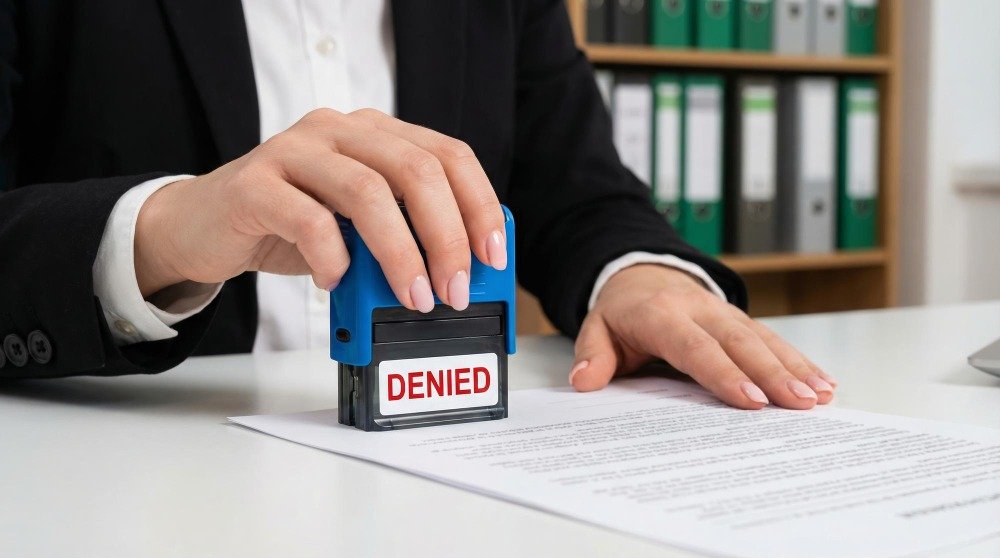
The quality of translation is directly linked to commercial risk because business documents often form the basis for legal decisions, investments, and strategic partnerships.
Inaccurate translations can alter the meaning of legal obligations, rights, or restrictions. In a global context, these errors can trigger disputes, financial losses, and damage to a company’s reputation in international markets.
These risks are even greater in patent translation. In patent documents, a single technical term, punctuation mark, or sentence structure can determine the scope of legal protection.
A small mistake can cause a patent to be rejected, easily challenged, or even exploited by competitors.
The impact is not only administrative but also strategic in terms of innovation advantage.
Therefore, the accuracy of patent translation cannot be treated as a purely linguistic task. It is part of business risk management.
With a professional approach, technical understanding, and legal precision, companies can ensure that patent document translation supports the protection of intellectual assets while maintaining long-term commercial value.
What Makes Patent Document Translation Truly Professional
A truly professional patent document translation does not depend solely on language skills.
Its quality stems from a combination of three key elements: linguistic expertise, technical understanding, and legal awareness.
Translators must have a precise command of both the source and target languages, understand the field of technology covered by the patent, and be aware of the legal implications of each term.
Language skills ensure that structure and meaning are conveyed accurately, and technical understanding helps capture the invention’s concept.
Meanwhile, legal awareness ensures that the translation remains consistent with the patent legal system and consequences in the target country.
Furthermore, terminology consistency is the next crucial aspect.
Terminology control ensures that technical terms are translated consistently throughout the document to avoid ambiguity.
Additionally, a multi-layer review process—involving linguistic, technical, and legal reviewers—serves as a layer of security.
This process requires examination by language and technical experts, as well as by parties who understand the legal aspects of patents.
Each layer focuses on different risks, so that linguistic, technical, and legal errors can be detected before the document is used officially.
However, this need is often overlooked when relying solely on machine translation.
Without professional supervision, machines tend to translate literally without understanding the legal or technical context.
For example, the term “claims” can be translated as a general “claim,” rather than a “patent claim,” which has a specific legal meaning.
As a result, the legal meaning can shift, risking future disputes.
How Professional Localization Services Strengthen Patent Translation at Scale

Source: Freepik.com
Localization plays an important role in maintaining consistency in patent documents across different markets and languages.
In a global context, patent documents not only require technical and legal accuracy, but also consistency of meaning across jurisdictions.
With the right localization approach, companies can ensure that patent claims, technical descriptions, and terminology remain consistent, relevant, and compliant with local standards without losing their original meaning.
To support this consistency, an integrated workflow is needed, especially for companies with a high volume of patents.
This workflow typically includes term management, translation memory, layered quality assurance, and collaboration between linguists and subject matter experts.
Through a structured system, the patent document translation process becomes more efficient and controlled.
As global demand increases, the integration of technology and human expertise is key.
End-to-end process-supported localization enables companies to accelerate time-to-market while minimizing the risk of legally impactful translation errors. This makes a standardized workflow a strategic necessity.
SpeeQual Translation helps businesses stay consistent, accurate, and relevant in the global market through comprehensive localization services, enabling international expansion without compromising quality or regulatory compliance.
Conclusion: Professional Patent Translation Is a Business Safeguard, Not a Cost
Patent translation is not merely a linguistic process, but an essential part of business risk management.
Terminology errors can lead to disputes, registration rejections, or loss of intellectual property rights.
With a professional approach, companies protect the value of innovation from the initial documentation stage.
From this perspective, patent document translation is a strategic investment in global IP management.
This is because accurate language strengthens cross-border legal positions, accelerates commercialization, and builds trust with international partners and regulators.
Hence, working with SpeeQual Translation is a tactical step to maintain consistency, confidentiality, and compliance.
Our team of experts understands technical and legal terminology, ensuring precise patent document translation.
Protect your intellectual property and turn translation into a safeguard for sustainable business.
This approach facilitates safer, more measurable global decision-making aligned with the company’s long-term growth in the global market.