
Tag: Legal Translation Service

  • The Business Case for Legal-Grade Document Translation in 2026

    The Business Case for Legal-Grade Document Translation in 2026

    In the context of cross-border business, the quality of business document translation is often overlooked. 

    Inaccurate document translations can delay deals because legal and compliance teams have to go back and forth clarifying clauses, definitions, and contractual obligations. This process slows down decision-making, prolongs negotiations, and even causes opportunities to shift competitors.

    At the same time, trust erodes when partners or investors encounter inconsistent terminology, an ambiguous tone, or unprofessional legal structures, thereby calling the company’s credibility into question. 

    The ultimate impact is revenue leakage, as translation errors lead to misinterpretations, potential claims, penalties, or the loss of monetizable commercial rights.

    Unfortunately, many companies still view business document translation as a cost center. The focus is only on reducing costs, not managing risk. However, the risks of mistranslating business documents are enormous. For instance, legal terminology errors can derail the compliance process, force renegotiation, and add much greater costs.

    As a result, vendors are selected without adequate understanding of the business and legal context, compromising quality. In fact, translation serves as a conversion layer that keeps transaction values intact across languages and jurisdictions. 

    Accurate translations accelerate closings, maintain trust, and protect business margins from the outset.Hence, entering the era of legal-grade document translation in 2026, the “sufficiently accurate” standard is already outdated. 

    Companies need legal-grade certainty to ensure that every word has the same legal force as the source document.

    Business Document Translation: The Revenue Layer No One Audits Until It’s Too Late

    Nowadays, business documents are not merely administrative tools but key drivers of deal-closing speed.  Language accuracy influences a brand’s professional perception, builds trust, and ensures smooth cross-border commercial value transfer. 

    This is where business document translation plays a strategic role that is often overlooked, even though it has a direct impact on revenue. Given this urgency, each type of document has a different level of sensitivity. 

    Proposals determine the attractiveness of an offer, MOUs bind initial commitments, tenders demand legal and technical precision, while reports and SOPs maintain operational consistency. Financial statements even concern compliance and credibility. All of this requires business document translation that is not only linguistically accurate but also contextually relevant to the business.

    However, many companies are still unaware of this professional translation practice. It’s not just about the cost; the real challenge arises when translation errors occur. Translation errors not only change the meaning of words but can also shift intentions, expectations, and legal interpretations. 

    One incorrect term can delay an agreement, trigger renegotiation, or even cancel a valuable collaboration.

    Reflecting on this issue, business document translation is a key determinant of business outcomes. Small mistakes can have a significant impact on reputation, trust, and financial results. 

    Therefore, viewing translation as a strategic investment, not just an expense, is key to maintaining the sustainability and growth of cross-border businesses.

    Legal translation helps businesses ensure compliance and reduce legal risks.

    Source: Freepik.com

    Legal document translation serves as a compliance layer, ensuring that every cross-border document is in compliance with applicable regulations. In this case, legal translation serves as a risk mitigator for disputes because legal meanings are conveyed precisely and in an accountable manner. 

    Additionally, it safeguards deal scope, enforceable rights, and ensures that party limitations remain consistent despite differences in language or legal systems. In line with this role, it is essential to recognize that the challenges in legal documents are complex. 

    One of the main issues is jurisdiction-specific terminology, where a single legal term can have different implications in other countries. Without accurate legal document translation, incorrect terminology selection can lead to non-compliance or serious interpretation conflicts.

    Meanwhile, linguistic ambiguity is often a hidden trap. Sentences that appear neutral in language can change legal obligations if translated without sensitivity to context. This is where legal translation serves as a compliance firewall, ensuring that the original legal intent remains intact and does not give rise to additional, unintended obligations. 

    Furthermore, cross-border standards of evidence and interpretation also demand a high degree of precision. Each legal system has different expectations regarding structure, terminology, and evidence.

    Therefore, professional legal document translation not only transfers language but also bridge legal systems with enforceable equivalence, maintains certainty, and protects the parties’ interests on an ongoing basis.

    The 2026 Advantage: Legal-Grade Business Document Translation as Market Entry Strategy

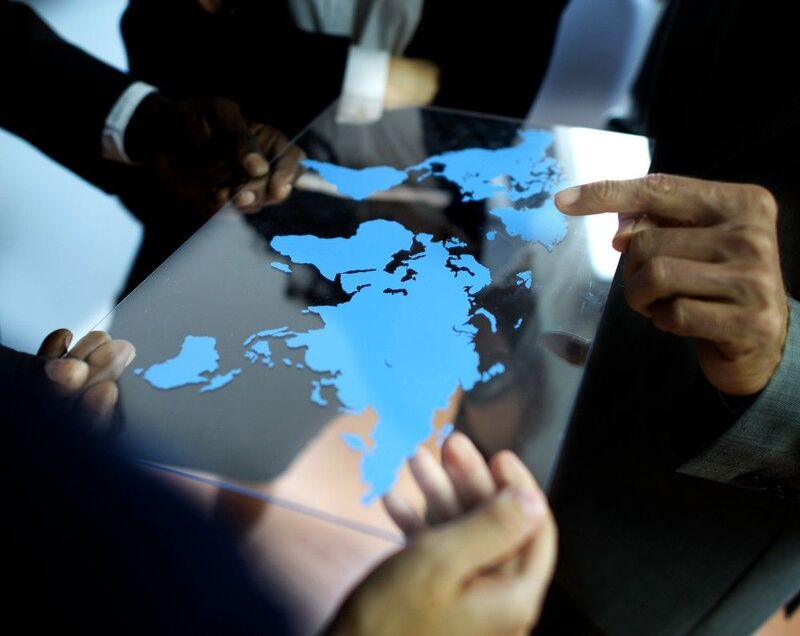
    Legal-grade business document translation as a market strategy to drive expansion in 2026.

    Source: Freepik.com. 

    In 2026, companies no longer win based on market predictions alone, but on the standards of document readiness they set. 

    Cross-border regulations are becoming stricter, audits are becoming faster, and due diligence processes demand greater accuracy.  In this context, legal-grade business document translation becomes the foundation of operational readiness, not just a supporting function, because documents are the official language of business trust.

    This readiness raises an important question: why is legal-grade translation a real differentiator? The answer lies in risk mitigation and credibility. Non-legal-grade translations can lead to ambiguity, legal loopholes, and even rejection by authorities. 

    Conversely, legal-grade business document translation ensures consistency in terminology, regulatory compliance, and evidentiary strength, which directly increases a company’s competitiveness. This advantage is even more relevant as market expansion in 2026  demands speed without sacrificing accuracy. 

    Companies that are prepared with legal-grade documents can move faster in negotiations, licensing, and strategic partnerships. Thus, translation is no longer an expense, but a strategic investment for market entry.

    With legal-grade business document translation services, SpeeQual Translation helps companies build credible and scalable document readiness. This approach ensures that every business document is translated with legal precision, terminological consistency, and cross-border regulatory sensitivity, enabling a structured, and sustainable market entry.

    Legal Translation Bottlenecks That Kill Business Velocity (and How to Remove Them)

    In legal translation practice, the first bottleneck that often arises is the need for repeated legal reviews due to inconsistent terminology. 

    Differences in terminology across contracts, vendors, or regions necessitate that legal teams focus on clarifying the meaning rather than the substance. 

    This situation is exacerbated when approvals are delayed because documents do not fully meet local regulatory standards, increasing compliance risks and wasting business time.

    The problem then continues with the fragmentation of document versions between teams and regions. 

    Without a single source of truth, each region works with different versions that are difficult to synchronize. 

    At the same time, traditional translation vendor SLAs are often too slow, even though the 2026 business cycle demands speed, accuracy, and scalability simultaneously. As a result, global expansion momentum can be hampered.

    To overcome this pattern, a strategic approach is needed. Terminology governance is the foundation for ensuring that all legal documents use consistent, standardized terminology across jurisdictions. 

    Furthermore, a legally aware QA layer ensures quality not only linguistically but also in line with the legal context and local regulations from the outset of the process.

    SpeeQual Translation comes as an integrated solution. With localization memory for cross-border legal documents, we significantly reduce the risk of inconsistency. 

    In addition, with a human-verified MTPE pipeline for large volumes, SpeeQual provides an integrated, compliance-aware translation pipeline that removes review drag, version fragmentation, and SLA latency in one stack.

    Conclusion — The Only Translation That Scales Is the One Business & Legal Teams Trust Without a Second Pass

    In global operations, business translation is the foundation for efficient cross-border communication. 

    Accurate translations ensure the company’s strategic messages are conveyed without ambiguity, enabling business teams to make quick, accurate decisions. This accuracy also minimizes the risk of miscommunication, which can directly impact the company’s growth.

    Equally important, legal translation ensures that all legal documents, from contracts to international agreements, are free from enforceability-breaking errors. 

    When these two types of translation are integrated, companies gain the full trust of their internal teams, as every word has been professionally checked and is ready for use without further revisions. That is why only translations that business and legal teams can trust without a second pass are truly scalable. 

    With this approach, companies not only save time and money but also build consistent, secure, and efficient global communication. To achieve translations that don’t require a second pass, you need a professional and experienced translation partner. 

    At SpeeQual Translation, we are accustomed to handling various business and legal documents with multi-layered quality control. 

    Let SpeeQual help you become relevant on the global stage through our business and legal document translation services.

  • The 1st Translation Industry Trend in 2026 Isn’t AI: It’s Patent Document Translation Accuracy

    The 1st Translation Industry Trend in 2026 Isn’t AI: It’s Patent Document Translation Accuracy

    Entering 2026, the translation industry trend will no longer focus on who is the fastest to adopt AI, but rather on who can guarantee accuracy and legal defensibility. 

    In patents, one ambiguous term can alter claim scope and create serious cross-border legal consequences. Patent translation is now a strategic pillar in global business decisions, beyond a technical language process. This transition is even more evident when unrecognized patent translations hamper global expansion. 

    The European Patent Office explains that companies can lose patent protection due to previous inaccurate translations of patent documents. This shows that translation accuracy can determine whether IP rights are accepted or rejected in international markets.

    Eventually, patent document translation serves as a layer of IP risk mitigation, not just a linguistic service. 

    As the translation industry trend in 2026 evolves, modern providers must pair translation accuracy with jurisdiction-aware review to ensure legal fit in each market.

    The Real 2026 Turning Point: Patent Document Translation Over AI Hype

    Accuracy in patent document translation practice, replacing AI hype.

    Source: Freepik.com

    Currently, AI hype in the translation industry is approaching saturation. AI has now become a baseline commodity. 

    It is easily accessible, inexpensive, and relatively uniform in its capabilities. For law firms, R&D companies, and regulators, the process method is no longer the main focus. 

    What is far more important is the legal validity of the translation results, especially in high-risk patent document translation. 

    A single technical term error or claim ambiguity can weaken a client’s position in court, regardless of how sophisticated the technology used in the process is.  This is why the translation industry trend in 2026 shows a shift in attention from “how it’s translated” to “can it hold up legally”.

    Along with this shift, translation accuracy has become part of the IP risk management infrastructure. Terminology errors, biased claims, or missed legal nuances can lead to cross-border patent disputes. Therefore, translation accuracy is no longer seen as a mere linguistic output but as a strategic layer of protection. 

    In this framework, patent document translation serves as a bridge between technical innovation and sustainable global legal protection. Therefore, the best vendors are not the most AI-driven, but rather the most legally-aligned and localization-aware. 

    Understanding local legal systems, regulatory standards, and litigation practices is the key differentiator. 

    Translation industry trends in 2026 clearly confirm that competitive advantage comes from legal and contextual sensitivity, not just technological hype.

    Patent Document Translation as the New Compliance Currency

    By 2026, the relationship between global patent language and local regulatory requirements will become increasingly close. 

    Many patents are filed in English, but national authorities demand terminological accuracy in the local language for substantive examination and legal enforcement. 

    A pharma patent accepted by USPTO can be rejected in SEA if translation fails to match local legal claim scope.

    Translation becomes a compliance bridge linking global strategy with local jurisdiction realities in 2026. This complexity is particularly evident in Southeast Asia, a region with diverse legal frameworks but interconnected economies. 

    Southeast Asian countries such as Malaysia, Indonesia, Vietnam, and Thailand have different approaches to claim terminology, invention descriptions, and linguistic ambiguities. 

    Regional harmonization is developing, but national practices remain dominant. As a result, a single translation version is often insufficient. This is where patent document translation serves as a navigational tool, ensuring cross-border compliance without sacrificing legal consistency.

    As complexity increases, the role of translators has evolved into that of interpreters of legal intent. They don’t just translate words — they preserve legal intent, assess jurisdictional risk, and safeguard claim scope. 

    After filing, this relevance continues into the commercialization phase, namely, localized derivatives for licenses, distribution agreements, and technical materials. 

    Hence, patent document translation in 2026 will become the currency of compliance and sustainable business value in Southeast Asia.

    Market Forces & Translation Industry Trends 2026

    The translation industry trend in 2026 is expected to be increasingly influenced by technological innovation and the specific needs of the intellectual property sector. Quality assurance automation, especially IP-focused QA automation improves accuracy while protecting release timelines.

    In addition, the acceleration of multilingual filing and the presence of in-region linguistic reviewers are increasingly important for speeding up patent registration in various jurisdictions. Terminology databases are also key, helping ensure term consistency and reducing the risk of miscommunication. 

    On the other hand, growing demand in emerging markets and the consolidation of trust-based and specialized vendors confirm that the industry is moving towards greater integration and professionalization. 

    These trends clearly show that 2026 trends reward vendors who combine accuracy, speed, and legal alignment — not just scale.

    Effective localization is no longer just about translation; it’s about building trust. Accurate and contextually adapted patent documents increase brand trust, legal clarity, and buyer confidence. 

    In a B2B context, this also supports partnership conversion as potential partners see the company’s seriousness and professionalism. This insight confirms that quality patent document translation is a strategic foundation, not just an administrative necessity.

    In this landscape, choosing a partner who understands the local market and industry trends is key. SpeeQual Translation, with its in-region team and mature market experience, offers patent document translation services that are ready to support your company in facing global complexities. 

    Our team’s market-aware approach ensures quality, accuracy, and speed, making your investment in translation a strategic move.

    Choosing a 2026 Patent Document Translation Partner (Without Guesswork)

    Collaboration with Patent Document Translation Partner meets local criteria.

    Source: Freepik.com

    Choosing the right patent document translation partner requires a deep understanding of specific local criteria. 

    Legal familiarity is fundamental, including knowledge of patent law, filing rules, and claim structures. 

    Without this understanding, the risk of misinterpreting patent documents increases, potentially affecting the validity of patent rights across various jurisdictions.

    Beyond legal considerations, subject-matter expertise is also crucial. Partners who understand the technical and scientific context of the document can translate accurately, avoiding the terminological errors that often occur in complex patent documents. 

    Localization capabilities, which combine cultural sensitivity with local regulatory context, ensure that documents are ready for acceptance by local authorities without altering claim intent or technical scope.

    A solid quality assurance process, such as layers of revision and reviewers, glossary governance, audit trails, and confidentiality infrastructure, provides an additional safety net. 

    With these layers in place, each patent document is not only accurately translated but also tracked for every change, ensuring the security of sensitive information.

    Given the increasingly complex risks of 2026, it’s time to evaluate your patent document translation partner now. 

    Audit your current vendor: do they provide legal expertise, technical accuracy, and verifiable QA layers? 

    Partners such as SpeeQual Translation can serve as benchmarks, helping ensure that your patent documents remain secure, accurate, and ready to meet future global demands.

    Conclusion — The 2026 Standard Is Clear: Bulletproof Patent Document Translation Accuracy and Market-Ready Localization

    In the era of globalization, a patent document is not just ordinary text; it contains technical and legal terms that must be translated with precision to protect intellectual property rights.

    Small errors can have a big impact on patent protection and a company’s reputation in the international market.

    Therefore, companies are now focusing on translations that are not only linguistically accurate but also contextually appropriate, including technical and legal terms. 

    The implementation of the 2026 standard emphasizes that patent document translation must follow double-verification procedures and a deep understanding of industry terminology, ensuring documents are ready for global use. 

    This approach bridges legal requirements and market readiness, ensuring that every patent document is not only accurate but also ready for localization.

    Thus, the new standard ensures that every patent translation is not merely a language transfer but a strategic tool for international expansion. 

    Patent document translation is now an integral part of global business strategy, allowing innovation to remain protected while accelerating entry into new markets. 

    The clarity of the 2026 standard provides confidence that patent documents can be delivered with defensible accuracy across jurisdictions and are ready for commercial use.

  • Why Legal Documents Require More Than Regular Translation in Business Contexts

    Why Legal Documents Require More Than Regular Translation in Business Contexts

    In the business world, legal documents such as contracts, agreements, company policies, and compliance documents serve as essential tools for regulating relationships, rights, and obligations between parties. 

    Contracts establish formal agreements between parties; agreements are often used for collaboration or partnerships. 

    Policies explain internal company rules, while compliance documents ensure that businesses follow applicable regulations. 

    These documents are not mere formalities but form the operational and legal foundation of a business.

    Unfortunately, regular translation approaches are often insufficient for legal documents. 

    This is because regular translation often focuses only on word-for-word translation without considering the legal context and commercial purpose of the document. 

    For example, translating the term “indemnity clause” literally can cause local parties to misunderstand the responsibilities that must be fulfilled. 

    This highlights how standard translation can overlook critical legal nuances.

    Risks arise when the legal meaning shifts, even though the sentence sounds correct. 

    Misinterpretation can lead to legal disputes, financial losses, or failure to comply with regulations. 

    Therefore, professional legal document translation is essential to ensure that legal and business messages are conveyed accurately without losing their essential meaning.

    Literal translation in legal documents can lead to legal risks and misinterpretation.

    Source: Freepik.com

    The main difference between regular translation and legal translation lies in their purpose. 

    Regular translation focuses on readability, i.e., ensuring that the general reader easily understands the text. 

    Meanwhile, legal translation emphasizes enforceability, i.e., the ability of the translated text to have the same legal force as the original document. 

    This difference in purpose forms the foundation of the entire legal translation process.

    Based on this purpose, the linguistic aspects of legal translation become much more complex. 

    Sentence structure must be precise; modality terms such as ‘shall,’ ‘may,’ or ‘must’ cannot be translated freely, and legal terminology must be consistent. 

    A small modality error, such as changing an obligation into an option, can significantly alter the legal consequences and affect the rights and obligations of the parties.

    The transition from theory to practice shows that many risks arise from seemingly trivial details. 

    In regular translation, variations in terminology are often considered acceptable for the sake of linguistic richness. 

    However, in legal translation, such variations are dangerous because they can create ambiguity and open the door to unwarranted interpretation in court.

    For example, translating the word “agreement” as “kesepakatan” instead of “perjanjian” can weaken the legal status of a document. 

    These minor errors emphasize that legal translation is not just a matter of language, but of real legal consequences.

    Business Risks That Emerge When Legal Meaning Is Misinterpreted

    Investing in legal translation services reduces the risk of legal document misinterpretation.

    Source: Freepik.com 

    Misunderstanding legal meanings often triggers serious business risks. 

    When the contents of an agreement are misinterpreted, companies can become embroiled in time-consuming and costly contract disputes. 

    This can escalate into regulatory exposure, even leading to reputational damage that is difficult to repair. The impact is not only legal, but also strategic for business continuity.

    The problem usually stems from the assumption that a close enough translation is sufficient. In fact, legal documents demand high precision because each term has specific legal consequences. 

    Small differences in meaning can change the obligations, rights, or responsibilities of the parties. This is where long-term legal risks begin to emerge.

    When mistakes have already been made, the cost of correction is almost always much greater than the cost of prevention. 

    The process of renegotiation, litigation, fines, and operational disruptions requires significant resources and drains management focus. 

    Conversely, investing early on to ensure the accuracy of meaning helps maintain stability and clarity from the outset of the collaboration.

    Therefore, a preventive approach is key to minimizing these risks. 

    By ensuring that every document undergoes proper legal translation, companies can protect their interests on an ongoing basis. 

    This step is not just a matter of language, but a smart, long-term risk management strategy.

    Why Legal Translation Requires Specialized Knowledge, Not Just Language Skills

    Legal translation requires not only language skills but also a deep understanding of the legal system. 

    Each country has a different legal structure, whether civil law or common law, with terms and concepts that are not always equivalent.

    In addition, the jurisdictional context determines how a legal term is interpreted and applied. 

    Business practices also play an essential role because legal documents are often related to commercial contracts, compliance, and risk, so translators must understand the business realities behind the text.

    Based on this understanding, the technical aspects of legal translation become crucial. 

    Consistency ensures that legal terms are translated consistently throughout the document to avoid ambiguity. 

    Reference accuracy requires precision in referring to articles, laws, or other documents, as minor errors can have significant legal implications. 

    Above all, maintaining legal intent means ensuring that the original meaning remains intact, not just the literal meaning of the words.

    However, the challenges become even more complex when technology is used without control. 

    Some companies rely heavily on machine translation. 

    However, machine translation often fails to capture legal nuances, differences in terminology between jurisdictions, and the legal implications of specific word choices. 

    Without professional review, the translation results risk being misleading and unreliable. 

    Thus, legal translation requires specialized expertise that combines language, law, and practical context. 

    A professional approach ensures accuracy, reliability, and legal protection that cannot be achieved with language skills or technology alone.

    How Professional Localization Services Support Legal Accuracy Across Markets

    In the context of global business, professional localization services play an essential role in maintaining the consistency of legal documents across countries. 

    Localization goes beyond translating language; it also involves adjusting legal meanings, sentence structures, and regulatory contexts to align with local legal systems. 

    With this approach, companies can minimize the risk of interpretation differences that could lead to disputes.

    Furthermore, this consistency is achieved through a deep understanding of the legal terminology and business culture of each market. 

    Professional localization services ensure that contracts, policies, and compliance documents retain their legal force across different jurisdictions. 

    Cross-market operations become more secure because the legal message remains intact despite differences in context.

    To support this accuracy, a structured workflow is key. 

    The ideal process combines legal linguists who understand the legal substance, multiple QA stages to check accuracy and consistency, and terminology control to ensure that important terms are used uniformly. 

    These workflows are interconnected, resulting in precise, accountable outcomes.

    Thus, SpeeQual Translation acts as a bridge in business operations through professional localization services. 

    SpeeQual is not merely a translation agency, but a long-term strategic partner for businesses.    

    Conclusion: In Business, Legal Translation Is a Risk Management Decision

    Legal translation is not merely a process of translating legal documents, but rather part of an integrated business strategy.

    When companies operate across countries, differences in legal systems, languages, and cultures become potential risks.

    This is where legal translation services play a role as a risk mitigation tool, ensuring that contracts, agreements, and policies remain accurate and compliant with the jurisdiction of destination.

    Furthermore, legal translation demonstrates professionalism and fosters trust. Precisely translated legal documents demonstrate a company’s commitment to compliance, transparency, and quality.

    This not only affects relationships with business partners and international clients but also strengthens the company’s reputation as a reliable and legally responsible entity.

    As a long-term measure, choosing the right partner is crucial. Hence, SpeeQual Translation is here to support business needs through legal translation services.

    With a professional approach and understanding of the legal context, we are your partner in your company’s journey to take more confident steps in global business decision-making.

  • Certified Translators and Patent Documents: High Stakes, High Pressure, and Hidden Pitfalls

    Certified Translators and Patent Documents: High Stakes, High Pressure, and Hidden Pitfalls

    In the world of patent documents, a single word can determine whether a patent claim is valid or invalid. Translators often make mistakes when they translate terms too literally.

    For example, the word “comprising” is sometimes incorrectly translated as “consisting of.” In patent law, “comprising” is open-ended, while “consisting” of is closed-ended, so this change can narrow the scope of the claim and significantly weaken the scope of legal protection.

    Meanwhile, patent translation differs from ordinary technical documents because it sits at the intersection of technology and law. 

    Technical documents primarily require technical accuracy, while patent documents demand consistency of terms, legal precision, and alignment with the requirements of the relevant patent jurisdiction. 

    For example, the difference between “may” and “shall” can alter the nature of an obligation in a claim and later lead to disputes.

    This is where certified translators play a critical role as guardians of meaning between innovation and law. 

    They do not simply translate words, but preserve the inventor’s intent, the strength of the claims, and legal validity. 

    Without certified translators, patent documents risk losing their strategic value and maximum legal protection.

    The Invisible Pressure Certified Translators Carry

    Certified translators handle the invisible pressure in document patent translation like an iceberg.

    Source: Freepik.com

    Certified translators work under professional pressure that is often invisible to clients. 

    In the world of technical and legal document translation,the applicable standards go far beyond linguistic accuracy, but rather the principles of zero ambiguity, zero assumption, and zero creative freedom. 

    Every word must represent the original meaning without additional interpretation. Therefore, the role of certified translators goes far beyond mere translation.

    This pressure increases because certified translators must understand more than just the source and target languages. 

    They must master legal logic, technical invention flows, and internationally applicable patent drafting conventions. 

    Without this understanding, translations risk deviating from the intended legal structure, even if they appear linguistically correct.

    Furthermore, a small error in a single phrase can have a significant impact. 

    Terminology or sentence structure errors can trigger litigation risks, patent rejection by relevant authorities, and even cross-border conflicts. 

    This is why certified translators bear significant legal responsibility in every project they handle.

    Hidden pitfalls within patent language exacerbate this pressure. 

    Many terms appear common, but actually have precise legal meanings. 

    Misunderstanding these terms can drastically alter the scope of patent protection.

    In addition, the difference between claims and descriptions is often a trap. 

    According to WIPO, claims are the scope of legal protection for inventions. 

    Meanwhile, descriptions teach how to make and use the invention. 

    Consistency of terms across pages is also crucial; even a single difference can constitute a legal inconsistency.

    Meanwhile, using machine translation or general-purpose translators is very risky. 

    Without a deep understanding of legal and technical matters, the translation results can be misleading. 

    That is why certified translators remain at the forefront in maintaining the validity, security, and integrity of international patent documents.

    Why Certification Alone Is Not Enough Without Context Awareness

    Certification is an essential indicator of a translator’s quality, but it does not automatically guarantee accurate and appropriate translations. 

    This means patent technical terms (e.g., claims, specifications, descriptions, examination reports) must use consistent English across countries to minimize misinterpretations between jurisdictions.

    A certified translator must deeply understand the specific domain and market dynamics where the document will be used.

    Without this context, translations risk losing crucial technical and regulatory nuances.

    The challenge becomes even more complex when working across jurisdictions, such as the USPTO in the United States, the EPO in Europe, or ASEAN IP offices. 

    Each institution has different formats, terminology, and expectations. 

    For example, the EPO emphasizes clarity of technical claims and consistency of terminology, while the USPTO is more flexible in structure but demands a high degree of legal accuracy. 

    Meanwhile, according to IPOS, ASEAN IP offices use English as the working language for ASPEC data exchange and communication processes across member patent offices. 

    This means patent technical terms (e.g., claims, specifications, descriptions, examination reports) must use consistent English across countries to minimize misinterpretations between jurisdictions.

    Therefore, a translator must understand not only what is being translated, but also where and how the patent will be used. 

    This understanding determines whether the translation can support the patent process, license negotiations, or litigation in the relevant jurisdiction. 

    Without contextual awareness, even the highest certification is not enough to guarantee the success of patent translation.

    This contextual understanding also highlights the importance of localization in patent commercialization. 

    Translators who master the local and industry context can adapt the language to suit market needs, ensuring that patents are not only legally compliant but also relevant and readily accepted in the target market.

    When Patent Translation Meets Localization Strategy

    Patent translation ensures accuracy and is fully aligned with localization needs.

    Source: Freepik.com

    Patent documents serve more than filing or patent registration purposes. 

    These documents are also often used in investor decks, license negotiations, technology transfer processes, and even cross-border commercialization strategies. 

    With such a broad role, accuracy and clarity of language are crucial, as every technical term can shape external parties’ perceptions and decisions.

    This is where localization plays an important role. 

    This process adapts terminology so it can be understood by non-patent audiences, while maintaining the consistency of technical terms without altering their legal meaning. 

    Localization ensures that the technological messages in patent documents are accepted and understood across business cultures, enabling international commercialization strategies to run more effectively.

    It is important to emphasize that localization does not change the claims or substance of a patent. 

    Instead, this process serves as a communication bridge that facilitates understanding among parties from different backgrounds, from investors to licensing partners, without creating legal risks or technical ambiguities.

    To ensure your patent documents are accurately translated and properly localized, SpeeQual Translation is here to help. 

    Our certified translation & localization services combine legal precision and cross-cultural understanding, making your documents effective in various global business contexts.

  • Bridging Innovation and Market Fit: Patent Documents as a Foundation for E-Commerce Localization in Southeast Asia

    Bridging Innovation and Market Fit: Patent Documents as a Foundation for E-Commerce Localization in Southeast Asia

    The e-commerce boom in Southeast Asia over the past decade has opened up vast market opportunities for global brands. 

    According to a report frome-Conomy SEA 2025 by Google, Temasek Holdings, and Bain & Co., the e-commerce industry in Southeast Asia continues to climb, driven by video-based retail and AI-powered shopping tools. 

    Quoting Business Standard, the Gross Merchandise Value (GMV) of the e-commerce sector in the region will reach US$181 billion in 2025 across six major markets: Malaysia, Indonesia, the Philippines, Singapore, Thailand, and Vietnam. This figure is up 16 per cent from US$156 billion in 2024.

    IRising demand, rapid internet penetration, and a digitally savvy young population make the region a strong magnet for global innovators. However, amid increasingly fierce competition, innovation alone is not enough. 

    Many innovative products fail to compete because they lack proper patent protection and documentation, making them vulnerable to imitation or unable to prove their technological uniqueness when entering new markets.

    Patent documentation plays a crucial role as the legal and technical foundation that ensures innovations have a clear identity. 

    In the context of global brand expansion into Southeast Asia, patent documents help assert technology claims, map product differentiation, and minimize the risk of intellectual property infringement. 

    Without this foundation, efforts to adapt products to local needs are often hampered by regulatory uncertainty or later patent disputes.

    Therefore, before discussing localization strategies—from feature adjustments and user experience to marketing narratives—we must understand that strong products always begin with accurate patent documentation.

    Only with this foundation can innovation be translated into relevant and sustainable market value in Southeast Asia.

    The Hidden Insights Inside Patent Documents

    Patent documents reveal the fundamental aspects of an invention — not only its features and functions, but also its legal limitations and the history of its discovery. 

    According toWIPO, a patent document contains technical information from the description and drawings of the invention, as well as legal information from the patent claims defining the scope of the patent and its legal status. 

    This means the description and drawings explain how the invention works, while the legal claims determine the protection boundaries.

    In the context of digital expansion, patent documents are crucial for strategies such as copywriting, product listing writing, UX adaptation for local markets, and regulatory compliance. 

    Before entering a new market, UX and marketing teams must check whether patent claims cover the key features to avoid legal conflicts. If ignored, copyright or patent infringement may occur. 

    Bibliographic information (such as the application date, country of origin, and inventor) from patent documents also helps companies assess whether the invention is still legally active or has expired, making it safe to adapt.

    However, brands often underestimate the contents of patent documents and make mistakes when adapting features for local markets. 

    These mistakes include launching features that the courts block, claims for damages, or reputational damage due to IP infringement. 

    Therefore, patent due diligence is mandatory before product localization and must involve legal, technical, and local consultant teams. 

    For example, according to Reuters, Amazon once faced a local ban on streaming features in Germany due to a Nokia patent. If it had continued, it would have been fined €250,000 for each violation.

    When Patent Misinterpretation Leads to Localization Failure

    Errors in translating the claims of a patent document can lead to serious mistakes when an application or product is marketed in different countries. 

    If technical terminology is misunderstood, features may be promoted inaccurately, leading to localization errors and regulatory issues.

    In the context of legal and patent translation, the impact can be much greater than mere linguistic errors. 

    Inaccurate communication of meaning can lead to product rejection by local authorities, especially if the patent claims do not meet the legal standards of the destination country. 

    In fact, companies may face legal action from competitors or regulators for allegedly infringing on patented technology.

    In regional marketplaces, minor errors in technical documents or patent claims can result in banned listings. 

    Marketplaces that strictly examine technical information often reject products with inaccurate claims or that violate intellectual property laws in the region.

    Therefore, the use of certified translations for technical documents is essential. Certified translators not only ensure linguistic accuracy but also understand the technical and legal context surrounding each term, ensuring that the localization process is secure, consistent, and compliant with regulations. 

    This is also applied by SpeeQual, which uses certified translations to ensure that the translation of technical documents is secure and compliant with regulations in Southeast Asian countries. 

    Southeast Asia’s Localization Challenge: Diverse Users, Diverse Laws

    Challenges of e-commerce localization in Southeast Asia due to varied culture and regulations.

    Source: Freepik.com. 

    Southeast Asia is a highly diverse market. The region is rich in languages and diverse online shopping preferences. 

    These factors make Southeast Asia a highly promising e-commerce market. According to Statista, the culture of online shopping in Southeast Asia has increased since the COVID-19 pandemic. 

    The relatively young internet user population has contributed to the development of the online shopping culture in this region. 

    However, digital market regulations also vary. For example, regulations in Malaysia require e-commerce platforms to be transparent about their information, including the identity of sellers. 

    Indonesian regulations prohibit social commerce from functioning as full e-commerce. Meanwhile, in Thailand, large digital platforms are required to register, be transparent about certain algorithms, report risks, and protect consumers. 

    Therefore, this diversity means that a one-size-fits-all approach is no longer relevant.

    Amidst this complexity, understanding patent documents is important for brands that want to adapt product features and messages. 

    Patent documents provide an overview of how the technology is designed, the permitted use limits, and the scope for legally safe innovation. 

    With this understanding, brands can execute local strategies without violating local regulations, which often differ from country to country.

    Localization in e-commerce is not just a matter of translating everyday language. 

    Accurate technical interpretation is essential to ensure product functions and features remain precise and compliant.

    Errors in translating technical elements can lead to miscommunication, regulatory non-compliance, or even a loss of user trust. 

    Therefore, with trusted certified translation services, a localization approach enables brands to be more sensitive to the target culture with technical precision.

    How Patent Documents Support Smarter E-Commerce Localization Strategies

    Clear patent documents help companies develop more innovative e-commerce localization strategies. 

    By understanding the scope of patents, teams can identify features that should not be displayed in specific markets, thereby preventing intellectual property rights violations. 

    This information also guides internal teams in creating legally compliant product descriptions and meeting regulatory standards in each country. 

    In Indonesia, regulators prohibit social commerce platforms from offering full in-app shopping functionality.

    In addition, patent documents provide important context for adjusting UI/UX. Elements such as layout, interaction flows, or specific UI mechanisms may be restricted by existing patents.

    By understanding these limitations from the outset, teams can design an optimal user experience that complies with local laws.

    Many companies now combine legal translation, product adaptation, and local compliance checks into a single integrated workflow. 

    This approach ensures that product adaptations are not only culturally relevant but also safe and compliant with legal requirements in each market.

    Where Professional Translation & Localization Services Make a Real Difference

    Professional translation and localization services help the brand comply with the laws.

    Source: Freepik.com. 

    Patent documents are a complex combination of technical and legal language, so general translators or machine translators cannot accurately translate them without in-depth post-editing. 

    Every term carries legal implications, and even minor errors may significantly affect IP protection.

    Therefore, patents require certified translators with a deep understanding of industry terminology, regulations, and legal writing standards in various jurisdictions.

    Brands entering Southeast Asia need specialised translators and localization experts to ensure compliance, reduce legal risks, and build credibility.

    In addition to patents and regulatory documents, e-commerce content also requires cultural adaptation, local keyword optimisation, and consistent brand voice. 

    Localization experts ensure labels and listings are translated accurately, remain relevant, and align with expectations of Southeast Asia’s diverse consumers.

    SpeeQual Translation and Localization prioritizes accurate, fast service without compromising on Southeast Asian cultural sensibilities. 

    Our localisation experts and specialised translators understand Southeast Asian languages and ensure patent and technical documents comply with regulations.

    Consider partnering with certified providers like SpeeQual to ensure accurate patent translations that fully comply with Southeast Asian regulations.Contact us to get the correct patent document translation!

  • The Dark Side of Patent Translation: Liability, Accuracy, and Certification Risks

    The Dark Side of Patent Translation: Liability, Accuracy, and Certification Risks

    Patent documents are a complex combination of technical and legal language, often discussing innovations with enormous financial value. 

    In addition, patent documents also contain specific scientific and legal terminology. Every word in these documents can affect intellectual property rights and a company’s potential profits. 

    Certified translators handle this process because translation isn’t just swapping words—it must preserve precise technical and legal meaning. Certified translators who handle patent documents are at high risk.

    Even small errors—wrong terms or misinterpretations—can trigger legal disputes, patent rejections, or costly financial losses.

    This pressure makes the profession highly demanding, requiring precise accuracy and deep understanding of both language and technical-legal contexts.
    The main risks in patent translation include terminology accuracy, legal liability, and high expectations from clients and patent authorities. 

    Certified translators must balance speed, accuracy, and legal compliance, as any mistake can severely affect finances and professional reputation.

    The High-Stakes Nature of Patent Documents

    Errors in translating patent documents weaken the company’s legal position.

    Source: Freepik.com.

    Patents differ significantly from ordinary technical documents because they combine legal language with highly detailed technical information. 

    Patent documents use legal terms such as claims, prior art, embodiments, and scope. These terms help define and limit the patent holder’s exclusive rights.

    Patents also contain complex technical details—spanning engineering, biotechnology, chemical formulas, and software algorithms—that explain how an innovation works.

    Word or term errors in claims can change the scope of protection and weaken the company’s legal position. 

    An example is claim limitation, which occurs when claims are too specific, such as mentioning certain materials that are not actually critical to the function of the invention, thereby narrowing the scope of protection. 

    Furthermore, ambiguous terms can arise when words or phrases can be interpreted differently, such as ‘efficient’ or ‘adequate’, which risks legal disputes. 

    Meanwhile, over-generalization occurs when claims are too broad without adequate technical support, potentially leading to invalidation due to insufficient support from the patent description.

    Therefore, translating this document requires certified translators to maintain a balance between broad rights coverage and technical accuracy. 

    This is because even the smallest error can open up legal loopholes for competitors or undermine the strategic value of the patent.

    Certified translator required to ensure accuracy in patent document translation.

    Source: Freepik.com.

    According to theWorld Intellectual Property Organisation (WIPO), accuracy in patent documents must apply a ‘zero-error tolerance’ standard because even the smallest error can lead to legal uncertainty, increased costs, or patent revocation. 

    This standard is important to properly protect inventions and maintain the credibility of the patent system.

    Here are some of the risks faced by certified translators:

    1. Mistranslation of technical terms → invalidation of patent

    A small error can make a claim ambiguous or depart from the inventor’s intention, and when tested at the patent office or in court, it can serve as grounds for invalidating the patent.

    1. Misinterpreting legal clauses → lawsuit

    Patents are not only technical documents, but also contain legal clauses that regulate rights, limitations, definitions, and legal terminology. 

    Such misinterpretations can trigger legal conflicts, as other parties may sue for infringement, patent invalidity, or different interpretations arising from translations that do not reflect the original legal intent.

    1. Inconsistencies across patent family → rejection by patent offices

    Inconsistencies can cause patent offices in one country to reject applications or consider claims unclear/not meeting requirements, resulting in applications being rejected or patents being deemed invalid in that jurisdiction.

    Therefore, the use of specific references — such as IPC codes, WIPO terminology, and bilingual patent databases — is essential to ensure precise, consistent translations that are technically and legally accurate.

    Liability and Legal Exposure for Certified Translators

    Certified translators are often blamed when patents are rejected or disputes arise, because the documents they translate are considered an important part of the legal or administrative process. 

    Small errors in translation can have a major impact on the interpretation of the patent’s content, so law firms or companies tend to place the responsibility on certified translators. 

    Their professional reputation is often at stake, even though the error may have been caused by other factors.

    In addition, the legal and financial risks for certified translators are quite significant. They may face claims from law firms or companies related to translation errors, including requests for financial compensation for losses incurred. 

    In extreme cases, such errors can even lead to the loss of certification licences. Therefore, their role is highly vulnerable to legal claims.

    It is important for certified translators to have adequate protection. Liability insurance is one of the key measures to reduce financial risk in the event of a claim. 

    In addition, signing NDAs with clients can maintain the confidentiality of sensitive information while strengthening the professional position of translators in legal disputes related to certified translations.

    Multi-layer quality assurance is also essential to minimise risk. A layered review process, including internal and external reviews, can ensure the accuracy of patent translations before they are submitted. 

    With a combination of legal protection, QA procedures, and compliance with certified translation standards, the risk of errors can be minimised, protecting the translator’s reputation and financial security. 

    As a translation service, SpeeQual also does the same things, ensuring to minimise risk through multi-layer quality assurance. 

    In patents, a single word can change the meaning. SpeeQual ensures that every translation is precise, helping clients protect their intellectual property with confidence. 

    Skills Gap: Why Not Every Certified Translator Should Handle Patents

    Translating patent documents is often considered to be merely a matter of language skills, when in fact the challenges are far more complex. 

    Many people underestimate the gap between language competence and the technical expertise required. 

    Patents use specific terminology from engineering, biotechnology, or software architecture that cannot be understood with linguistic skills alone. 

    In addition, translators must be able to read technical diagrams, understand process flow charts, and recognize scientific and legal terms that are crucial to maintaining translation accuracy. Failure to understand the technical content can lead to misinterpretation and high legal risks.
    When technical abilities do not match language skills, the quality of patent translations can be greatly affected. 

    This makes the patent translation process a job that requires high concentration and extreme precision. 

    In addition, translators must understand the context of ‘prior art’ so that the translation accurately reflects the innovation, without creating ambiguities that could potentially harm the client or patent owner.
    As a result, many certified translators choose to avoid patent translation. The high legal risk, mental strain, and technical complexity make this job unsuitable for everyone. 

    Professionalism in this field requires a unique combination of linguistic ability, technical understanding, and legal precision, making the gap between language skills and technical competence a determining factor in the success of patent translation.

    Expanding Beyond High-Risk Fields: Safer Specializations Like Game Localization

    Not all certified translators are suited to handling patent documents, as this work requires a deep understanding of law, technical terminology, and a high degree of accuracy. 

    The risk of error is so great that not all professionals are willing to take on the responsibility. 

    As a result, many certified translators are now choosing other fields that are still challenging but safer, such as game localization services. 

    In this field, complexity remains, for example, cultural context adaptation, technical gaming terms, and storylines, but the legal risks are much lower than with patents. 

    This choice allows translators to maintain professional quality while significantly reducing pressure.

    For game localization needs, SpeeQual offers certified translation services with reliable certified translators. 

    Not only do they understand the cultural context of the target country, but they also ensure accuracy through a multi-layered Quality Assurance process. This is an effort to deliver precise and accurate translations.

    Contact us to get our best services.

  • Localization Services in Malaysia: The Hidden Power of Machine Translation Post-Editing

    Localization Services in Malaysia: The Hidden Power of Machine Translation Post-Editing

    In a coffee shop in Malaysia, conversations often jump from Malay to Mandarin to English without pause, like a natural dance of languages. 

    This scene is not only unique but also a reflection of Malaysia’s identity as a vibrant multilingual country. 

    This long-standing cultural richness makes communication that mixes two or three languages commonplace.

    In this atmosphere, localization services are a necessity in Malaysia. It is not just a technical service but an art of understanding the cultural nuances behind each word.

    This diversity makes Malaysia an ideal testing ground for collaboration between machines and humans. 

    Machine Translation Post-Editing (MTPE) acts as a bridge: machines provide speed, while human editors preserve the subtleties of local context.

    In a fast-moving and highly competitive market, this hybrid approach allows brands to deliver multilingual content with precision without sacrificing efficiency. 

    However, one fact remains undeniable: the Malaysian market does not forgive translations that are stiff or feel ‘foreign.’ Consumers here are sensitive to tone, culture, and the right choice of words.

    Therefore, the true power of machine translation post-editing lies in the human ability to refine machine output, making it natural, grounded, and relevant. 

    In an automated world, the human touch remains the key differentiator that determines audience trust and loyalty.

    The Rise of AI Translation—and the Quiet Frustrations No One Reports

    Machine translation is common, but human touch through MT post-editing ensures higher accuracy.

    Source: Unsplash.com 

    The rise of AI in translation promises unmatched speed and efficiency. Its usage has increased year over year.

    According to Xinhua, AI adoption in Malaysia has increased by 35 per cent. Games that adapt to local cultures stand out and go viral faster than one-size-fits-all titles. 

    Yet behind this polished impression, translations often feel flat, the tone misses, and the UI can be unintuitive. The machine’s sophistication is still unable to replicate the nuances of human language fully. 

    Word choices often sound robotic, sentences feel stiff, and the message can subtly shift. This is especially true in multilingual markets like Malaysia, where nuance and tone must be precise.

    Interestingly, many companies use MT regularly but hesitate to admit it for fear of seeming low-quality. Ultimately, these frustrations remain buried, discussed only in small meetings or internal chats.

    It is in this silence of frustration that the need for Machine Translation Post-Editing (MTPE) becomes increasingly strong. 

    MTPE combines machine speed with human nuance to produce fast, natural, and contextually accurate translations. This collaboration marks the future of translation: not mere automation, but a smart synergy between technology and humans.

    When Machines Set the Base Layer: What Human Post-Editors Actually Repair

    Imagine MTPE as a machine that sketches a face: the general shape is there, but sometimes the nose is crooked, the expression is strange, or the eyes are ’empty’. 

    This is where humans come in as the final touch-up artist. In the Malaysian context, machines may translate everyday sentences literally, lacking nuance. 

    For example, slang such as ‘lah’, ‘lepak’, kacang putih, or shiok is often translated literally, losing its social nuance. 

    For instance, kacang putih in Malaysian slang does not refer to white beans but means ‘very easy’. 

    A machine might change ‘Kita lepak jap dekat mamak lah’ into a standard sentence that feels stiff, and a post-editor needs to fix it so that it remains natural for Malaysian readers.

    In addition, humans must check for language mixing, which is very common in Malaysia. A machine may be confused when someone says, ‘Nanti I submit first before you check balik, can?’ and change it into a single language that is not appropriate for the context. 

    With localization services, human editors ensure that switching between English and Malay feels authentic, rather than forcing it into a single language and losing the conversation’s identity. 

    Borrowed words such as tapau, kiasu, or settle also need to be refined to suit the situation and avoid misinterpretation.

    There are also culturally sensitive terms. For example, references to mamak, hari raya, or certain customs can be translated flatly by machines without understanding their emotional value. 

    Humans correct the tone, choose more polite words, and ensure that the message is not offensive. 

    Ultimately, this effort is a process of giving ‘life’ to machine translation, making it not only accurate, but also alive to Malaysian readers.

    The Malaysian Digital Experience: Localize the Feel, Not Just the Words

    In the world of digital marketing, many brands focus on word accuracy but forget to capture the local nuances that bring content to life. 

    Subtle Malay humour, for example, is often lost in literal translations. The use of rojak language—a mixture of English, Malay, and sometimes local dialects—is not just a trend, but part of everyday communication identity. 

    For example, a promotional sentence such as ‘Jangan lupa try our new teh tarik latte, memang sedap!’ (Don’t forget to try our new teh tarik latte, it’s delicious!) feels natural to a Malaysian audience, while the literal English version loses its casual and familiar feel. 

    This is where MTPE comes in—not as a technician who merely fixes words, but as a curator who ensures that humour, speech rhythm, and cultural context remain intact.

    Differences in speech styles between Kuala Lumpur, Penang, and East Malaysia also affect how messages are received. 

    Content that sounds natural in KL may feel stiff in Penang, and formal language may be too heavy for audiences in Sarawak or Sabah.

    When combined with localization, MTPE enables brands to adjust their tone of voice, use familiar terms, and maintain brand consistency across regions.

    Essentially, Malaysian users prefer content that feels ‘close’ to them, not just translated. This process curates the language experience so that content is not only understood but also felt. 

    With this approach, brands can build genuine emotional connections in the Malaysian market.

    Why Brands Now Blend Localization Talent With Machine Speed

    Large companies now face different business pressures than before: rapid global expansion must go hand in hand with a personal, authentic customer experience. 

    This is where hybrid strategies come in, combining local talent with machine speed. Rather than being merely a technical solution, this approach was born out of the need to maintain human quality while moving as fast as the market grows. 

    Localization is not just about translating words; it’s about conveying the right cultural context and tone, something machines still struggle to achieve on their own. 

    This is also reinforced by research from the Harvard Business Review, which found that 73% of consumers are more likely to buy products presented in their own language.

    In practice, hybrid workflows allow businesses to balance volume and accuracy. For example, a large e-commerce company that needs to upload thousands of products in multiple languages can utilize AI for quick pre-translation. 

    At the same time, local editors refine the results to ensure they remain relevant to the target culture. The result is content that appears faster but still feels natural to consumers. 

    This approach is not only efficient but also reduces the risk of cultural missteps that could damage a brand’s reputation.

    From a business perspective, the combination of humans and machines opens up more aggressive expansion pathways without sacrificing quality. Speed influences time-to-market, while local touches maintain customer loyalty.

    For Teams That Want to Avoid Embarrassing Mistakes: Professional Help Still Matters

    Professional team enhancing your brand image in local markets with MTPE and localization services.

    Source: Freepik.com

    Several international brands have faced serious problems caused by literal translations that failed to account for local context. 

    These mistakes often arise when content is created directly from the source language without understanding the cultural nuances, idioms, or appropriate terms in the target market. 

    As a result, neutral or positive messages can be misinterpreted, sparking controversy or even damaging the brand’s reputation.

    For example, a health product store in Malaysia caused a stir a few years ago. They displayed ‘Malays only’ on the store door. 

    This misunderstanding was later clarified by the store’s spokesperson, who explained that the announcement was a translation blunder. 

    The actual intention was to conduct the promotional session in Malay, not only for visitors of Malay ethnicity.

     This case emphasises that understanding the context, culture, and audience is far more critical than simply checking grammar, especially when the content concerns a brand’s reputation in the local market. 

    This is where professional services such as SpeeQual Translation & Localization play a crucial role. 

    Through Machine Translation Post-Editing (MTPE) and Localization Services, translations become accurate and contextually appropriate. 

    This not only prevents miscommunication but also strengthens the brand’s image. The right language is a seamless experience, not just a technical feature. 

    Every word, phrase, and sentence structure reflects the brand’s identity, builds credibility, and ensures the message is conveyed clearly without getting lost in literal translation.

  • The Hidden Cost of Going Global Without Certified Translation: Lost Trust

    The Hidden Cost of Going Global Without Certified Translation: Lost Trust

    In today’s era of globalization, all aspects of life are increasingly transcending national borders, including the economy. 

    Brands from different companies are currently competing to expand internationally. They are pursuing new opportunities, expanding their customer base, strengthening cooperation with clients and partners, and taking advantage of global market conditions.

    As studied by Cuervo-Cazurra et al. (2017), international expansion enables companies and brands to achieve economies of scale and gain access to resources, markets, or conditions that are more favourable to them than in the domestic market.

    Many brands that aspire to enter the international market often focus too much on marketing and technology strategies while overlooking one crucial aspect: official documents and multilingual communication. 

    In fact, language consistency is the foundation of clarity and credibility in the global market. Even small translation errors—such as ambiguous phrases, incorrect legal terms, or misleading product messages—can trigger miscommunication with significant consequences. 

    In the context of international business, such errors not only hinder understanding but can also reduce the level of trust among consumers and partners. 

    In many cases, the market views language quality as a reflection of a brand’s professionalism. 

    Therefore, ensuring accuracy through certified translation services is the right step to maintain reputation and trust in the global environment.

    When “Good Enough” Translation Stops Being Good Enough

    Ordinary and legal accuracy differ in the level of precision required, the consequences of errors, and the standards that must be met.

    Ordinary accuracy only requires general meaning consistency, while legal accuracy requires terminological precision, structural consistency, and alignment with regulatory frameworks. 

    In a legal context, minor errors can lead to legal liability, contract disputes, or non-compliance, resulting in fines and reputational damage. 

    Therefore, high-risk businesses require certified translations as standard. Certified translation assures that the translator meets official qualifications, understands the legal consequences, and is accountable for their work.

    Certification also provides an additional layer of security for companies, ensuring that documents are legally compliant, accurate, and defensible in the event of an audit or dispute. 

    This step helps reduce the risk of strategic errors and ensures that business decisions are based on valid, officially recognised documents. 

    We can learn from the significant contract translation error in the case of Occidental Petroleum Corporation (Oxy) and Ecuador.

    In this international arbitration case, the panel ordered Ecuador to pay Oxy billions of dollars in damages and interest. This was triggered by allegations that local court documents distorted the arbitration’s understanding of applicable Ecuadorian law. 

    The Ecuadorian side stated that the amount paid would have been much lower if the translation of the Ecuadorian Supreme Court’s ruling and documents had been better.

    The Silent Damage: Compliance Issues, Customer Confusion, and Broken Partnerships

    A business contract is being delayed due to translation errors.

    Source: freepik.com. 

    Translation errors often seem trivial, but their impact can severely damage the foundation of trust in business partnerships. 

    Mistranslations in compliance documents, contracts, or operational instructions can trigger legal issues, regulatory rejections, and unexpected audits that disrupt operations.. 

    A subtler but equally serious impact arises when errors confuse customers and partners, making them question the company’s professionalism. If technical specs are mistranslated, partners may view the company as unreliable and end the partnership.

    These errors can damage the company’s reputation, which then spreads rapidly across the industry. In many situations, the harmed party takes the issue to court, arguing that the company mishandled essential information.

    Ultimately, preventable linguistic errors—avoided through professional translation, verification, and cultural-technical insight—erode the business value that should have grown.

    The millions of dollars in losses HSBC has experienced are an example of the consequences of incorrect translation. 

    Several international markets mistranslated their slogan ‘Assume Nothing’ as ‘Do Nothing’. Instead of giving a proactive, alert impression, the translation of the slogan conveyed a passive, unresponsive image. 

    This damaged the bank’s customers’ and partners’ perceptions. Therefore, a certified translation is a preventive measure against potential losses from translation errors.

    Digital Localization Gaps That Undermine Global Credibility

    In digital localization, recurring errors may appear simple but can significantly damage a brand’s reputation. In fact, you could face legal issues. Here are some common problems that often occur:

    Broken UI 

    When translators render text into another language, the length or structure of the sentences can change significantly. Suppose the UI design is inflexible (e.g., buttons or dialogue boxes have fixed sizes). 

    In that case, text may overflow, be cut off, or extend beyond boundaries, making the interface look messy or unprofessional.

    Inconsistent terminology 

    Without terminology management (e.g., a glossary or standardised writing style), different language versions may use different terms for the same thing.

    This confuses users and weakens brand identity and message clarity.

    Culturally inappropriate tone/style

    Literal translations that do not consider the cultural context can result in a tone that seems stiff, irrelevant, or even offensive. 

    Humour, metaphors, icons, colours, or grammar that are common in one culture can have different meanings in another culture. 

    For example, the use of white in Japan symbolises mourning. Another example is the KFC slogan, ‘Finger-lickin’ good’, which was translated when entering the Chinese market. 

    The slogan was translated as ‘Eat your finger off’. This translation error created a bad perception among customers.

    Where Certified Translation Becomes a Non-Negotiable Element

    In many professional contexts, certified translations are a mandatory element because they guarantee accuracy, legality, and equivalence of meaning between the original document and the translation. 

    When companies enter global markets, documents such as business agreements, contracts, or MoUs must be translated by certified translators to maintain legal force across jurisdictions.

    Examples of situations that require certified translators include the certification of official documents such as company deeds of incorporation, immigration documents, compliance reports, and internationally applied Standard Operating Procedures (SOP). 

    For example, when a Malaysian technology brand applies for an operating licence in Thailand, all regulatory documentation and safety standards must be certified and translated to be accepted by local authorities. 

    Without certification, documents may be deemed invalid, and the administrative process could potentially be delayed.

    The urgency of this standard becomes even clearer when looking at the practices of global companies that require certified translations as a mandatory compliance requirement. 

    Major brands cannot risk misinterpretation, as a single terminology error can result in fines, product launch delays, or regulatory violations. 

    Certified translators ensure that every technical, legal, and operational term is translated with precision and is legally accountable.

    Professional Support: Combining Certified Translation & Localization for Trust-Ready Global Expansion

    Professional certified translation and localization services that enhance global business trust and international reach.

    Source: freepik.com. 

    To enter the global market with confidence, brands need professional support that can guarantee accuracy and reliability. 

    One component of this is certified translation, which ensures that all legal documents, business contracts, partnership agreements, and compliance requirements are translated in accordance with official standards. 

    With certified translation, companies can reduce the risk of misinterpretation while meeting regulatory requirements in various countries.

    On the other hand, digital localisation is key to ensuring that applications, websites, and content feel natural to local audiences. 

    This process includes adapting language, visuals, cultural elements, and even users’ technical preferences in each region. 

    By combining certified translation and digital localisation, brands can build trust, enhance the user experience, and strengthen global competitiveness through consistent, relevant, and easy-to-understand messages across markets, enabling sustainable, measurable international growth.

    Therefore, SpeeQual is here to assist with the digital localisation and document translation process through certified translation services. 

    We have an experienced team that helps ensure your content is accurate, culturally aligned, and globally ready. With certified translation, your business is one step ahead in building your partners’ trust. Partner with our certified linguists to strengthen your global presence.

  • Breaking Down the Differences: Regular Translation vs. Legal Translation for Legal Documents

    Breaking Down the Differences: Regular Translation vs. Legal Translation for Legal Documents

    Amidst the increasing need for cross-border documents, many people assume that translation can be done using ordinary language techniques. 

    However, when it comes to legal matters, this approach is no longer adequate. Legal translation differs from regular translation because legal documents not only convey information but also bind parties and create normative effects.

    This aligns with the International Journal for the Semiotics of Law, which states that in ‘legal translation’, translators do not simply translate words; they must consider the legal context and interpretation so that the document remains legally valid in both languages.

    Regular translations may allow adaptations in style, idioms, or editorial flexibility. However, legal documents use technical terms and structures that are sensitive to minor changes. 

    Terminological errors or structural modifications can alter meaning, obscure the parties’ rights and obligations, or even render the document invalid. Mistranslating legal documents carries serious risks, including invalid contracts, disputes, or altered legal interpretations.

    Translation errors can render documents inadmissible as evidence in court. In addition, errors in cross-border contracts can delay transactions, incur high legal costs, and damage the parties’ reputations.

    What People Usually Mean by “Regular Translation”

    While regular translation offers freedom of expression, legal translation ensures exact legal meaning.

    Source: Freepik.com

    Regular translation transfers text between languages to ensure the message is clear, well-flowing, and natural to read. The focus is not on word-for-word equivalents, but on context, meaning, and fluency.

    Translators can adapt style, idioms, and expressions to suit the target audience while preserving the original nuances. Common examples of this type of translation include marketing materials, websites, articles, and business emails. 

    In these cases, the main goal is to convey information effectively, attract attention, and make it easy to digest. Translators adapt terms, structures, and cultural references to make communication more relevant, efficient, and enjoyable for readers.

    Regular translation is flexible and not bound by technical rules or specific terminology, allowing broader adaptation to the communication context. Regular translation emphasizes the quality of communication and the reader’s experience over rigid technical accuracy. 

    This approach keeps the message strong and clear while making it easily understood across languages and cultures. Regular translation is useful for public media, creative content, and everyday business communication that requires fluency and optimal understanding.

    What Makes Legal Translation a Completely Different Game

    In an increasingly connected world, parties often translate legal documents across countries for international contracts, cross-jurisdictional litigation, and multinational business agreements.

    This trend shows that legal translation is not merely a routine linguistic activity, but a process that demands high precision and a deep understanding of the legal systems of both countries involved.

    Pi-Chan Hu and Le Cheng, in the International Journal of Legal Discourse, argue that legal terms cannot be translated freely or with improvisation; translators must understand the legal context and origins of the terms to preserve their legal meaning. 

    Without this understanding, the risk of misinterpretation or loss of the original legal meaning increases, with serious consequences for the parties involved in the document.

    In addition to the accuracy of the terms, maintaining the document’s format is also crucial. Legal translators must maintain clause structures, article numbering, and official terminology to keep the document valid and legally acceptable.

    This shows that legal translation is very different from ordinary translation, as there is no room for improvisation—every word, term, and structure must be carefully considered to maintain legal clarity and ensure the document’s interpretation remains accurate.

    Core Differences Between Regular and Legal Translation

    Terminology and definitions

    Based on the journal Problems of Semantic Translation of Legal Documents from a Functional–Communicative Perspective, legal terms contain specific semantic and functional meanings in a legal context, and many terms cannot be translated using everyday equivalents without losing their functional meaning. 

    For example, the term ‘consideration’ in everyday English means ‘thoughtfulness’ or ‘attention’, but in contract law it means ‘value or something given in return for a valid contract‘. 

    If translated literally into another language, the essential legal meaning is lost, potentially rendering the contract document ambiguous or legally incorrect.

    Document structure

    Legal documents usually have a formal structure: articles, clauses, and legal procedural elements, which cannot be translated freely like general texts. 

    Translators must maintain the structure so that the translation remains understandable in a legal context.

    For example, when translating a notarial deed, the structure of the articles, legal references, and legal terminology must be the same for the document to remain legally valid.

    Consequences of errors

    Even the smallest errors can lead to misinterpretation, inconsistency, or the invalidation of a legal document. A misplaced preposition or altered clause order can change legal obligations entirely.

    Legal equivalence vs. semantic equivalence

    Legal translation requires ‘legal equivalence’, meaning that the translation must produce the same legal effect, not merely ‘semantic equivalence’. 

    This means that a term may be translated semantically correctly. Still, if it does not take into account the legal system and legal function in the target language, the translation may fail to achieve the same legal effect.

    The obligation to maintain consistency

    Legal translators must maintain consistency in terminology, style, and structure throughout the document to avoid ambiguity or changes in meaning.

    Real-Life Examples Where the Difference Actually Matters

    In the world of international business, a proper understanding of legal terms is crucial. The differences between business contracts, Memoranda of Understanding (MoUs), and employment agreements often seem minor, but they carry different legal consequences. 

    Business contracts are binding and clearly set out the rights and obligations of the parties. MoUs, on the other hand, usually only indicate an intention to cooperate without any explicit legal sanctions. 

    Employment agreements are documents that govern the working relationship between a company and its employees, covering rights, obligations, salaries, and terms of termination. 

    In this context, legal translation services are essential to ensure that every term is translated accurately so as not to cause disputes in the future.

    The difference between compliance documents and regulatory documents is also significant. Compliance documents contain internal company procedures for meeting legal standards, while regulations are official rules from the government. 

    Misinterpreting even a single word can cause a company to be considered in violation of the law or in failure to comply with certain regulations. 

    Therefore, accurate translation is important for correctly understanding the context and legal obligations.

    In the formal legal realm, court rulings and affidavits play different roles. Court rulings are final and binding decisions, while affidavits are written statements under oath used as evidence. 

    Inaccurate translations can result in evidence being rejected or rulings being misinterpreted, harming the parties involved.

    Small errors can have significant legal consequences. For example, mistranslating a word in a contract, employment agreement, or regulation can trigger litigation or sanctions. 

    With professional legal translation services, companies and individuals can avoid legal risks, ensure compliance, and maintain credibility in the eyes of international law.

    Who Should Handle Legal Documents and Why Expertise Matters

    Legal documents require expert handling due to their specific nature and specialized

    Source: Freepik.com 

    Legal documents have a particular language and terminology. This is where the role of a legal translator becomes essential. 

    A legal translator not only masters a foreign language but also understands the legal context, official terminology, and nuances that can affect the interpretation of documents. 

    Even minor translation errors can lead to serious legal misinterpretations, so professionalism and accuracy are key when handling these documents.

    Collaboration between translators and lawyers is also essential. Translators ensure the document’s language is accurate and appropriate to the legal context, while lawyers verify that it complies with applicable regulations and legal practices. 

    This synergy ensures that documents are not only linguistically translated but also legally valid, minimising the risk of errors that could result in legal disputes or losses.

    Machine translation, despite rapid advances, is still insufficient for handling legal documents. Algorithms still struggle to understand complex legal contexts and the nuances of terms that differ between jurisdictions.

    Therefore, the use of professional human translators is the safest and most reliable option. With this expertise, legal documents can be translated precisely, accurately, and legally, so that the parties involved feel secure and legally protected.

    SpeeQual serves as a trusted partner for resolving translation challenges in legal documents. We have a team of sworn translators for legal documents who can serve as a bridge between you and the target language.

    Final Take: Choosing the Right Type of Translation for the Right Purpose

    Not all documents require specialised translation. Regular translators can handle the language appropriately without having to understand specific technical terms or regulations. 

    However, for legal documents, contracts, or official agreements, legal translation is mandatory. These documents require translators who understand legal terminology, regulatory context, and the legal implications of each word.  

    Even the smallest mistake can lead to serious legal risks, so the professionalism of human translators is essential.

    To choose the right service, check the type of document and its intended use. Ensure that the service provider has relevant experience and reliable reviews. 

    If you are still unsure, consult a translator or solicitor to ensure that your choice is safe and suitable for your needs. With these steps, the translation results will be more accurate, effective, and risk-free.

    At SpeeQual, we deliver reliable legal translation services for all your legal document translation needs. We offer not only speed but also guaranteed quality and accuracy of every translation. 

    Let our team of experienced legal translators handle your documents with care. Investing in professional legal translation ensures agreements are drafted in accurate language and to avoid potential legal problems. Contact our team now for help with translating your documents!

  • Southeast Asian Startups Are Losing Global Deals Because of Poor Patent Documentation

    Southeast Asian Startups Are Losing Global Deals Because of Poor Patent Documentation

    Nowadays, digital economic growth in Southeast Asia has skyrocketed. According to the e-Conomy report compiled by Bain & Company, Temasek, and Google, the region’s revenue is projected to reach US$100 billion by 2025. 

    This year’s report includes contributions from Laos, Myanmar, Cambodia, and Brunei Darussalam. 

    Without these four markets, the 2025 digital economy revenue in Southeast Asia is estimated to be US$99 billion. This figure reflects a 1.4% increase from 2024.

    This growth has encouraged innovators to build local startups with solutions tailored to current market needs.

    Examples include AgriTech in the Philippines, HealthTech in Vietnam, AI and e-Commerce in Indonesia, and CleanTech in Malaysia. 

    According to weforum.org, in 2022, the Philippines and Malaysia were the top two countries in e-commerce growth, with growth rates of 25% and 23% per year, respectively. This shows that technology has impacted the economy since the COVID-19 pandemic.

    Unfortunately, with highly competitive products and services on offer, many startups are complacent about patent documentation. 

    In fact, they often translate their patent documents without adhering to international standards. Many founders believe that stellar products are the key to attracting global investors. 

    In reality, global investors assess patent documentation, not just advanced technology development.

    Investors Don’t Just Invest in Technology, They Invest in Documents

    Investors reviewing startups’ due diligence documents, including patents.

    Source: Freepik.com

    In cross-border investment, investors care about more than just how startups use the latest technology. Investors are willing to invest only after completing due diligence.

    Certified translation services bridge language gaps, ensuring technical and legal documents are readable and legally verified. Global capital demands rigorous document verification, especially in patent evaluation, to ensure accuracy, consistency, and legal certainty before funding decisions.

    According to WIPO, patent documents are territorial in nature, so the legal status, ownership, and scope of patent claims must be clearly verifiable in each jurisdiction to avoid potential cross-border litigation. 

    In addition, the OECD, also explains that a lack of transparency and adequate IP documentation increases the risk of legal disputes, thus becoming a significant barrier to foreign investment. 

    Thus, even strong AI research in Indonesian startups becomes unverifiable to investors from Japan, Europe, or the U.S. when patents are issued only in local languages. This is what causes their investment feasibility to decline.

    The Real Barrier Isn’t Innovation — It’s Language

    Many global investors not only assess technological potential but also examine the documents that underpin intellectual property rights protection. 

    Certified translation services ensure that all documents—including patents—are presented in a legally recognized language across international jurisdictions. 

    Meanwhile, the challenge faced in ASEAN is not technological backwardness. Innovation is actually developing rapidly in universities, laboratories, and small startups that are becoming increasingly competitive.

    However, the biggest obstacle arises when patent documentation is only available in the local language. Without accurate translation, claims may change, technical terms lose precision, and legal structures can stray from international standards.

    WIPO guidelines stress that patents are territorial, so international protection requires descriptions and claims in a language accepted by the destination authorities.

    The issue arises when patent documents are translated carelessly, especially by uncertified translators, they can become invalid or misleading. 

    As a result, poorly translated patents risk international rejection and potential disputes, making translation quality crucial to protecting intellectual property rights.

    Patent Translation Isn’t Like App Translation

    Many startup founders often mistakenly assume that translating patents is the same as translating applications or websites. 

    However, patent experts emphasize that patent translation requires dual expertise: mastery of language, technical terminology, and intellectual property law. 

    One mistranslated term can change the meaning of a patent claim, weaken legal protection, or even invalidate the claim.

    In addition, the Journal of International Business Policy emphasizes that patent translators must maintain sentence structure, syntax, and the technical and pragmatic contexts so that the interpretation of the claims remains equivalent to the original document. 

    Terminology errors or stylistic inconsistencies can weaken the value of a patent and trigger legal disputes in international jurisdictions. For example, a patent translation error by a European company. 

    The original patent document submitted mentioned ‘median particle diameter.’ However, when translated into English for the PCT phase, it became ‘average particle diameter.’ 

    Although the meaning is similar, the company was sued, and the court ultimately invalidated the patent.

    Relying on professional translators with technical and patent law expertise is crucial to ensure accurate, internationally styled, and legally robust patent translations. 

    SpeeQual Translation combines technical knowledge and legal expertise to ensure patent translations remain accurate, enforceable, and globally accepted.

    When ASEAN Startups Compete Globally, Their Patents Collapse

    Global tech competition challenges ASEAN startups lacking patents.

    Source: Freepik.com

    When ASEAN startups try to compete in global markets such as Japan, Europe, China, or the United States, they face significant challenges with their patent documents. 

    Each patent application must pass a series of rigorous legal tests: novelty, clarity, accuracy, and enforceability.

    Many patents fail not because the technology is less innovative, but because the documents and their translations do not meet high international standards. 

    One of the main causes of this failure lies in ASEAN’s patent examination practices. According to ERIA‘s research, many member countries still have problems with patent examination guidelines, especially those related to new technologies, which weaken the strength of patents in international applications.

    Translation errors in applications to countries such as the United States can render patent claims ambiguous, making it difficult to enforce legal rights. 

    In addition, the quality of patent documents significantly affects the value and scope of intellectual property protection in the global market.

    The impact of this failure is not just about registration costs, but also the loss of an up-and-coming global market. ASEAN startups whose patents are rejected could lose licensing opportunities, investment, and even technological dominance abroad. 

    In fact, international mechanisms can be a strategic path, provided that patent documents meet global standards.

    Patent Documentation Builds Trust Across Borders

    Amid increasingly fierce economic competition, ASEAN countries need a reputation as a ‘serious and trustworthy’ market. One of the most effective ways to build this reputation is through accurate and professional patent documentation. 

    Patent documents that are written and translated correctly not only protect innovation but also open doors for global investors seeking legal certainty and clarity on intellectual property rights.

    The quality of the documentation presented often determines the level of trust international investors place in it.

    Neat, linguistically accurate documents enable cross-border collaboration, facilitate certification, and strengthen legal protections across jurisdictions. 

    This creates a healthy innovation ecosystem, where companies and innovators can feel secure in sharing ideas, developing new products, and forming strategic partnerships.

    Recognising this need, SpeeQual provides patent translation solutions that meet international legal standards.

    Understanding the context and translating patent documents with precision are two keys to assisting startups to go the extra mile. 

    This is done by ensuring that every document meets international standards and applicable legal language. 

    Through accurate, precise translation, ASEAN startups can build a credible reputation, expand collaboration opportunities, and secure legal protection for their innovations in the global market. 

    With the support of professional patent documentation, trust across national borders is no longer just a hope, but an achievable reality.

    A Better Future Depends on Translators Who Understand Technology

    If ASEAN wants to catch up with Japan and Korea in technological innovation, startups cannot rely solely on talented engineers. 

    They also need translators who understand both technology and legal perspectives. In the AI era, modern patents are not just about ordinary hardware or software; they cover topics such as machine learning interpretability, data ethics, biometrics, and IoT safety. 

    Being bilingual alone is not enough; in-depth technical expertise is required to bridge innovative ideas with complex regulations. 

    Such translators ensure accurate communication among engineering, legal, and investor teams, enabling technology to be commercialised safely and efficiently. 

    This is where SpeeQual comes in: providing translation services that are not only linguistic but also technical and legally minded, supporting startups in competing on the global stage. 

    The future of ASEAN innovation depends on translators who understand technology, not just words.

    Ready to protect your innovation globally? Let’s secure your patent translation with precision.