Southeast Asia is now developing as a centre for digital and manufacturing growth, driven by its young population, rapid technology adoption, and increasingly mature startup ecosystem.
Many countries in the region are transitioning from resource-based to knowledge-based economies, where creativity, technology, and innovation are key drivers of competitiveness. This shift makes the need for accurate and strategic information even more urgent.
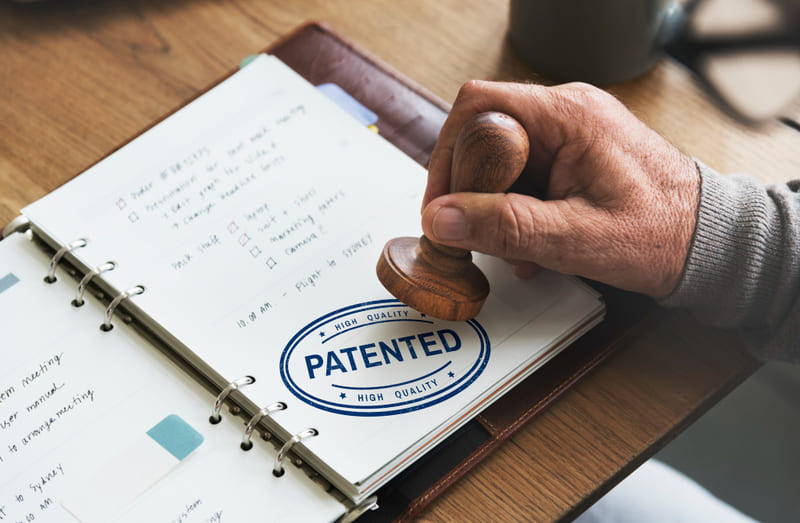
In this context, patent documents are gaining renewed attention. These documents are not only legal records, but also a rich source of technical knowledge. Through patent documents, industry players, academics, and policymakers can understand technology trends, market gaps, and the direction of global research.
As innovation competition intensifies, access to this information is key to accelerating product development, avoiding research duplication, and creating more focused innovation strategies.
For example, Indonesian startups developing online shopping applications need these documents to expand into other countries and avoid plagiarism risks.
Hence, discussing patent documents is now highly relevant for Southeast Asia, which is strengthening its position in the innovation economy.
Innovation Momentum Across ASEAN: Not Just About Numbers

Source: Freepik.com
The growth of patent applications in Singapore, Vietnam, Malaysia, Thailand, and Indonesia has continued to increase in recent years. However, this development is not only about the volume of applications.
More importantly, the movement of innovation quality is becoming increasingly evident across various strategic sectors. Many inventors and companies now understand that intellectual property protection is an essential part of the innovation journey, not just an administrative formality.
The quality of innovation in ASEAN is evident in the emergence of technologies tailored to regional needs. In the agritech sector, for example, there are an increasing number of solutions designed to cope with tropical climates, such as field-sensor-based pest-monitoring systems.
In the field of alternative proteins, local products are being developed, such as cassava- and microalgae-based plant-based meat, designed for supply chains that remain limited. Indonesia and the Philippines are also promoting research into nickel-based electric vehicle batteries, utilising large mineral reserves to produce more affordable energy storage technology.
In the fintech realm, microcredit and digital payment platforms are emerging that are specifically designed for the unbanked, using simple data analysis tailored to field conditions.
These innovations require more organised, technical, and structured documentation. Every technology has details and characteristics that must be clearly explained so that they can be understood, evaluated, and further developed.
With good documentation, innovators can avoid repetitive work, accelerate development, and create sharper technology strategies. ASEAN is no longer just chasing numbers; it is now building a strong, sustainable foundation for innovation.
Patent Documents as an Intelligence System: Underused but Powerful
Patent documents are often seen merely as legal instruments, even though their function is much broader. These documents are information systems that store technical knowledge, research directions, and innovation strategies of global players.
Every claim, image, and technical description in them can be read like an open database that shows how a technology has developed over time.
This document makes it easy to identify technology patterns. For example, the trend towards increased solar panel efficiency is evident in the emergence of patents for tandem cell structures. In biotechnology, research patterns are evident in the large number of patents for specific gene-editing techniques.
In the battery industry, an increase in patents for new anode materials often signals changes in energy storage technology.
Large companies have long utilised this analysis. Global technology companies map competitors by reading processor or artificial intelligence patents. Biotech companies trace cell culture method patent portfolios to gauge competitors’ research direction.
Electric vehicle manufacturers monitor solid-state battery patents to see who is approaching commercialisation.
However, many companies in ASEAN have not yet put this into practice. The reasons vary, ranging from a lack of experts to the perception that patent documents are too complicated and a lack of a culture of technical data-based research.
If local startups, factories, and universities adopt this approach, the impact could be significant. They could reduce research duplication, identify unexplored technological gaps, and accelerate product development.
By strategically utilising patent documents, innovation in ASEAN could develop more quickly and more focusedly.
Sectors Where Patent Documents Could Become Game-Changers

Source: Freepik.com
Several sectors in ASEAN offer significant opportunities to leverage patent documents as a source of strategy and innovation.
Each industry has unique characteristics that are clearly evident in the technology patterns recorded in thousands of global patent documents.
1. EV Batteries & Energy Transition
ASEAN has large nickel reserves, a strong manufacturing workforce, and ambitions to become a hub for electric vehicle production.
Patent documents on battery chemistry, such as nickel-based cathode technology or battery cooling, can help local companies understand research gaps.
For example, component factories can see battery module designs that are gaining popularity and adjust their production lines more quickly.
2. Agritech & Food Security:
Countries in the region have not widely patented tropical farming technologies. Yet the opportunities are vast, such as soil sensors designed for high humidity, heat-resistant seed engineering techniques, or automated shrimp farming systems.
By understanding global trends, companies can adapt relevant technologies to local conditions.
3. Healthcare & Biopharmaceuticals
Research into herbal remedies, vaccines, and low-cost medical devices is growing rapidly.
Patent documents may reveal ongoing research on herbal formulations or designs for simple medical devices, such as portable ventilators for remote areas.
4. Fintech & Digital Products
Tropical farming technologies in the region are still rarely patented. Examples include behaviour-based credit scoring algorithms or offline payment systems for areas without internet access.
5. Semiconductors & Electronics Assembly Upgrading
ASEAN is moving from mere assembly to chip design. Patent documents can help local players map new chip architectures or emerging semiconductor packaging techniques.
If utilised seriously, patent documents can become a technology roadmap that accelerates innovation across these sectors.
Barriers That Keep ASEAN from Unlocking Patent Potential
There are still many obstacles preventing ASEAN countries from optimally utilising patent documents. One of the biggest challenges is the weak documentation culture.
Many innovations occur in factories, workshops, and laboratories, but are not properly recorded, making it challenging to develop them further.
For example, locally developed crop-drying machine technology is often retained only as internal knowledge, without technical documentation.
Another obstacle is the shortage of experts who understand both technology and law. Professions such as patent engineers are still rare.
Many companies find it challenging to write technical descriptions that meet patent standards, for instance, when registering agritech sensor designs or simple robotic modules.
Language is also a real barrier. Thailand, Vietnam, and Indonesia often face problems when reading patent documents in English or Japanese. This slows down the process of learning from global technology.
On the other hand, the cost of prior art searches and document preparation is also considered expensive by many MSMEs, especially in sectors such as food processing or simple medical devices.
Fragmented regulations across ASEAN countries complicate collaboration. For instance, joint research between Malaysian universities and Indonesian companies is often hampered by differing data protection rules and filing procedures.
Many local companies also rely on internal know-how without formal protection. For instance, liquid fertiliser formulas or packaging machine designs are simply kept as company secrets, making them easy to copy.
The lack of university-industry integration exacerbates the situation. Much campus research does not result in patents because there are no industry partners ready to develop the technology. If these obstacles are not addressed, the patent potential in ASEAN will remain untapped.
The Expanding Opportunities for IP-Based Services and Deep-Tech Ecosystems
The demand for intellectual property-based services is skyrocketing in ASEAN. Many companies, startups, and universities are beginning to seek services such as patent drafting, technical translation, prior art searches, freedom-to-operate analysis, and technology landscape reports.
For example, battery startups in Indonesia now need FTO before selling prototypes to automotive manufacturers.
Cross-border collaboration is also growing rapidly and driving demand for IP services. For example, when a Thai agritech company collaborates with a Malaysian research institute, they need a landscape report to see what technologies have been patented in both countries.
This kind of collaboration makes documentation standards and patent processes increasingly important.
In the coming years, ASEAN has the potential to establish patent knowledge centres. Singapore could become a hub for deep-tech patent analysis; Kuala Lumpur is strong in technical translation and drafting; Jakarta is developing as a centre for prior art search services; and Ho Chi Minh City is well-suited for hardware and AI research. These centres could form the backbone of a regional deep-tech ecosystem.
The role of technology consultants, research institutions, and deep-tech incubators is also becoming increasingly important.
They can help startups understand their technological position through patent analysis. For example, incubators that focus on robotics can map out patent opportunities for teams developing low-cost robotic arms.
Universities also have strong opportunities to develop patent-based spin-offs. Research such as biodegradable materials or inexpensive health sensors can be the foundation for new companies.
If these opportunities are utilised, ASEAN can build a strong and sustainable deep-tech ecosystem.
What the Next 10–20 Years Could Look Like: Three Possible Scenarios
Over the next two decades, the direction of patent development in Southeast Asia could take several forms.
Each path depends on the readiness of governments, industries, and universities to build a culture of technology documentation.
1. Optimistic Scenario
ASEAN has become a centre for applied technology, particularly in sectors such as EV batteries, tropical agritech, and low-cost medical devices.
The number of local patents grows exponentially as companies begin to understand the importance of technical documentation.
For example, a component factory in Thailand can create new battery modules and register its patents globally. Universities in Indonesia create well-patented spin-offs in health sensor technology.
Cross-border collaboration also grows stronger, making the region a source of innovation rather than just manufacturing.
2. Moderate Scenario
Growth continues, but not as rapidly as expected. Many new technologies emerge, but only some successfully reach commercialisation. Several agritech start-ups may patent plant-monitoring tools, but still struggle to bring their products to international markets.
Large companies may diligently file patent documents, but SMEs and small factories remain hesitant due to costs and a lack of experts. ASEAN is slowly catching up, but still lags behind Korea or Japan in terms of the number and quality of patents.
3. Stagnation Scenario
Innovation continues to emerge, but it is not documented. Food processing machinery and portable medical device technologies are kept as internal know-how.
As a result, their economic value is lost, and foreign investors take patents for similar technologies. Local companies ultimately become users, not owners, of the technology.
These scenarios indicate that patent documentation will shape the future of innovation in ASEAN.
Conclusion: Patent Documents as the Hidden Frontier of ASEAN’s Innovation Rise
Patent documents can be an essential foundation for innovation in Southeast Asia. Many local technologies have great potential but are not yet well documented.
For example, automatic rice-harvesting tools made by local workshops or water-quality sensors for shrimp ponds are often stored only as internal knowledge.
If such technologies are written to patent standards, their value can increase and they can be developed more easily.
ASEAN is also moving towards a knowledge-based economy. Battery companies, agritech startups, and developers of low-cost medical devices increasingly need clear technical guidance.
Patent documents can serve as a technology map, helping them understand global trends and identify new opportunities.
Local universities and factories can also use patent analysis to avoid duplicating research and accelerate innovation. By utilising these documents strategically, ASEAN can open up previously unexplored frontiers.
In the process of creating patent documents, you need to work with a trusted service provider such as SpeeQual. We have a team of experienced patent document translators who will assist you.
With proper patent documentation, your innovations become more credible and legally protected against infringement. Want to be assisted by our experienced team? Contact us now!