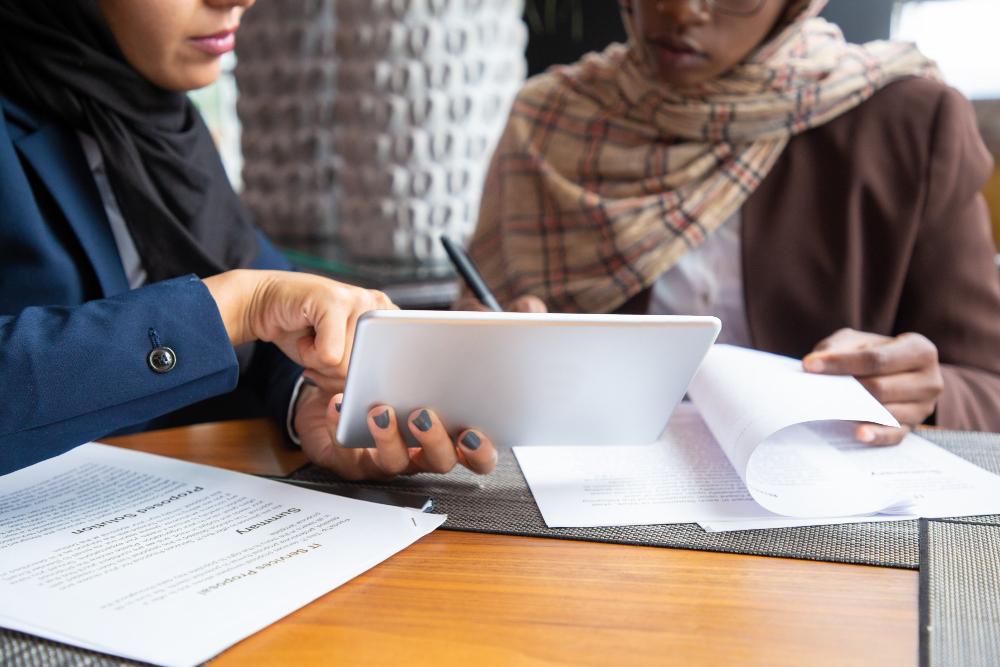

Category: Translation

  • The Silent Errors Hiding in Technical Translations and How Professionals Catch Them

    The Silent Errors Hiding in Technical Translations and How Professionals Catch Them

    Minor errors in technical documents are often considered trivial, but their impact can be far-reaching. In the world of engineering, a single incorrect term can alter how a machine is assembled, lead to misinterpretation of safety procedures, or cause a system to malfunction.

    Furthermore, such errors can lead to legal risks when specifications are not met and damage a company’s reputation in the eyes of international clients. 

    Amid rapid global industrialisation and cross-border operations, the need for technical document translation services is growing. Companies now have to navigate crossborder standards, multilingual documentation, and increasingly stringent quality requirements. 

    However, many companies still consider translation to be a secondary task that can be handled without specialised expertise, even with the help of AI. As a result, important documents are often processed by AI without human review, which is precisely where these silent errors creep in. 

    Technical translation professionals can catch these details. With their understanding of terminology, industry context, and multi-layered verification processes, they can detect ambiguities, inconsistencies, and potential functional errors that machines cannot see. 

    What Makes Technical Translation So Easy to Get Wrong

    Technical documents are not simply texts that can be translated word-for-word; they are complex logical systems. Every instruction, parameter, symbol, and writing style carries a specific functional meaning that must be thoroughly understood. 

    Imagine if the user guide for installing a washing machine were missing a single word of explanation, could lead to serious misuse or safety risk. 

    Even the most minor error can change the way a device or process is operated, posing safety risks and damaging the company’s reputation. This is why technical translation services require more than just language skills.

    The main pitfall for inexperienced translators is focusing only on words or phrases, without understanding their actual function or purpose. For instance, warnings, operational instructions, or technical descriptions have specific intentions that must be preserved for the document to remain safe and effective. 

    Another common mistake is ignoring critical safety-related phrases such as “must”, “should”, and “may”, which distinguish between obligations, suggestions, and possible actions. Incorrect translations in these areas can result in procedures being misapplied, potential accidents, or device failure.

    Technical translators understand that successful technical translation is not just about language, but about function. By examining the context, the author’s intent, and the terminology of the target industry, they capture important nuances that are easily overlooked, ensuring that documents remain accurate, safe, and reliable at all levels.

    The Silent Errors No One Notices—Until They Matter

    In the world of technical translation, minor errors can have a significant impact, but often go unnoticed until the document is used in the field. 

    Technical translators know that the biggest risk is not only incorrect language but also details hidden between words, in context, and in format.

    1. Terminology Echoes That Don’t Match

    Technical terms that appear lexically correct often confuse when applied in a system. For example, “bearing housing” may be translated as “rumah bantalan” in Bahasa Indonesia in one part of a document, but appear as “pelindung bantalan” in another. 

    Such minor differences can confuse technicians following assembly instructions, delaying the process or even damaging components. 

    In technical translation, terminology consistency is key to ensuring that each term refers to the same object or function throughout the document.

    2. Cultural and Contextual Shifts

    Errors also arise when terms are translated without considering the cultural or industrial context. For example, the word ‘tolerance‘ has a different meaning in engineering than in medicine. 

    At the same time, ‘hazardous area’ in the oil industry refers to a zone with a risk of explosion; in electronics, it can mean an area with high voltage. Without an understanding of the context, translations can be misleading and risky for the end user.

    3. Unit and Symbol Ghosts

    Units, symbols, and technical labels are often hidden pitfalls. Inconsistent unit conversions or symbols that appear correct visually in both languages can lead to operational errors. A simple example: pressure in psi translated to bar without updating the diagram, causing the user to read the wrong value. 

    In technical translation, attention to numerical details is as important as the words themselves.

    4. Formatting Blind Spots

    Technical documents rely on layout: diagrams, labels, and captions often carry critical information. Novice translators tend to focus only on narrative text, ignoring the visual context. 

    As a result, seemingly clear instructions can become ambiguous, and mislabelled diagrams can lead to assembly or tool usage errors.

    These invisible errors serve as a reminder that technical translation is not simply a matter of replacing words from one language to another, but rather a comprehensive understanding of the system, context, and visuals. 

    Experienced technical translators check terminology, cultural context, technical conversions, and formatting to ensure that documents remain accurate, safe, and reliable.

    Inside the Mind of a Professional Certified Translator

    Professional certified translators think very differently from ordinary translators. They do not simply translate word-for-word, but understand the function, context, and risks of each text. 

    They structure their work habits to ensure accuracy, security, and compliance. Here is how the professional technical translator works:

    1. Terminology Engineering 

    Instead of relying solely on static glossaries, professionals build dynamic term memories. Each project adds to internal references that help maintain term consistency in subsequent technical documents, especially in engineering fields full of specialized jargon.

    2. Dual Reading

    Professionals perform dual reading: first as readers, then as end users (e.g., engineer/operator). For example, engineers, doctors, or operators—to grasp the intent and function of the instructions. This approach prevents errors that can arise if the focus is solely on language.

    3. Risk Awareness

    We assess each section of text to determine its level of risk. You must check the phrase “safety-critical” repeatedly to prevent any misinterpretation of safety instructions and to protect both the device and its users.

    4. Compliance Awareness

    Professionals understand international regulations, such as ISO 17100, and sector-specific standards, including the EU MDR, IEEE, and ASTM. This knowledge ensures that documents are not only linguistically accurate but also legally compliant and in compliance with industry standards.

    With this mindset, technical translation is not just a linguistic task, but a combination of linguistic and technical expertise and mature risk awareness.

    How Technology Helps—But Never Replaces the Human Check

    In technical translation, technology is an essential tool, but it cannot replace human judgment. CAT tools, QA software, and terminology databases help maintain consistency in terminology, speed up revisions, and check for formatting or spelling errors. 

    For example, CAT tools allow translators to save and apply the same terms throughout a document, while QA software highlights inconsistencies and potential duplications.

    However, AI and machines are still limited in their understanding of domain context and legal risks. Machines can translate technical phrases literally—for example, ‘seal failure’ into ‘kegagalan segel’ in Bahasa Indonesia—but they do not know whether the term refers to a specific mechanical part or a leak in the entire system. 

    Errors like this can be highly consequential, especially in safety-critical or regulatory documents. In fact, they can lead to financial losses or legal problems.

    Therefore, professional technical translators always perform manual checks. They verify the context, function, and compliance with industry standards, ensuring that every term is accurate and in line with the author’s intent. 

    Technology speeds up and supports the process, but human accuracy remains the final layer of protection. It is this balance between modern tools and human judgment that ensures technical documents are not only linguistically correct but also safe, reliable, and compliant with regulations.

    The Business Cost of Overlooking Expertise

    Higher costs and risks occur when technical translation is not done by professional translators.

    Source: Unsplash.com

    Ignoring the expertise of technical translators can have costly real-world consequences. Incorrect translations can damage products and trigger recalls or denied warranty claims.

    In more serious cases, errors in technical documentation can cause workplace accidents, pose safety risks to operators, and significantly damage a company’s reputation. Beyond financial losses, companies may also face legal exposure.

    Meanwhile, the cost of correcting incorrect documents—including revisions, reprints, and litigation—is often far higher than the initial investment in professional services. Certified technical translators will ensure that every instruction, label, and warning is accurate, consistent, and compliant with industry standards. 

    Hence, the initial cost of professional services is far more cost-effective than dealing with avoidable errors. Technical translation is a long-term investment for the industry, minimising language risks and real business risks that have financial and reputational implications.

    Work with Professional Certified Translators Who Know the Difference

    In technical fields, professional translators are a must—such as SpeeQual’s certified and experienced team. Our technical translators understand that technical documents are not just language—they are critical guides, safety instructions, and legal references. 

    Our translators act as a bridge, delivering accurate, user-friendly documents with the right industry terminology. This helps your company evaluate safety risks and ensure compliance.

    With the right technical translation services, such as those provided by SpeeQual, companies not only obtain accurate translations but also protection against operational, legal, and reputational risks. 

    With over 27 years of experience, SpeeQual provides certified technical translators who make accuracy, consistency, and compliance integral to the entire process.

    Conclusion — Precision Is an Ethic, Not a Skill

    Higher costs and risks occur when technical translation is not done by professional translators.

    Source: Unsplash.com

    In the process of technical translation services, precision is not merely a linguistic ability; it is a professional ethic. 

    Technical documents dictate machine operation, safety procedures, and regulatory compliance. Minor errors can have significant consequences—product damage, legal risks, or even worker injury.

    Certified translators combine language expertise with a deep understanding of industry context, technical terminology, and compliance standards.

    They read documents as practical guides for end users, while a trusted team like SpeeQual ensures accuracy, compliance, and protects your reputation.

    We believe that quality and accuracy are not options—they are obligations. Thus, choosing professional services is a smart and ethical way to ensure every instruction and technical symbol works as intended. Does your company need a team of certified technical translators? Our team is here and delighted to assist you in any way we can.

  • The Hidden Value of Transcription Services in Handling Certified Legal Documents

    The Hidden Value of Transcription Services in Handling Certified Legal Documents

    In the legal world, linguistic accuracy and valid evidence are non-negotiable. Both play a crucial role in ensuring legal certainty, justice, and preventing potential misunderstandings or abuse of authority. 

    If we break down the explanation, legal certainty depends heavily on transparent, objective, and precise language. This is essential to prevent differing interpretations during implementation. 

    Legal certainty also protects individuals from arbitrary interpretations. For example, a defendant who should have received a 3-month sentence for theft could end up serving 3 years due to misinterpretation. 

    The role of valid evidence is to uphold justice, serve as a basis for decision-making, standardise legal processes, and protect the rights of various parties, from defendants to litigants.

    Then, there are legal documents that originate from recordings, such as court recordings, interviews, verbal agreements, or investigations. These recordings can be in audio and/or video form. 

    For example, courts often use recordings as the basis for official transcripts, which then form part of the court record. Recordings of interviews, whether with witnesses, suspects, or victims, contain original statements, which are essential for verification and potential use as evidence. These transcripts become primary legal evidence. 

    However, problems arise when the transcription and translation processes are imprecise. These errors can affect legal validity. 

    In fact, the transcription and translation processes should not alter filler words such as ‘like’, ‘you know’, ‘uh’, or ‘umm…’. This is to analyse the overall credibility of eyewitnesses, whether they are deceitful or purely honest. 

    Hence, to avoid such fatal errors, legal document transcription and translation services are needed.

    Professional transcription works meticulously on legal documents.

    Source: Freepik.com

    Transcription services accurately convert spoken audio or video into written text. In a legal context, these services play a vital role as the basis for official documentation used in various legal processes. 

    Transcripts help ensure that every statement, testimony, and conversation is accurately captured for analysis, evidence, and archiving purposes. Some examples of documents that require transcription include court recordings, legal interviews, investigations, solicitor-client meetings, and contracts or agreements recorded in audio or video format.

    However, the legal transcription process is not without its challenges. Poor recording quality, noise, and differences in accents and speaking speeds often make accuracy difficult. 

    This is especially challenging when the recording must be both transcribed and translated—for example, in a Malaysian trial involving foreign defendants. In addition, complex legal terms require special expertise to avoid misinterpretation. 

    Therefore, professional transcribers who understand legal terminology generally handle legal transcripts. These combined challenges are often too complex for general transcribers or translators. 

    Accurate transcription results form the basis for the creation of written legal documents, including certified translations. In this process, certified translators officially translate the transcribed text for use in courts or cross-border legal institutions. 

    Nevertheless, transcription services have a vital role in maintaining the integrity, clarity, and validity of legal documents.

    Accuracy as the Foundation of Legal Translation 

    Accuracy is the cornerstone of legal translation, as every word carries significant meaning and legal consequences. In this process, you must treat transcription as an essential first step. 

    Without an accurate transcription of audio or video recordings, the text that forms the basis for translation will not be valid. Even the slightest transcription error can alter how a document is interpreted in translation and, in turn, influence legal decisions.

    Even fillers must appear in legal transcription, as these small details can influence credibility assessments.

    Legal translation demands extreme precision, as one wrong word can change a sentence’s meaning and create serious legal consequences. For example, the difference between the terms ‘shall’ and ‘may’ in English can determine whether an action is mandatory or optional. 

    In addition, misinterpretation of the law can alter its substantive meaning and may even be misleading. The omission of essential words or phrases, such as “not” or ‘subject to’, can completely change the meaning of a statement.

    Unlike standard translations, certified translations come from sworn translators. They are accompanied by an official signature and certificate that guarantee the authenticity and accuracy of the source document’s meaning. 

    Legal and government institutions recognise these documents. Therefore, precise transcription is an absolute prerequisite for certified translations to be legally accountable and meet international validity standards.

    The Hidden Value of Transcription Services in the Legal

    Transcription services offer hidden value that people often overlook, yet this value is crucial in the legal field. One of its main benefits is providing a verifiable record for use in court or other legal proceedings. 

    This document serves as valid evidence and ensures that the court records every statement or testimony accurately. In addition, well-structured transcriptions expedite the certified translation process, as the text is ready for translation without extensive editing.

    Professional transcription services also help maintain consistency in legal terminology across languages, ensuring the legal meaning is preserved when documents are used in different jurisdictions. 

    For solicitors, notaries, and certified translators, high-quality transcription increases work efficiency, saves time, and reduces the risk of misinterpretation.

    Although artificial intelligence (AI) technology is now widely used, human expertise remains irreplaceable. Professional transcribers can understand legal context, tone of voice, and nuances of terminology that automated tools often miss. 

    The combination of technology and human expertise produces transcriptions that are not only accurate but also have strong integrity and legal value. Relying solely on AI means that the understanding of legal context in the transcript will not be as deep as that of a professional transcriber. 

    AI can transcribe quickly, but it cannot fully capture context, tone, and emotional intent—elements that are critical in legal settings.

    SpeeQual: Certified Translation and Transcription for Legal Documents

    SpeeQual is a provider of certified translation and transcription services that focuses on legal document requirements. With a team of sworn translators and professional transcribers who are experienced in the legal field, SpeeQual ensures that every word in a document has the correct meaning, accurate terminology, and legal validity. 

    This service is designed to support solicitors, notaries, legal institutions, and companies that require reliable and official translations and transcriptions.

    Our strength at SpeeQual lies in the combination of human expertise and advanced technology. Each transcription process is carried out meticulously to produce precise, unambiguous text that complies with legal standards. 

    Meanwhile, certified translations are accompanied by the signature and stamp of a government-recognised sworn translator, making them legally valid for national and international legal purposes. SpeeQual also guarantees data confidentiality through a Non-Disclosure Agreement (NDA).

    The types of documents that can be handled include legal contracts, notarial deeds, court decisions, business agreements, powers of attorney, court transcripts, legal interviews, and multilingual corporate documents. 

    With a quality, compliance, and trust-based approach, we not only provide legal language services but also act as a strategic partner to ensure every document is legally valid and credible. We also have three advantages: speed, quality, and solutions. 

    So, we deliver speed without compromising quality. Meanwhile, we will also listen to your every need so that we can provide the right solution.

    Building Trust Through Quality and Compliance

    Stellar transcription for legal documents enhances trust among law firms and clients.

    Source: Freepik.com

    Trust is a key element in legal language services, as every word transcribed or translated directly affects the validity of legal documents. In this context, providers of legal transcription and translation services must uphold accuracy, confidentiality, and compliance with applicable legal standards. 

    In Indonesia and Malaysia, for example, legal translations are only valid if carried out by sworn translators recognised by the government. This ensures that the translations have legal force and are acceptable to official institutions such as courts or government agencies. 

    If the transcription is inaccurate, the resulting translation will also contain legal flaws. This will cause law firms to lose their clients’ trust.

    Precise transcription quality is the foundation for such trust. Accurate transcription ensures that every fact, statement, and legal term is correctly recorded before being certified translated. 

    When the work is error-free, it not only guarantees the validity of the document but also builds a professional reputation for the law firm and its clients.

    Compliance with regulations and adherence to high standards demonstrate integrity and commitment to quality. 

    Thus, legal language services that prioritise accuracy and compliance do not merely provide text, but also build trust and credibility in the eyes of clients and legal institutions. These issues can be addressed through professional legal transcription services.

    Conclusion 

    Certified translation and professional transcription for legal documents are needed to ensure the accuracy, validity, and credibility of legal processes. Accurate transcription is the cornerstone of certified translation, providing clear and verifiable records of both spoken and written content. 

    Without accurate transcription, even translators cannot guarantee the legal integrity of the final document. Professional services ensure that complex legal terminology, names, dates, and contextual nuances are accurately conveyed, minimising the risk of misinterpretation. 

    Furthermore, certified translations performed by sworn translators provide legal recognition, allowing documents to be accepted in court, by government agencies, and in international transactions. 

    By combining human expertise and adherence to legal standards, our services at SpeeQual help law firms, notaries, and clients work more efficiently while maintaining trust and compliance. 

    This service is essential for anyone who needs accurate and valid legal documentation across languages and jurisdictions.

    Why choose SpeeQual as your partner for certified translation and transcription services? For more than 27 years, we have been trusted by clients to provide these services. 

    We also have a team of sworn translators and professional transcribers who are ready to assist you in streamlining your legal processes. Contact our team today to receive our best services!

  • What You Need to Know About Certified Translation for Patent Documents

    What You Need to Know About Certified Translation for Patent Documents

    In the world of global innovation, patent documents play a vital role in protecting research results and inventions from claims by other parties. Patent applications must provide a clear and complete description of the invention, enabling experts to reproduce and use it. 

    However, when patents are filed in different countries, language and legal system differences often pose a significant challenge. Even minor translation errors in technical descriptions or legal claims can lead to serious consequences, ranging from application rejection to costly legal disputes. 

    To reduce such problems, certified translation of patent documents is an investment that helps streamline the patent filing process abroad

    Certified translation ensures that a professional translator with official certification accurately translates every technical and legal term in a patent document. The translation is usually accompanied by a statement of authenticity and the signature of a certified translator, which attests to the validity of the document under international law. 

    This process not only maintains the integrity of the patent content but also speeds up registration across various jurisdictions. 

    Thus, certified translation for patent documents is an essential step for companies, researchers, and innovators who want to protect their intellectual property globally, ensuring that every innovation is recognised and protected without the risk of language errors or legal misinterpretation.

    Patent documents are legal documents that serve to protect exclusive rights to an invention. These documents usually consist of several main parts, namely a description, claims, technical drawings, and an abstract. 

    The description explains in detail how the invention works, while the claims determine the legal protection limits of the patent. The drawings help illustrate the technical concept, and the abstract provides an overview of the proposed innovation.

    The language and terminology in patent documents must be precise because a single word can significantly change the legal meaning. For example, the difference between ‘may’ and ‘shall’ in a claim can affect the extent to which patent protection is granted. 

    These inaccuracies often occur during translation, especially when patent documents are filed in different countries and languages.

    Translation errors in patent documents can have serious legal consequences. An inaccurate translation can result in patent rejection, loss of rights, or even legal disputes over overlapping claims.

    For example, a 2020 U.S. pharma case showed how a single mistranslated word can decide a patent dispute. Thus, certified accuracy is crucial to protect legal validity and commercial value.

    Why Patent Documents Require Certified Translation 

    A patent is not just a technical description of an invention, but a legal document that defines its protection and exclusive rights. Therefore, every word in a patent document carries significant legal weight. An inaccurate translation can distort a claim’s meaning, create misunderstandings, or even jeopardize patent rights. 

    For instance, when an Indonesian company applies for a patent in Vietnam, poor translation can hinder approval. This would make it difficult for the company to obtain a patent, and could even lead to legal problems.

    In addition, standard translations are not sufficient to ensure the legal validity of patent documents. Translating such documents requires a deep understanding of both technical terminology and legal language. 

    Even minor errors—wrong technical terms or misinterpreted legal sentences—can lead to serious consequences. Potential risks include application rejection, major financial losses, or even international legal disputes.

    Certified translation ensures your documents are handled by certified professionals who take full responsibility for their accuracy and authenticity. Many offices—such as the EPO, JPO, MyIPO, and Indonesia’s DJKI—require certified translations for local patent filings.

    Certified translation is not a formality but a vital step to ensure legal protection and avoid interpretation risks.

    The Process of Certified Translation for Patent Documents

    Translating patent documents involves strict, systematic steps to ensure accuracy, consistency, and legal validity. It starts with reviewing the patent’s description, claims, drawings, and abstract to grasp the innovation and its field.

    This initial analysis is crucial for determining the appropriate terminology and avoiding ambiguity.

    Next is the translation by professional experts with backgrounds in law and technology. These translators master both languages and understand the legal system of the destination country.

    Relying solely on word-for-word translation can create ambiguity as the legal systems in each country differ. 

    Terminology consistency is maintained using CAT tools and patent glossaries to ensure uniform technical terms throughout the document.

    The third stage involves quality control and certification. The translated document is reviewed to ensure there are no linguistic, terminological, or legal errors. 

    Once it passes review, a certified translator will provide official certification in the form of a statement of authenticity and a signature, guaranteeing the translation’s accuracy and legal compliance.

    The final stage is validation by the relevant authority to ensure the document is legally valid for patent registration or litigation.

    Through this process, patent translation becomes a crucial bridge between innovation, language, and law, ensuring strong protection across jurisdictions.

    Common Mistakes to Avoid in Patent Translation

    Legal issues may arise from errors in certified translation for a patent document.

    Source: Freepik.com

    In the process of translating patent documents, accuracy is a key factor in determining the success of patent applications at the international level. However, many common mistakes still occur and can have fatal consequences for patent applicants. 

    One of the most common mistakes is translating technical and legal terminology inaccurately. Translating technical terms literally, without considering the scientific context, can alter the meaning of the invention, while errors in legal terms can narrow or even invalidate patent claims. 

    For example, errors often occur when translating the Indonesian term ‘claim’ into Malaysian. In Malaysia, the word ‘claim’ means “demand”. However, the intended meaning of the word is ‘statement of rights’. Meanwhile, in Malaysia, ‘claim’ means a legal suit, not the limits of patent protection.

    Another mistake is using translators who are inexperienced in the field of patents. Patent documents are not only technical texts, but also complex legal documents. General translators without a technical or legal background often do not understand patent structure, industry terminology, or the required legal style. 

    In addition, ignoring differences in legal systems across countries can lead to misinterpretations, especially when patent rules in one jurisdiction differ from those in another.

    Another common issue is the failure to include an official certificate or the signature of a certified translator. 

    This can cause the document to be deemed invalid by the patent office, potentially resulting in application rejection, additional costs for revisions or retranslation, and even legal disputes in the event of interpretation differences. 

    To prevent such issues, every international patent application should always undergo a translation process carried out by a professional, legally recognised translator.

    Professional Certified Translation Services: Ensuring Global Protection

    Certified translators team working carefully to deliver accurate patent document translations.

    Source: Freepik.com

    Choosing a professional, certified translation service for patent documents is crucial to maintaining their quality, accuracy, and legal validity. 

    Patent documents are not merely technical texts, but also contain legal claims that determine the limits of protection for an innovation. 

    Therefore, only certified professional translators with expertise in technical and legal fields can speed ensure that every term is translated correctly and consistently.

    Certified translation services help clients secure their patents in various countries by providing translations recognised by international patent institutions. 

    They also help streamline the patent application process for your business when applying for patent rights for an invention or product. 

    Each translation is accompanied by a certificate of authenticity and the signature of a certified translator, attesting to the document’s validity under the law. 

    With this kind of professional support, companies, researchers, and innovators can expand their intellectual property protection globally without worrying about rejection, language errors, or misinterpretation of the law.

    SpeeQual provides patent document translation with fast results, without compromising document accuracy. 

    Our team of experienced certified translators ensures accurate and consistent translation of your patent documents. 

    Not only do we have the skills, but we have also been trusted by many clients for 27 years. Accuracy and precision are the keys to our service. It’s time to take your business to the next level with certified translations for your patent documents — made easy with SpeeQual!

  • High-Quality Medical Translation Backed by Certified Experts in Southeast Asia

    High-Quality Medical Translation Backed by Certified Experts in Southeast Asia

    Health trends across the ASEAN region show a significant rise in cross-border patient mobility. Many patients now choose to travel to neighbouring countries to obtain better, faster, or more affordable medical services. 

    This phenomenon, known as medical tourism, has driven a growing demand for reliable medical translation services. In this context, medical translation has become increasingly important to ensure accurate communication among patients, doctors, and healthcare institutions.

    The main challenge in ASEAN patient mobility is language and cultural differences. Mistranslation of medical terms or misinterpretation of cultural context can have serious implications for patient safety. 

    Therefore, medical translation must be carried out by professionals with a deep understanding of medical terminology, clinical procedures, and the cultural nuances of each country. For instance, medical translators must accurately convey medication dosages, procedure explanations, and descriptions of illnesses.

    Beyond communication, translation accuracy is also closely linked to legal compliance, particularly in medical documents, treatment consent forms, and patient records. Minor errors can pose legal risks for hospitals and medical personnel. 

    Hence, the strategic role of medical translation in supporting a safe, efficient, and reliable cross-border healthcare system in the ASEAN region cannot be overstated.

    The Stakes of Inaccurate Medical Translation

    Errors in medical translation can have serious consequences for patients and healthcare institutions. A common example is the mistranslation of medical prescriptions. 

    For example, the medical term ‘once daily’ incorrectly translated as ‘once every hour’ can lead to overdose and endanger the patient’s life. Another example is errors in translating informed consent, where patients do not fully understand the risks of medical procedures due to ambiguous or incomplete translations. 

    A concrete example is the case of Willie Ramirez. His family said he was intoxicado, meaning he was poisoned. However, the translator mistakenly translated it as ‘drunk,’ so the medical staff treated him for a drug overdose. Ramirez was actually experiencing a brain haemorrhage, and due to incorrect and delayed treatment, he suffered permanent paralysis.

    The impact is felt not only by patients but also by hospitals and healthcare professionals. Patients may experience severe side effects, lose trust in the healthcare system, and even take legal action. 

    For hospitals, translation errors can lead to lawsuits, reputational damage, and significant financial losses. Legally, inaccurately translated medical documents may also be deemed invalid, with implications for legal compliance and professional liability.

    Therefore, accuracy and linguistic competence are not just language matters but crucial to patient safety and institutional integrity. High-quality translation is the foundation of trust and safety in cross-linguistic medical communication.

    Certified Translation: Guaranteeing Accuracy and Trust

    Team of certified medical translators collaborating to provide accurate and reliable medical translations.

    Source: Freepik.com

    The role of certified medical translators is increasingly crucial in today’s multilingual healthcare sector. The demand for these professionals is on the rise, driven by the need for accurate and reliable cross-language medical communication. 

    A certified medical translator doesn’t just translate word-for-word. They also grasp the medical context, technical terminology, and legal implications of each translated document, making them an indispensable part of the healthcare system.

    Professional standards for medical translators are usually set by internationally or regionally recognised certification bodies, such as the IMIA (International Medical Interpreters Association), the ATA (American Translators Association), or national translator associations in ASEAN countries, such as the Malaysian Translators Association (MTA) or the Indonesian Translators Association (HPI). 

    Such certification ensures that translators possess linguistic expertise, medical competence, and a strong grasp of ethics and patient confidentiality. In addition, certification signifies the translator’s ability to handle essential documents, such as medical records, informed consent documents, clinical trial documents, and laboratory reports, with a high degree of precision and professionalism.

    Certified medical translation is not a simple word-for-word task. It’s a comprehensive process that requires an understanding of the clinical context, cultural adaptation, and the ability to ensure that medical meanings and instructions remain consistent across different healthcare systems. 

    Certified medical translators are not just translators; they are bridges that ensure patient safety, legal compliance, and the credibility of medical institutions. The quality of their translation is the primary foundation of safe and reliable cross-language healthcare services.

    Localization Considerations in Southeast Asia

    In the context of medical translation, Southeast Asia presents unique challenges due to the diversity of languages, cultures, and healthcare systems across countries. Indonesia, Malaysia, Thailand, Vietnam, and the Philippines have different medical terminology, communication styles, and legal standards. Localization, the process of adapting translations to the local context, is an essential step in ensuring that medical messages remain accurate and easily understood by healthcare professionals and patients alike.

    In Indonesia and Malaysia, many medical terms are derived from English but adapted differently.” The word stroke is translated as ‘stroke’ in Indonesia, but is often referred to as ‘angin ahmar’ in the Malay medical context. In Thailand, medical terms written in the Thai script require translators familiar with medical transliteration. 

    Meanwhile, in Vietnam, the medical terminology system is influenced by French, such as vitamin C, which is called vitamin Cô-sê. In the Philippines, the use of a mixture of English and Tagalog (Taglish) requires translators to adjust the tone and terminology to remain formal in a medical context.

    In addition to language, medical writing styles also differ. Medical reports in Indonesia tend to be descriptive, whereas in Thailand and the Philippines, they are more technical. Differences in local laws and medical standards are also significant, for example, the format of informed consent or drug labels, which are regulated by each country’s regulations.

    These challenges require translators to master not only language but also each country’s culture and healthcare system. A medical translator in ASEAN must be able to perform accurate localization to ensure cross-border medical communication remains safe, clear, and compliant with regulations.

    Introducing Our Certified Medical Translation Services in Southeast Asia

    SpeeQual Translation stands out as a trusted provider of medical translation services in Southeast Asia. Our deep understanding of how every word in a medical document can impact patient safety and clinical decisions sets us apart. We have designed our services to handle a wide range of medical documents, including medical devices, software, prescriptions, clinical trials, records, consent forms, and more.

    At SpeeQual Translation, our strength is our team of certified medical translators. Each member is highly experienced and possesses a deep understanding of medical terminology across various ASEAN languages, including Indonesian, Malaysian, Thai, Vietnamese, and Filipino. With their extensive regional experience, we can tailor translations to each country’s cultural context and local medical standards.

    At SpeeQual Translation, we not only ensure linguistic accuracy but also uphold the highest data security standards in accordance with international regulations. This includes those governing the protection of patient confidentiality. All our translation processes undergo multiple stages of review to guarantee precise, ethical, and legal results.

    With SpeeQual Translation, you get more than just a translation service. You get certified human expertise plus quality control, ensuring accurate, secure, and reliable medical translations across Southeast Asia. Our commitment to accuracy and reliability is designed to make you feel secure in your choice of translation service.

    Technology and Human Expertise in Medical Translation

    Certified medical translators’ role can never be replaced with advanced technology

    Source: Unsplash.com

    Machine translation is increasingly common in modern medicine for fast, efficient text translation. This technology speeds up translating large medical documents like research reports, clinical data, and publications. While fast, machine translation struggles with context, technical terms, and cultural nuances vital in medical communication. Relying solely on machine translation could potentially lead to misinterpretations and errors, underscoring the need for human oversight.

    On the other hand, human-certified translation remains the gold standard in medical document translation. A certified medical translator preserves meaning, clinical context, and legal accuracy—not just words. Even minor translation errors in prescriptions, diagnoses, or consent can endanger patients and create legal issues. In addition, certified translators are bound by a professional code of ethics that guarantees the confidentiality and integrity of patient data.

    The ideal solution combines translation technology with certified human oversight. Machines can handle large volumes quickly, while certified translators ensure that the final result remains accurate, legal, and ethical. This synergy results in efficiency without compromising safety and reliability in the translation of cross-language medical documents.

    Conclusion: Why Certified Medical Translation is a Must in Southeast Asia

    In Southeast Asia’s multilingual and multicultural healthcare landscape, your role is crucial. Certified medical translation is a necessity to ensure patient safety, legal compliance, and reliable medical communication. 

    Differences in language, terminology, and regulations between countries require your expertise and the support of trained and certified translators. 

    Only certified medical translators can ensure accurate, ethical, and standards-compliant translations. In today’s cross-border and digital healthcare era, certified medical translations are key to trust, professionalism, and safety in Southeast Asia.

    As a trusted provider of medical translation services, SpeeQual prioritises accuracy, confidentiality, and speed without compromising quality. Our certified medical translators know Southeast Asian languages and medical terms, bridging patients and healthcare providers. 

    Become relevant and trusted with the help of SpeeQual’s medical translation services! Contact our team for more information!

  • Legal Translation in Southeast Asia: Opportunities and Business Insights for 2026

    Legal Translation in Southeast Asia: Opportunities and Business Insights for 2026

    Southeast Asia is increasingly attracting foreign direct investment (FDI) as a prime business destination. This aligns with the region’s consistent and resilient economic growth.

    This is driven by regional integration initiatives such as the ASEAN Economic Community (AEC), shifts in global supply chains, and the rise of the digital economy. This significant economic growth is seen as a bright spot amid global economic uncertainty. 

    Meanwhile, average GDP growth in Southeast Asia has averaged between 4% and 5% over the past decade. The long-term growth trend projections for the region remain strong, although the short-term outlook is expected to slow to 4.3% in 2025-2026. 

    Amid this economic expansion, legal translation plays a vital role in enabling smooth and compliant business operations across the region.

    So, why is legal translation essential for the success of international transactions? In fact, many businesses face legal challenges that hinder smooth operations. One of these challenges is the difference in regulations and policies in the target country. 

    For example, if you are working with a client from Malaysia, the policies will be different from those in Vietnam. Therefore, legal translation acts as a bridge between your business and the target country.

    Legal translation serves as a bridge between businesses in Southeast Asia, a region known for its linguistic and legal diversity. Each country has its own official language and local dialects, compounded by differences in legal systems that include civil law, common law, customary law, or religious law. 

    Remarkably, more than 1,200 languages are spoken across the region. The colonial historical background also contributes to the legal landscape in the countries in this region. 

    This complexity means legal translation goes beyond mere word conversion—it demands a deep understanding of the legal context behind every term and procedure. Without an in-depth understanding, translations can lead to misinterpretations, which can be risky for contracts, litigation, or regulatory compliance.

    Commonly translated legal documents include business contracts, international trade agreements, court documents, notarial deeds, laws, government regulations, and corporate documents. 

    These documents are often sensitive and require a high degree of accuracy, so legal translators must have linguistic skills, cross-border legal knowledge, and maintain confidentiality.

    With a multilingual environment and diverse legal systems, legal translation in ASEAN demands specialised expertise. 

    Professionalism, accuracy, cultural awareness, and confidentiality are key to ensuring that translated legal documents are understandable and legally valid in various jurisdictions. 

    Providing legal translations in Southeast Asia presents several unique challenges, given the region’s diverse legal systems and linguistic complexity. Each country has its own legal framework, ranging from civil and common law systems to customary or religious laws. 

    This diversity leads to significant differences in legal terminology, concepts, and procedures. For legal translators, a word-for-word approach is rarely sufficient; an understanding of the underlying legal context is essential to ensure translations remain accurate and meaningful. 

    Misinterpretation of legal terms can have serious consequences, including misunderstandings in contracts, litigation, and regulatory compliance issues.

    Another significant challenge is maintaining the accuracy and confidentiality of documents. Legal documents often contain sensitive information, such as contracts, company records, or court documents. Translators must be meticulous in preserving the meaning of each clause while protecting the confidentiality of the information. Even minor errors can lead to misinterpretation or legal disputes. Moreover, variations in legal style and document formatting further increase the complexity of the translation process.

    To address these challenges, legal translators in Southeast Asia must combine deep language skills with a strong understanding of local legal systems. They typically use specialised glossaries, ongoing training, and strict confidentiality protocols. 

    Nevertheless, the region’s diverse laws make legal translation a field that demands a high level of expertise. 

    Demand for legal translation in Southeast Asia is projected to increase in 2026

    Source: Freepik.com

    By 2026, demand for legal translation is projected to rise alongside growth in foreign investment and the expanding digital economy. The region is an attractive destination for multinational companies seeking to expand their operations in manufacturing, technology, and digital services. 

    Foreign investment requires drafting contracts, joint venture agreements, licensing documents, and cross-border legal reports. All of these documents must be accurately translated to comply with local laws and be understandable to international parties.

    In addition, the development of the digital economy has led to new regulations on e-commerce, data protection, and online transactions. Companies must ensure legal compliance in various jurisdictions, thereby increasing the demand for translations of legal documents and local regulations. 

    This phenomenon, known as compliance localization, involves adapting legal documents—such as data privacy policies or e-commerce regulations—to align with local laws.

    This trend requires legal translators to possess dual expertise: strong linguistic skills and a deep understanding of business and technology regulations across ASEAN countries. Professionals capable of bridging linguistic and legal differences have become invaluable assets for international companies. 

    With the growth of investment and the digital economy, the legal translation sector is expected to continue expanding, becoming a key component in supporting business expansion and legal compliance in the region.

    Business Opportunities for Legal Translation Providers

    Legal translation providers face promising opportunities as global demand for accurate, compliant documentation continues to grow. Sectors with high demand include multinational companies, law firms, banking, insurance, and government sectors, which require contracts, international agreements, licences, and legal regulations in various languages. 

    In addition, the rise of international trade and foreign investment has created opportunities for translating deeds, compliance documents, and litigation materials. Specialisation is key to differentiation in this market, allowing providers to stand out by focusing on niche areas such as commercial law, taxation, or intellectual property. 

    Local branding can also increase client trust, for instance, by emphasising an understanding of the national legal context as well as the speed and accuracy of the service. Service providers can leverage advanced translation technology as an added value, while maintaining the crucial aspect of legal expert validation. 

    With the right specialization and branding strategy, legal translation providers can expand globally while fulfilling domestic legal requirements.

    Technology, Quality, and Trust in Legal Translation

    The combination of technology and quality will create trust in legal translation.

    Source: Freepik.com

    In the world of legal translation, technology, quality, and trust are closely intertwined. The role of artificial intelligence (AI) and the MTPE (Machine Translation Post-Editing) process is increasingly important in improving efficiency, enabling legal documents to be translated more quickly without compromising on consistency of terminology. 

    However, legal texts demand precision and contextual understanding—areas where human translators remain indispensable. They are essential to ensuring both accuracy and legal compliance.

    Meanwhile, the quality of a translation depends not only on speed but also on the translator’s ability to capture legal nuances and technical terms. In addition, professional certification and translation service providers’ track record are essential factors in building client trust. 

    Legal clients, including law firms, companies, and government agencies, prioritise data security, terminological accuracy, and legal certainty. 

    By combining advanced technology, human expertise, and professional certification, legal translation service providers can offer fast, accurate, and reliable services in the global market.

    Professional Legal Translation Services in Southeast Asia: A Local Advantage

    SpeeQual offers professional legal translation services that can serve as your bridge to doing business in Southeast Asia. SpeeQual’s legal translation team combines deep legal expertise and regional insight, allowing us to understand the unique legal nuances of each ASEAN country. 

    SpeeQual’s strength lies in the combination of certified legal translators, advanced translation technology such as MTPE and CAT, and a rigorous quality assurance process. This service is designed to meet the demands of accuracy, speed, and security that are very important to legal clients. 

    SpeeQual’s focus is on providing solutions that are relevant to the local legal context while maintaining international standards. Trust, confidentiality, and timeliness are at the heart of our service. Every document is handled with strict confidentiality and delivered punctually. 

    With a strong local approach and a trusted reputation, SpeeQual is a strategic partner for your business’s high-quality legal translation needs, helping you stay relevant in the legal landscape in Southeast Asia. 

    Conclusion: The Future of Legal Translation in Southeast Asia

    The future of legal translation in Southeast Asia promises significant growth as international trade, foreign investment, and regulatory complexity in the region increase. The demand for accurate legal documents, ranging from business contracts and cross-border agreements to compliance documents, continues to rise. 

    Technology—including AI and MTPE—will continue to enhance efficiency and consistency. However, certified human translators will still be needed to ensure accuracy and legal compliance. In addition, a focus on quality, confidentiality, and timeliness will be key factors in building client trust. 

    Translation service providers that can combine local expertise with international standards will have a competitive advantage. With a strategic approach that emphasises regional legal specialisation, professional certification, and technology, SpeeQual can help you do business more easily while complying with the law in Southeast Asia. 

    With translation services covering more than 10 regional languages, our legal experts help bridge the gap between your business and target markets across Southeast Asia. Get ready to strengthen your business presence in Southeast Asia with SpeeQual’s expert legal translators. Contact us today for more information!

  • Why Machine Translation Post-Editing Is the Future of Localization

    Why Machine Translation Post-Editing Is the Future of Localization

    Can machines ever truly replace human translators? This question grows more relevant as AI rapidly transforms work—including translation, which once was slow, costly, and required expert oversight. However, with MT systems like Google Translate and DeepL, translation is now faster and more efficient.
    MT technology has revolutionised the language industry by processing millions of words in a matter of seconds. Global companies now rely on MT to meet their large-scale localization needs, from technical documents and websites to internal communications. 

    The main advantage of MT is its speed in processing large text volumes and meeting the demand for instant results.

    However, behind these advances, there is a growing awareness that machine translation results are still not perfect. MT is often unable to capture context, cultural nuances, and distinctive language styles. This is where the human touch remains irreplaceable. 

    The combination of machine speed and human precision through the machine translation post-editing (MTPE) process is the ideal solution, merging technological efficiency with human linguistic accuracy. This is the new direction for the future of localization.

    What Is Machine Translation Post-Editing (MTPE)?

    Machine Translation Post-Editing (MTPE) is a process in which human translators refine translations produced by machines. In practice, machines such as Google Translate or DeepL automatically generate initial translations, which human translators then refine to ensure accuracy, fluency, and contextual relevance. MTPE bridges the gap between technological speed and human linguistic sensitivity.

    There are two main levels in MTPE. First, light post-editing, which focuses on correcting the basic meaning and structure so the text can be understood correctly. At this level, style and nuance are not yet a priority; the important thing is that the message is conveyed accurately and efficiently. 

    Second, full post-editing, which is a comprehensive editing process that corrects grammar, style, word choice, and cultural nuances so that the final result is equivalent to a professional human translation.

    MTPE aims to balance speed, cost, and quality. By leveraging the power of machines to handle large volumes and high speeds, and human precision to ensure quality and accuracy, MTPE is the ideal solution in the modern translation industry. 

    This approach enables fast yet high-quality translations, perfectly suited for the global content demands of today’s businesses.

    Why MTPE Matters in Modern Localization

    In this fast-paced digital age, Machine Translation Post-Editing (MTPE) has become an integral part of the modern localization process. MTPE enables localization teams to handle multilingual content much more quickly than manual translation alone. 

    By leveraging the speed of machine translation (MT) and human expertise, companies can translate thousands of words per day without compromising quality. 

    For example, a localization team handles content for Indonesian and Chinese. Manual translation would take much longer, whereas MTPE allows the work to be completed far more efficiently.

    This approach is particularly relevant for multiple industries that rely on cross-language communication, such as e-commerce, the gaming industry, legal, marketing, and technology. 

    In e-commerce, for example, thousands of product descriptions must be translated into multiple languages to reach global markets. 

    In the gaming industry, dialogue and user interfaces need to be localised to suit each country’s culture. MTPE helps speed up this process without losing accuracy or content appeal.

    One of the main benefits of MTPE is increased cost efficiency and accelerated time-to-market. Since machines do most of the initial work, translation costs can be significantly reduced. Meanwhile, human editors ensure the final result remains natural and high-quality. 

    As a result, MTPE isn’t just a linguistic solution—it’s a competitive business strategy that allows companies to launch products, campaigns, and updates faster than ever before.

    For example, many global companies now use MTPE to accelerate cross-border product launches. Instead of waiting months for traditional localization processes, they can adapt content in a matter of weeks or even days. 

    As a result, MTPE is not only a technological solution but also a crucial business strategy in the face of increasingly fierce global competition.

    The Human Touch: Where Machines Still Fall Short

    The role of human translators can’t be completely replaced by MTPE.

    Source: Freepik.com

    Although artificial intelligence (AI) and machine translation (MT) technologies continue to develop rapidly, there are still limitations that machines struggle to overcome.

     AI can translate words quickly and accurately from a technical standpoint, but it often fails to grasp cultural context, emotions, and subtle linguistic nuances. 

    Human language consists not only of structure and grammar, but also of implied meanings, emotional expressions, and cultural values that algorithms still struggle to grasp. Therefore, the role of humans cannot be replaced by sophisticated AI.

    Human translators have a sense that AI lacks. Only human translators can accurately interpret idioms, tone of voice, and technical or industry-specific terms. For example, in marketing, overly literal translations can diminish the emotional appeal of a message. In legal or medical texts, minor errors in word choice can lead to very different meanings.

    This is where the balance between technology and human sensitivity comes in. Machines can help speed up the process, but humans remain the guardians of meaning. As a modern saying often quoted in the world of translation goes:

    ‘AI translates words, humans translate meaning.’

    This sentence clearly illustrates that artificial intelligence may be able to understand language, but only humans are capable of understanding the meaning behind it.

    MTPE Best Practices for Quality Localization

    In order for MTPE to produce optimal localization, well-planned strategies and best practices are required. MTPE is not merely about improving machine translation results, but also ensuring that the message conveyed remains consistent with the communication objectives and brand identity. Here are some important guidelines that need to be applied in every MTPE project.

    First, choose a translation engine suitable for the domain or industry. Each machine has different strengths and weaknesses; for example, some excel at technical texts, while others are better at marketing content. Choosing the right machine will reduce the number of corrections needed in the post-translation stage.

    Second, use a glossary and translation memory. Both help maintain consistency in terminology, style, and tone throughout the project, especially if the content is translated by multiple translators. This also speeds up the editing process and improves cost efficiency.

    Third, implement thorough quality assurance (QA) and linguistic review. Quality assurance (QA) ensures there are no grammatical, translation, or contextual errors, while linguistic review ensures natural and culturally appropriate text.

    In addition, involve experienced translators, not just regular editors. Professional translators understand the nuances of language and can adjust their tone to remain consistent with the brand’s image and values.

    The last step is to maintain consistency in style and brand voice. In localization, consistency in language style creates a cohesive and professional user experience across all markets. By implementing these practices, MTPE not only increases speed but also ensures the quality and credibility of global communication.

    The Future Outlook: AI and Human Collaboration

    The future of translation and localization is no longer simply a matter of choosing between humans and machines, but rather how the two can collaborate intelligently. The current trend is toward hybrid systems that combine the power of MT with human intelligence and sensitivity. Machines provide speed, scale and efficiency, while humans ensure accuracy, cultural context and natural language style.

    In this context, MTPE acts as a bridge between technology and linguistic quality. MTPE enables global companies to deliver scalable localization solutions, where MTPE can handle large volumes of multilingual content without compromising quality. 

    This approach gives international brands the flexibility to expand their market reach quickly, efficiently, and in a culturally relevant manner.

    Looking ahead, the emergence of new technologies such as adaptive MT and Large Language Models (LLMs) will further strengthen this synergy. Adaptive MT can learn from human corrections and adjust translation results contextually, while LLMs provide deeper semantic understanding and the ability to generate more natural language. 

    The combination of the two makes the localization process faster, more innovative, and more cost-effective. This enables the translation process to be more targeted and culturally appropriate for the destination country.

    At the end of the day, the future of the translation industry is not about AI versus humans, but rather AI plus humans. Artificial intelligence provides the foundation for efficiency, and humans provide meaning and soul to language. 

    This collaboration is the key to an era of localization that is more inclusive, adaptive, and focused on the true quality of global communication.

    Choosing the Right Partner for MTPE and Localization Success

    We work hand in hand to deliver the best service in localization

    Source: Freepik

    The success of MTPE and localization projects depends not only on the technology used, but also on partners who can balance machine efficiency with human linguistic quality. There are several important criteria to consider when choosing an MTPE partner. First, choose a partner with a proven track record in multilingual projects and deep understanding of cross-industry linguistic challenges. Second, ensure they use advanced translation engines, translation memory, and quality assurance systems to ensure consistency and efficiency.

    Third, industry specialisation is also essential. Each sector, such as legal, medical, gaming, or marketing, has its own unique language and terminology that requires specialised expertise. Last one: ensure the service provider has quality assurance and a multi-layered review process to ensure the final result meets high standards.

    With the right partner like SpeeQual, MTPE can be an effective localization strategy, combining the speed of technology and the accuracy of human translators so that you can compete in the global market. We have a reliable team ready to assist you with the localization process, with experts in their fields who are proficient in more than 10 Asian languages, including English, of course. We also prioritise speed while maintaining quality to ensure our clients’ satisfaction. 

    Let us help your brand stay relevant in every target market. Contact SpeeQual today to discover how our MTPE and localization solutions can elevate your global presence.

  • The Critical Role of Translation in Legal Documents

    The Critical Role of Translation in Legal Documents

    Legal documents differ significantly from ordinary texts because they are not just collections of words but binding instruments with legal consequences. Every word, phrase, and punctuation mark in a legal document has a specific meaning in a legal context. 

    Legal translation requires absolute precision, as even a single mistranslated word can alter the interpretation of rights, obligations, or responsibilities. This precision is crucial, given that legal documents such as contracts, court rulings, patents, and international agreements form the basis of justice, governance, and business activities. 

    One incorrectly translated term can have far-reaching consequences, ranging from legal disputes and financial losses to the invalidation of documents. For example, an error in translating a single clause in a contract can alter the balance of obligations between the parties or create a legal loophole that one party could exploit. 

    In a cross-border context, where differences in legal systems and legal terminology are significant, the risk of misunderstanding is even higher. Thus, legal translation is not merely a linguistic task, but also a legal function that requires a deep understanding of both languages and legal systems. 

    Therefore, accuracy, consistency, and contextual appropriateness are essential to preserve the same legal force, intent, and validity as the original text.

    Legal translation faces unique challenges because legal language is highly technical, rigid, and deeply rooted in specific legal systems. Unlike everyday language, legal terms have specific meanings and cannot be interpreted freely. 

    Legal texts are often written in formal, archaic, and highly context-dependent language, in which a single term can carry significant legal implications. This involves translating legal documents that are far more complex than general translation, as it requires not only linguistic accuracy but also a deep understanding of legal concepts and systems.

    Each country has its own legal framework, such as common law in the UK and civil law in Indonesia, which have different principles and terminology. For example, the English legal term ‘consideration’ refers to something of value exchanged between the parties and is a key requirement for a contract to be valid under the standard law system. 

    However, in the context of Indonesian law or the civil law system, the concept of ‘consideration’ is not understood in the same way; contracts are generally based on “agreement” and ‘lawful causa.’

    These differences make this translation service indispensable. A legal translator must bridge not only the language gap, but also the conceptual gap between legal systems to ensure that documents remain accurate, valid, and contextually appropriate. Such efforts ensure that the translated document remains valid and relevant within the target country’s legal framework.

    In today’s globalized economy, legal translation has become indispensable across sectors — from corporate and trade agreements to court rulings and immigration documents. Many types of documents require accurate, legally compliant translations to remain clear, valid, and usable across countries.

    One of the most common examples is a business contract, which sets out the rights, obligations, and penalties between the parties. When companies engage in international trade or investment, each clause must be translated accurately to prevent disputes or misunderstandings. The same applies to cooperation agreements or memoranda of understanding (MoUs), which often involve parties from different legal systems and require precise meaning.

    Another important type of document is corporate regulations and internal corporate policies, especially for multinational companies. The translation of these documents ensures that all employees and subsidiaries in different countries understand and comply with the same legal and internal compliance standards. 

    In the export-import sector, accurate translations of permits, licences, and customs documents are also essential to meet international trade requirements and avoid costly legal delays. Additionally, court documents, such as verdicts, affidavits, and legal evidence, often require professional translation, especially in cross-border litigation or arbitration cases. 

    Similarly, patents and intellectual property documents must be translated carefully so that their legal protection remains valid in foreign jurisdictions. This is where professional court document translation becomes essential.

    Meanwhile, legal certificates such as birth certificates, marriage certificates, and police clearance certificates often require certified translations for immigration, education, or company verification. Accuracy, confidentiality, and contextual understanding are key to ensuring that the translation has the same legal force and is recognised internationally.

    Illustration risk of poor legal translation services Title Tag: -
    Freepik.com

    Errors in legal translations can have serious consequences, both legally and financially. Because legal documents are legally binding, even a single mistranslated term can distort the meaning of the text and lead to serious legal or financial repercussions. Inaccurate translations can render contracts invalid, trigger lawsuits, or even result in fines and regulatory violations.

    For instance, imagine a cooperation contract between an Indonesian skincare company and a foreign partner, which is a large skincare manufacturer, that includes a clause on ‘termination without cause’. 

    If this is mistranslated as ‘cancellation without clear reason’, when it should mean ‘termination of contract without breach’, this could alter the legal position of the parties. The Indonesian company may feel it has the right to terminate the contract at any time, while the foreign partner may believe the opposite. 

    This difference in interpretation could trigger legal disputes, damage business relationships, and reputations, and even cause significant losses. Thus, a single word difference in a legal document can have fatal consequences, including financial losses for the business.

    In other contexts, mistranslating legal terms such as ‘liability,’ ‘indemnity,’ or ‘consideration’ could also alter the legal responsibilities that certain parties should bear. Such errors often occur when translators do not understand the underlying legal context.

    Therefore, legal translation must be entrusted to professionals who possess deep expertise in both languages and legal systems. A legal translator must understand the specific legal terminology of the target country. 

    Accuracy, consistency, and verification are key to ensuring that translated documents remain valid, accurate, and have the same legal force as the original.

    Qualities of a Professional Legal Translator

    Professional legal translators work hand in hand to produce meticulous legal document translations
    Freepik.com

    A legal translator must ensure each document is highly accurate and legally valid. This task goes far beyond word-for-word translation; it requires understanding the underlying legal meaning behind each term, clause, and context. Therefore, a legal translator must have a combination of linguistic skills, legal knowledge, and strong professional integrity.

    The main quality required is a deep mastery of both the source and target languages. Translators must understand the nuances of meaning, sentence structure, and cultural context of both languages. However, language skills alone are not enough. 

    A legal translator must also understand the legal systems of both countries, as each system has different concepts and terminology. For instance, terms like consideration or tort have no direct equivalents in Indonesia’s civil law system.

    Legal translators must master terminology and write formally, matching documents like contracts or notarial deeds. Minor errors in terminology or style can have a major impact on legal interpretation.

    Another key qualification is certification or prior experience in the legal field. Certified translators, especially those who are sworn translators, have higher credibility because official institutions and courts recognise their translations.

    Professional legal translators serve not only as language experts but also as vital bridges between different legal systems. Competence, accuracy, and reliability are the main foundations for maintaining the validity and credibility of every translated legal document.

    How Legal Translation Differs from General Translation

    Legal translation differs significantly from general translation because it concerns meanings that have legal consequences. General translation uses a flexible, communicative style focused on reader understanding. In contrast, legal translation requires a formal style, high precision, and consistency with the target legal system’s terminology.

    Legal texts follow rigid formats, often structured by articles, paragraphs, or clauses. Each word has a specific legal weight and cannot be freely replaced with synonyms. The tone of legal texts must remain neutral and objective, free from any personal interpretation by the translator.

    The legal responsibility of the translator is also greater. A small mistake in translating a term such as ‘shall’ to ‘may’ can change the legal obligations of the parties. Therefore, legal translators must understand the legal context and the source and target legal systems.

    For instance:

    •    General text: ‘The first party must immediately send the goods.’

    •   Legal text: ‘The First Party is obliged to deliver the Goods to the Second Party within the period specified in Article 3 of this Agreement.’

    This distinction underscores that precision and professional accountability lie at the heart of legal translation.

    Conclusion: Accuracy Equals Legal Security

    Legal translation is not just a linguistic process but a bridge that upholds legal certainty and cross-border protection. In the legal world, every word has consequences that can affect the rights, obligations and responsibilities of the parties. 

    Thus, translation accuracy is not just linguistic but vital for legal certainty. A contract can lose validity if terms are mistranslated—like “obligation” becoming “responsibility” instead of “duty”. As a result, the risk of disputes increases and legal protection becomes weak.

    Accurate translation also protects business interests. Multinational companies need precise legal translations to apply policies and agreements clearly. Legal translators, skilled in terminology and legal context, ensure fairness and transparency across languages.

    Thus, accuracy in legal translation is the cornerstone of legal security and business stability. Accurate translation bridges languages while protecting clarity, validity, and legal interests.

    At SpeeQual, our team of certified and experienced legal translators ensures that every document retains its legal integrity across languages. With expertise in over 10 Asian languages, we help your business expand confidently in the international arena.

  • The Growing Demand for Software Localization Services in Southeast Asia

    The Growing Demand for Software Localization Services in Southeast Asia

    Over the past five years, Southeast Asia has undergone a rapid transformation from being merely a consumer market to becoming one of the world’s most dynamic digital hubs. The growth of the digital economy, the rise of tech startups, and increasing internet penetration have made the region a prime target for global companies looking to expand. 

    Indonesia, for example, had 3,114 startups as of July 2025. According to Startup Ranking, this is the sixth-highest number in the world and the highest in Southeast Asia. 

    However, behind these great opportunities lie fundamental challenges: language and cultural barriers. Although global products and services are easily accessible, they still have unique linguistic preferences and distinct cultural contexts across countries.

    Therefore, software translation services are essential for expanding the market. These services go beyond simple translation; they also so that every click, word, and visual feels natural to local audiences. This is closely related to the concept of software localization, which involves adapting software to suit the language, culture, date format, currency, and user habits of a particular region.

    With effective software localization, companies can build trust, increase user engagement, and expand their market share without losing their global brand identity. In an era where user experience is a key factor in digital success, software translation services serve as a bridge between technological innovation and cultural diversity. 

    Southeast Asia is no longer merely a consumer of global technology but also an active player demanding digital products that honestly ‘speak’ their own language.

    Why Southeast Asia Is the Perfect Storm for Localization Growth

    Illustration of business growth that is adapting software localization.

    Source: Freepik.com

    Southeast Asia is currently one of the most dynamic regions in the global digital landscape. In a short period, this region has transformed from a consumer market into a centre of technological innovation, attracting millions of new users each year. 

    This rapid growth has created high demand for software localization services in Southeast Asia, as digital success in the region depends heavily on companies’ ability to adapt their products to local languages and cultures.

    One of the main driving factors is the explosive growth of startups and fintech in Indonesia, Malaysia, and Vietnam. Thousands of new companies are emerging, offering digital solutions across finance, e-commerce, and education. 

    To penetrate cross-border markets in this highly diverse region, they must ensure that their applications and content feel natural to every local user. Software localization has become a key element in cross-market expansion strategies. 

    Examples of startups that have successfully localized their software include Grab and Gojek. Both localise their software to make it highly relevant and accessible to consumers. This localized approach allows users to interact in their native languages, access local payment systems, and feel that the app was built for them.

    In addition, government support and regulations are also strengthening this trend. Several countries in Southeast Asia now mandate the use of national languages in public applications and digital government services. This policy not only strengthens cultural identity but also ensures that digital services are more accessible to the broader community.

    Another critical factor is the rise in digital purchasing power and the growth of a tech-savvy young population. This generation demands a relevant and personalised digital experience. They tend to choose applications that understand the local context and their communication style.

    Challenges in Software Localization Across the Region

    Although Southeast Asia offers great opportunities for digital growth, the software localization process in this region faces significant challenges. The region’s linguistic, cultural, and technological diversity makes localization projects in this region much more complex than in other markets.

    One of the main challenges is linguistic and cultural diversity. Southeast Asia has more than 1,000 languages and dialects, as well as significant differences in how people interact with technology. 

    An application that is successful in Indonesia may not necessarily receive the same response in Vietnam or Thailand, even though they are in the same region. Adaptation is not just about translating text; it also involves adjusting visuals, communication tone, and even cultural symbols.

    From a technological standpoint, localization also faces significant obstacles. Many legacy systems were not designed to support multiple languages or complex non-Latin scripts such as Thai, Khmer, or Burmese. In addition, limited local resources, such as linguistic experts and localization engineers, often slow down the development process.

    Another problem arises during testing and maintenance. Every software update requires thorough re-testing to ensure there are no translation errors or UI bugs. Given this complexity, companies need to combine advanced technology and a deep understanding of culture to ensure that software localization services in Southeast Asia run effectively and sustainably.

    How Software Localization Services Are Evolving

    The software localization services industry is currently undergoing a major transformation in line with technological advances and increasing demands for speed and precision. Whereas localization used to focus solely on manual translation, the approach now used is far more sophisticated, efficient, and integrated with the software development process.

    One of the most prominent trends is the emergence of AI-assisted localization tools. Artificial intelligence technology helps speed up the translation process while maintaining terminology consistency across the user interface. 

    Machine learning enables systems to understand contextual nuances and style preferences in each market. As a result, companies can accelerate global product launches without sacrificing linguistic quality.

    In addition, more and more service providers are utilising in-context editing and automation in the UI/UX localization process. This approach allows translators and designers to see first-hand how text appears in the user interface. 

    Thus, issues such as truncated text, unbalanced layouts, or incorrect context can be corrected immediately before the production stage. Automation also helps speed up content synchronization across platforms and application version updates.

    Another increasingly important trend is the integration of QA testing, both linguistically and functionally. This testing ensures that localised versions are not only linguistically accurate but also function perfectly across different systems and devices.

    This evolution shows that localization has matured from being a support service into a strategic function within product globalization. The combination of AI, automation, and comprehensive testing makes localization faster and more efficient.

    Our Approach to Software Localization for Southeast Asia

    Our team works hand in hand to deliver the best software localization services.

    Source: Freepik.com

    Our approach to software localization services in Southeast Asia at SpeeQual combines advanced technology, linguistic fluency, and deep cultural understanding. 

    We utilise AI-assisted translation tools such as CAT tools and MTPE (Machine Translation Post-Editing) to ensure speed, consistency, and efficiency, while still involving human localizers to maintain contextual authenticity and cultural sensitivity in each language. 

    Our team of translators at SpeeQual is fluent in more than 10 languages in Southeast Asia and is ready to help your business become more relevant to your audience.

    Our process begins with local market analysis to understand user preferences, followed by in-context editing to ensure the look and feel are consistent with regional UI/UX. We also implement an end-to-end localization workflow that covers translation, visual adaptation, and linguistic and functional QA testing.

    We ensure that every digital product feels natural and relevant to users across the region. Our goal is simple: to deliver a truly localised digital experience that still meets global standards.

    Key Industries Driving the Demand

    Demand for software localization services in Southeast Asia is growing rapidly as various digital sectors develop in the region. Several industries play a particularly dominant role in driving localization needs due to their intensive interaction with users from different linguistic and cultural backgrounds.

    The gaming sector is one of the main drivers. Local language and humor play a significant role in creating emotional engagement between players and games. Developers who can adapt dialogue, characters, and cultural references to the local context will find it easier to build a loyal player community. Therefore, localization is not merely an additional strategy, but an essential element of the gaming experience.

    Next, the fintech and e-commerce sectors also rely heavily on localization. In addition to adapting interfaces and financial terminology to the local language, companies in this field must comply with national regulations on data and transaction security. A smooth user experience and local payment habits are key factors in consumer trust.

    Meanwhile, healthtech and edtech demand a high level of accuracy and clarity in language. In both sectors, language must be easy to understand, professional, and trustworthy, as it concerns health, education, and the credibility of information sources.

    With cultural diversity and specific needs across industries, software localization services are now a strategic component for relevance and inclusivity throughout Southeast Asia.

    The Future of Localization in Southeast Asia’s Digital Landscape

    In upcoming years (2026–2028), the software localization services industry in Southeast Asia is predicted to grow rapidly in line with increasing digitalisation and cross-market expansion in the region. 

    AI will play an increasingly vital role in translation and automation. However, the role of humans remains crucial, especially in understanding cultural nuances, social contexts, and local sensitivities that cannot be fully captured by machines.

    In addition, regional localization hubs will emerge in countries such as Malaysia, Indonesia, and Singapore, serving as centres for development, research, and inter-industry collaboration. The presence of these centres will strengthen the localization service supply chain in the region, while also improving the quality standards and professionalism of the local workforce.

    Another emerging trend is an increase in demand for end-to-end localization services. It includes translation, cultural adaptation, local regulation, and quality testing (linguistic and functional). Businesses are now looking for partners who can handle the entire localization process in an integrated manner.

    With a combination of advances in AI, regional collaboration, and a focus on human quality, Southeast Asia is poised to become a new force in the global digital landscape.

  • The Ultimate Guide to Choosing a Localization Agency in Malaysia

    The Ultimate Guide to Choosing a Localization Agency in Malaysia

    Imagine a global start-up that has just launched a significant campaign to break into the Southeast Asian market. With high optimism, they translate all marketing materials into the local language. 

    However, instead of producing results, the advertisements that were supposed to be appealing feel stiff and unfamiliar to the audience. Slogans that sound clever in their home country confuse us here. From this failure, they learned one crucial thing: global success always starts with the ability to go local.

    In an interconnected business world, a website localization service is not just about translating words; it is about adapting the message, tone, and context to the local community’s culture and values. This is where choosing the right localization agency is important, a partner who not only understands the language but also understands the spirit of the target market.

    The Malaysian context makes it an ideal example. The country is a unique blend of global modernity and strong traditions. With a multi-ethnic population comprising Malays, Chinese, Indians, and other communities, Malaysia demands a careful and sensitive approach to localization that respects cultural diversity. 

    To penetrate the Malaysian market, companies must speak in a way that feels familiar, relevant, and authentic. Read on for a deeper look at this topic.

    The True Meaning of Localization — and Why Most Brands Get It Wrong 

    Many companies still mistakenly view website localization services as merely translating words from one language to another. However, localization is a complex process of translating meaning, requiring a deep understanding of cultural interpretation that goes beyond mere word replacement. It’s not a mechanical task, but an art that delves into how a society thinks, jokes, and feels.

    Take the Japanese gaming industry, for example. Many games that are rich in humor and cultural nuances frequently lose their appeal when translated literally for the global market. Jokes that are funny to Japanese players can seem bland or even confusing to players in other countries due to the loss of cultural context. 

    The same thing happens with global advertising campaigns that fail because they do not take into account the different symbols, colours, or values in each culture. This is why accurate localization demands empathy and cross-cultural sensitivity. For example, the use of yellow in website localization is not a problem, but it would be controversial in Malaysia because it is associated with the royal family.

    Malaysia is an interesting example: a linguistic laboratory where language, culture, and context meet in complex harmony. Here, a single sentence can have different meanings depending on who hears it, Malay, Chinese, Indian, or English speakers. This diversity requires brands to think smarter and be more sensitive in their communication.

    Thus, when a brand can speak the language of the Malaysian people’s hearts (not just the literal language), that is where localization finds its true meaning: uniting the world without erasing differences.

    Malaysia: A Living Example of Localization in Action 

    Malaysia is a living example of how website localization is not just a theory, but a real-life practice. The country stands at the crossroads between East and West, with an identity that continues to evolve while remaining firmly rooted in tradition. It is not only multilingual but also multi-identity. 

    In the context of marketing and communication, every message conveyed in Malaysia must be translated into at least four languages: Malay, Mandarin, Tamil, and English. However, behind these languages lie four layers of culture that interact with each other: Malay, which emphasises the values of togetherness and politeness; Chinese, with its work ethic and pragmatism; Indian, which is rich in colour, spirituality, and expression; and the global urban culture that shapes the face of modern Malaysia.

    For businesses, navigating this diversity means more than simply adapting text or visuals. It is about understanding when to use formal greetings or casual conversation styles, which colours symbolise good luck or bad luck, and how humour can be a bridge or a divide between cultures.

    For example, an advertising campaign that is successful in Kuala Lumpur may need to be adapted differently for audiences in Penang or Johor, as linguistic nuances and local sensitivities can vary greatly, from the way people greet each other to the language they use.

    Malaysia proves that accurate localization is about emotional connection and social context. It shows that successful cross-cultural communication does not come from uniformity, but from the ability to appreciate and celebrate differences. In every well-targeted message in Malaysia, businesses will remain relevant to their multi-ethnic and multilingual audiences. 

    Inside the Mind of a Good Localization Agency

    Professionals analyzing content to ensure accurate and emotionally resonant localization
    https://www.freepik.com/free-photo/entrepreneur-talking-colleague_6803622.htm#fromView=search&page=1&position=23&uuid=9f8cfb14-23c7-4f29-ba5a-d767fc39e573&query=people+meeting+asian

    A great localization agency does not work like a translation machine. They work like a scriptwriter who has just moved to a foreign city, striving to understand and connect with the local culture. They listen, observe, and then rewrite the story so that it feels as if it originated there. The process is long, subtle, and often invisible, but it is driven by empathy.

    The localization journey commences with a crucial step: cultural research. Before a single word is translated, the localization team delves deep into the world of the target audience. They explore what resonates with them, what they find amusing, what they consider off-limits, and what they find mundane. They observe social media trends, review local ads, and even listen to casual conversations in cafés. This in-depth cultural immersion is the cornerstone that guides every subsequent decision.

    The next pivotal stage is language adaptation. Here, it’s not just about translating words, but about re-translating them. A slogan like ‘Think Different’ may undergo a complete transformation in another language, not because the original meaning is incorrect, but because the same message needs to be conveyed with a different cultural resonance. The agency’s task is to find equivalents that stir up similar emotions in the local audience.

    Then there is context validation, a stage that is often overlooked. Humour, idioms, or visual symbols that are considered clever in one culture can be offensive in another. The localization team will review every detail, ensuring that colours, gestures, and metaphors remain safe and effective.

    The final stage is emotional testing. A message must not only read correctly, but also feel correct. A good agency will test the local audience’s reaction, refining the tone or expression until the message flows naturally. It is this stage that unites the global and local worlds in one common language: the language of human emotion.

    The Art of Choosing the Right Localization Partner

    The right localization partner will understand how your brand speaks to speak with the audience.

    Source: Freepik.com

    Choosing the right localization agency is not a matter of finding the fastest or cheapest vendor. It is more like a journey to find a partner who can speak the same language as your brand’s heart. This journey begins not from the outside, but from the inside, from a deep understanding of who you are as a brand.

    1. Understand your voice

    Before looking for an agency, ask yourself: what does your brand really want to say to the world? Is it bold, warm, elegant, or humorous? Without this understanding, even the best agency will struggle to capture your essence. True localization starts with a clear identity.

    2. Look for empathy, not just expertise

    The next step is to look for empathy, not just expertise. A good agency not only knows how to translate language, but also knows when to adapt. They understand when to swap metaphors, change colours, or hold back on jokes that may not be appropriate in other cultures. They don’t work from a list of terms, but from a sense of respect for your target audience.

    3. Ask for process transparency 

    A trustworthy agency won’t hide behind technical jargon. They will show you how they research cultural context, adapt content, and ensure quality control at every stage. An open process fosters confidence that every word that comes out carries the same intent as the original.

    4. Trust the chemistry

    Localization isn’t just a project; it’s a creative collaboration that demands trust and two-way communication. You are not just looking for a service provider, but a partner who can spark ideas with you.

    When these four steps come together: a clear voice, genuine empathy, honest transparency, and a warm relationship, the result is not just translated content, but a message that truly resonates with the local audience.

    The Malaysian Localization Scene: Small Market, Big Potential 

    The website localization service industry in Malaysia may not be as large as in Japan or Korea, but that is precisely where its appeal lies. This market is still developing, still finding its form, but it already shows great potential thanks to a unique combination of linguistic diversity, local skills, and competitive cost efficiency.

    Malaysia has a strong ecosystem: professionals fluent in Malay, English, Mandarin, and Tamil, with a deep understanding of Southeast Asian culture. This makes the country a magnet for foreign companies that want to tailor their message to regional markets without losing local flavour. Many agencies in Malaysia now serve international clients who need localization services for the whole of Asia, not just the domestic market.

    However, the domestic dynamic is still evolving. Many local businesses still underestimate the strategic value of effective localization. They often see it as mere translation, rather than a way to build emotional connections with consumers. As a result, the quality of communication is often inconsistent across languages and platforms.

    Nevertheless, the trend is beginning to change. With more Malaysian brands expanding overseas, awareness of the importance of localization is growing rapidly. Young agencies are emerging, bringing more creative and data-driven approaches.

    In this context, Malaysia is not just a small, developing market; it is a talent hub with enormous potential. With its balance of language skills, cultural understanding, and operational efficiency, Malaysia is slowly positioning itself as an important player on the global map of the localization industry.

    Our Approach: Localization as Partnership, Not Project 

    For us at SpeeQual, website localization services are not just a task that is completed when the text is translated or the video is subtitled. We see it as a joint journey, a long-term partnership to help your brand truly speak to your local audience in a natural and relevant way.

    We begin every collaboration by understanding your brand’s identity and vision. Before a single word is written, we want to know how you speak, what values you bring, and how you want to be heard in new markets. 

    From there, localization becomes a two-way dialogue—an exchange of ideas and cultural perspectives, not just technical steps. We may suggest certain adjustments to ensure your brand speaks to its target audience, it is highly relevant, for instance, such as avoiding the use of yellow, which carries specific cultural meanings.

    In practice, our team works as an extension of your own team. We involve native speakers, cultural experts, and editors who understand the local context carefully. Every decision, from word choice to visual tone, is made through joint consideration so that the final result feels authentic to the audience without changing your brand identity.

    What we offer is not just results, but trust. We believe that effective localization is built on open communication, mutual respect, and a shared goal: to make your global message feel close to anyone who hears it.

    For us, localization is not a temporary project. It is a partnership that grows with your brand, from one language to another, from one culture to a wider world.

    Beyond Translation: The Future of Localization in a Hybrid World 

    The future of localization no longer stands between humans and machines. It will live in the space where the two meet, where artificial intelligence speeds up the process, while human sensitivity keeps its meaning intact. 

    An increasingly connected world demands speed and scale, but also authenticity and empathy. This is where the concept of hybrid localization comes in: a blend of technological efficiency and human cultural touch.

    AI is now capable of recognising language patterns, predicting communication styles, and even adjusting tone based on user behaviour data. However, machines still struggle to grasp emotion—why a joke works in Tokyo but feels awkward in Kuala Lumpur, or how word choice shows respect in Malay culture.

    This is where the role of humans becomes important, not to replace machines, but to guide and refine the results to suit the spirit of the audience.

    For Malaysia and the Southeast Asian region, the future of localization presents a wealth of opportunities. With its rich linguistic and cultural diversity, the region is ideal for a data-driven yet context-sensitive approach to localization.

    Agencies that can successfully blend AI-based analysis with regional cultural insights will be at the forefront of this burgeoning industry.

    Moving forward, localization is not just about translating global messages but building personalised and meaningful cross-cultural experiences. This hybrid world demands a balance between digital precision and human intuition. It is precisely in this balance that the future of localization will flourish.

    Conclusion — Speaking Humanity, Not Just Language 

    Website localization is not just about using a familiar language, but about speaking in a way that truly resonates.

    Behind every translation, there is an effort to understand people, how they think, joke, react, and feel valued. It is this effort that can enhance the audience’s experience, not just a string of messages from your brand.

    Malaysia is one of the countries in Southeast Asia that serves as a cultural incubator, with multiple ethnicities and languages. Through localization, becoming relevant in Malaysia is not just a pipe dream. Localization bridges the gap between your brand and your target audience by building deeper communication.

    Speequal is here for your brand that wants to be at the forefront and be trusted by audiences in Malaysia. We have experienced translators fluent in Malay, Tamil, and Chinese. We will personalise your brand’s message to be relevant to your audience.

    Be relevant to your audience and leave it to us! Contact our team for more information.

  • Avoid These 7 Red Flags When Choosing a Financial Translation Service

    Avoid These 7 Red Flags When Choosing a Financial Translation Service

    In the fast-paced, precision-driven world of finance, even a single mistranslated word can cost millions. In this sector, every term has legal meaning and significant business implications. 

    A small error in translating financial reports, investment contracts, or compliance documents can alter the meaning of numbers, lead to misunderstandings, and even result in substantial financial losses.

    Imagine a cross-border financial report meant for US partners but using European number notation. For example, this financial report is intended for partners in the US, but uses European standard number notation. 

    The result? Tax calculations, share values, and investor confidence could change drastically. Similarly, in legal documents, mistranslating terms such as ‘liability’ or ‘bond’ can have fatal consequences for contractual and regulatory obligations. 

    In a world strictly regulated by international standards such as IFRS or Basel III, linguistic accuracy is not merely a formality; it is a form of legal and reputational protection.

    Therefore, professional financial translation services not only understand language but also financial terminology, legal systems, and the cultural context of each market. 

    In a global environment where business decisions worth millions of pounds depend on words, reliable financial translation services are an investment, not an expense. Because in finance, even the most minor error is not just a linguistic mistake, but a potential financial loss with real-world consequences.

    Red Flag #1: They Offer “All-Language, All-Industry” Expertise

    All-language translation services may lack financial services as a target industry
    https://www.freepik.com/free-photo/female-professionals-working-documents_5890247.htm#fromView=search&page=1&position=49&uuid=2adc7088-bc2d-4f35-9d45-db493a46bb08&query=document+same+translation

    One red flag when choosing a financial translation service provider is the claim of being ‘all-language, all-industry.’ Often, providers offering these all-purpose services lack domain specialisation, increasing the risk of terminology errors. 

    Just imagine: you wouldn’t hire a general practitioner to perform heart surgery. Similarly, a translator without in-depth financial experience is not qualified to handle complex financial documents.

    In the financial sector, subject-matter expertise is key. Annual reports, investment contracts, banking documents, and legal compliance materials contain specific and meaningful technical terms. 

    For example, the term ‘provisions’ in accounting refers to reserves for financial risks, not just general ‘provisions.’ The word “derivatives” does not mean ‘derivatives’ in the literal sense, but rather financial instruments with complex rules. 

    Without an in-depth understanding, translators can misinterpret these critical terms, potentially affecting profit and loss statements, tax calculations, or regulatory compliance.

    Likewise, the financial field encompasses accounting, banking, investment, and compliance, each with its own specific terminology and practices. A translator who is an expert in one field may not necessarily understand the intricacies of another. 

    Hence, when selecting a financial translation service provider, it is essential to ensure that they have an explicit specialisation in the financial sector, rather than simply claiming to be capable of ‘all languages, all industries’.

    Specialization isn’t a limitation — it’s proof that they understand the complexity of your field.

    Red Flag #2: Their Rates Are “Too Good to Be True” 

    Cheap translation isn’t cheap when it costs your reputation. In the world offinancial translation, excessively low rates often signal significant risk. Financial documents are not just text; they contain figures, legal terms, and technical terminology that must be translated with a high degree of precision and meticulousness. 

    Service providers offering prices that are ‘too good to be true’ usually compromise on quality: they often skip quality assurance, proofreading, and expert review.

    Many fly-by-night providers rely on machine translation or crowdsourcing without adequate quality control. As a result, critical terms may be mistranslated, figures may be incorrect, or the legal context may be lost. 

    A single mistranslated term in a cross-border income statement could affect investor perception or tax compliance, potentially leading to significant financial losses.

    In the world of finance, accuracy is not a luxury; it’s a necessity. Professionalism and expertise come at a reasonable cost because every word and number carries real implications. 

    If the rates seem too good to be true, you’re likely paying for risk, not a truly reliable service. In this context, the value of choosing an experienced provider with a rigorous quality assurance process far outweighs the allure of low prices.

    Red Flag #3: No Quality Assurance or Review Process

    A confused person reviewing financial documents due to poor quality control in translation
    https://www.freepik.com/free-photo/workplace-violence-taking-place-colleagues_24998469.htm#fromView=search&page=1&position=6&uuid=b7878fbc-02a8-4128-8dc3-09f202063b29&query=business+gagal

    In financial translation, accuracy is not just important; it’s everything. 

    This is why professional providers consistently implement a multi-step review process: first, a translator translates the document; then, a financial reviewer checks the terminology; an editor ensures style and consistency; and finally, a proofreader verifies figures, formatting, and grammar. 

    Each stage is a crucial step in preventing errors that could have far-reaching financial implications.

    Without rigorous QA, real risks arise. For example, cross-border annual reports could contain incorrect figures or terms, such as a mistranslation of ‘revenue’ as ‘profit’, affecting profit and loss statements, taxes, or regulatory compliance. 

    A single numerical or technical error, like a misplaced decimal point, could alter investor perceptions or trigger legal issues.

    The signs of a substandard provider are easy to spot: they cannot explain their QA process or claim that it is ‘simple.’ Many rely solely on a single translator without additional review, or use machines and crowdsourcing without quality control.

    In contrast, professional providers typically use CAT tools, translation memory, and compliance glossaries, ensuring consistent, regulatory-compliant terminology across every document. 

    With a clear QA system, the risk of financial errors can be minimized, and tthe result is not just linguistically accurate but also legally and financially reliable.

    Red Flag #4: They Don’t Understand Regulatory or Legal Context 

    In financial translation, it’s not just about language, but also about legal and compliance issues. Each country has its own unique regulations that must be adhered to. For instance, misinterpreting a single IFRS term could invalidate an entire audit report. 

    This contrasts with US GAAP, while local regulations—like those from Bank Indonesia or the EU’s MiFID—impose their own reporting and compliance standards. 

    Translators who lack an understanding of these frameworks risk producing documents that are not only linguistically inaccurate but also legally and financially incorrect.

    Errors in translating terms or figures can have severe consequences, potentially causing cross-border financial reports to be deemed non-compliant. For instance, misinterpreting terms such as provisions or derivatives can trigger audits, fines, or serious legal problems.

     Such errors can lead to misunderstandings of a company’s financial position by investors and regulators, resulting in reputational and financial losses.

    Professional translation services play a crucial role in ensuring compliance in financial translation. They are well-versed in local and international regulations and can explain how documents remain compliant. These providers always ensure that translations adhere to regulations, accounting standards, and local compliance practices. Their expertise ensures not only linguistic accuracy but also legal compliance and adherence to global financial standards.

    Red Flag #5: Lack of Confidentiality and Data Security 

    Financial documents always contain sensitive data, including profit and loss statements, balance sheets, investment contracts, and confidential business strategies. 

    Submitting such documents to a translation service provider without proper security measures in place is like leaving a safe open.

    Some unscrupulous providers often send files via open email, use public cloud platforms without encryption, or even refuse to sign an NDA (Non-Disclosure Agreement). This practice is highly risky, as unauthorized third parties can access documents.

    The impact of financial data leaks can be severe. Investor confidence can be lost, a company’s reputation tarnished, and even legal action or regulatory sanctions may arise. 

    For example, a leak of financial report information before official publication could affect share prices or constitute insider trading. These consequences underscore the gravity of the situation.

    Professional providers always implement strict security protocols: file encryption, secure servers, restricted access, and NDAs for all parties involved. In the financial world, maintaining confidentiality is not just a formality; it is an integral part of trustworthy service.

     As a financial professional, choosing a provider with clear security standards is crucial. It’s not just about data security; it’s about protecting the company’s reputation and legal compliance.

    Red Flag #6: Overreliance on Machine Translation

    In the complex realm of financial translation services, the use of technologies like machine translation (MT) can indeed offer speed and efficiency. 

    However, the unique challenges of financial documents that combine figures, legal terms, and technical accounting language that cannot be translated literally, underscore the necessity of human supervision. When used without this oversight, the risk of error is significantly high.

    AI or machine translators often ignore context. For instance, terms such as derivatives, provisions, or equity have specific meanings in accounting and law. 

    Incorrect machine translations can alter the meaning of reports, contracts, or compliance documents, potentially leading to financial losses or legal issues. In addition, the use of MT tools also poses serious data privacy risks.

    Financial files sent to third-party cloud servers can be accessed or stored without permission, potentially leading to sensitive data leaks.

    Professional providers of financial translation services understand the value of technology as a tool, not a substitute for humans. 

    They ensure that translations always undergo review by experienced translators, editors, and QA to guarantee the accuracy of terminology, regulatory compliance, and data security. 

    This approach not only delivers fast, accurate, and secure documents but also maintains the company’s reputation and legal compliance.

    Red Flag #7: No Track Record or Verified References

    The credibility of financial translation service providers is key. Financial documents contain sensitive information, figures, and legal terms that must be translated accurately and reliably. 

    Choosing a vendor without a clear track record is tantamount to risking your reputation, legal compliance, and investor confidence.

    To assess the quality of a financial translation provider, several things need to be considered. First, their portfolio: look at the types of documents they have handled, including financial reports, investment contracts, compliance documents, and tax filings. 

    Second, client testimonials: reviews from other financial companies or institutions can provide an overview of their accuracy, speed, and professionalism.

    Linguistic audits are a crucial indicator of a provider’s professionalism: reputable providers often conduct internal quality checks to ensure consistent and standardised terminology. 

    In addition, ensure they hold professional licences or relevant certifications, such as a financial translator accreditation or an ISO translation services certification.

    Without references or proof of track record, it isn’t easy to assess whether a provider is capable of handling complex financial documents. 

    In the context of financial translation, choosing an experienced and trusted vendor is not just a preference — it’s a necessity that ensures confidence in accuracy, compliance, and reputation.

    Choosing the Right Partner: What to Look for Instead

    Instead of simply avoiding unreliable providers, focus on financial translation services that are truly trustworthy. 

    Look for providers who specialise in finance, accounting, banking, investment, and compliance, and who understand technical terminology and legal contexts. Ensure they have a multi-step QA process involving financial reviewers, editors, and proofreaders to maintain the accuracy of figures and terminology.

    Check their track record and client references, financial document portfolio, and professional certifications. Professional providers also use CAT tools, translation memory, and compliance glossaries for consistency and data security.

    By choosing an experienced, trusted partner like SpeeQual, you get accurate, regulatory-compliant, and legally secure translations while protecting your company’s reputation and investor confidence. 

    Our team of translators at SpeeQual has a deep understanding of their field, including finance. is not just a preference — it’s a necessity that ensures confidence in accuracy, compliance, and reputation.

    Conclusion: Translating More Than Numbers

    Financial translation services are not just about transferring words; they are about understanding numbers, laws, and business contexts. A single mistake in terminology or figures can affect investors, regulatory compliance, and a company’s reputation. Choosing a service provider that specialises in finance, has a rigorous QA process, and maintains data confidentiality is key. With an experienced partner like SpeeQual, your translations are not only linguistically accurate but also legally and financially precise, ensuring reports, contracts, and investment documents are understood and trusted across borders. In finance, words are assets.

    Get it right with SpeeQual! Interested in being assisted by our team of expert translators? Contact us now!