
Today’s technology can create the sensation of being present in a space that doesn’t actually exist. This is what immersive media achieves through AR, VR, MR, and XR, making the invisible feel tangible and real. These technologies are already being used in medical surgery simulations, gaming, manufacturing, and architecture. According to Reality Atlas, more than 75% of Fortune 500 companies have adopted XR. Meanwhile, Grand View Research reports that the global immersive technology market is projected to reach USD 169.88 billion by 2030, with a CAGR of 27.9%. These figures show that the market is no longer confined by geography, and opportunities for developers, service providers, and digital businesses continue to expand across borders.
This rapid growth also brings new challenges. Even the most advanced immersive experiences can lose their impact if localization feels rigid or disconnected from the user’s culture. Imagine a virtual environment that looks convincing, but where the language, symbols, or interaction context feels foreign. In an instant, the sense of connection is replaced by a subtle distance that disrupts the experience.
That’s why immersive media localization is not just about translating words, it’s about adapting meaning, emotion, and context so that interactions feel natural in every market. Poor localization can undermine user trust and hinder global expansion.
In the spatial computing boom of 2026, 3D graphics build the world, but immersive localization unlocks its wallet. Discover how precise XR adaptation drives global scalability.
Unlocking High-Yield International Markets
Global consumers tend to show stronger purchasing behavior when they engage with products in their native language. Research suggests that a person’s mother tongue doesn’t just make information easier to understand—it also has a significant impact on emotional perception, attitude, and purchase intent. In today’s increasingly crowded digital landscape, this is often an overlooked factor, even though it can be decisive in the final buying decision.
That’s why the demand for premium localization is becoming more important than ever, especially for companies entering highly competitive markets in Asia and Europe. Each region comes with its own cultural preferences, communication styles, and expectations around user experience. Without proper adaptation, a product’s message can easily lose both meaning and appeal.
This approach also opens the door to much broader digital distribution opportunities. Well-localized content is more readily accepted across global platforms, which in turn improves visibility and conversion rates. The impact is often reflected in more stable, sustained sales growth across different regions.
In this context, immersive media localization has become an essential strategy for companies aiming to enter high-yield international markets. Entering high-yield virtual markets requires more than textbook translation; your digital assets must respect regional spatial ergonomics and local visual taboos.
Maximizing Player Retention and Lifetime Value
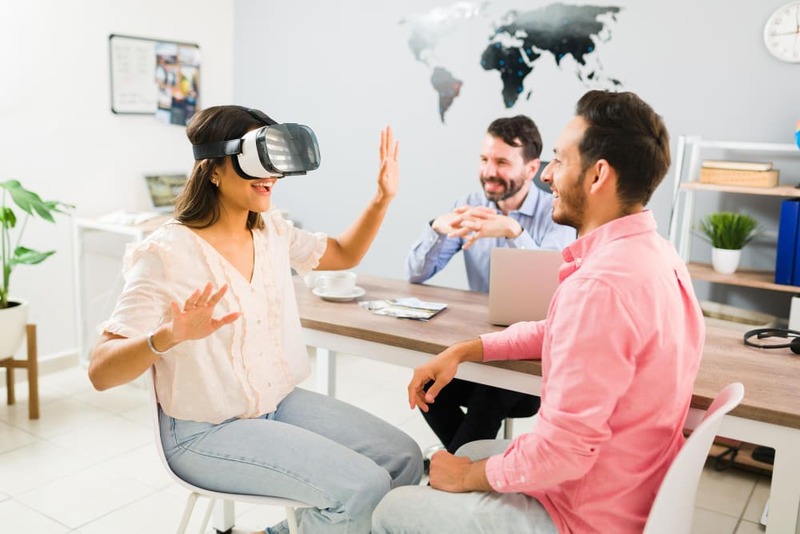
Interactive experiences in virtual worlds are increasingly shaped by the depth of storytelling and the quality of natural-sounding spatial audio. Have you ever noticed how even a single subtle sound detail can make users stay much longer? These elements help create the feeling that users are truly inside a digital environment. When their attention is held, engagement time increases significantly across platforms.
Without language barriers, immersive experiences become much smoother and more accessible to players from different countries. This fosters a stronger sense of emotional connection with the content. When players don’t need to pause to translate or reinterpret what they’re seeing, they tend to be more loyal and consistently engaged over the long term.
The integration of immersive media localization helps sustain user experience continuity across regions. With the right adjustments, content becomes easier to receive and creates a longer-term impact on user retention.
Relevance to local markets is a key requirement in global expansion. Advanced technology alone is not enough without cultural and linguistic understanding. SpeeQual synchronizes the semantics of the metaverse, anchoring your spatial audio cues and interactive assets within verified regional behavior parameters. Our team understands the differences between market behaviors, making messages feel more natural and relevant. With this approach, trust and loyalty can grow. Are you ready to make your immersive experience more locally relevant?
Mitigating Post-Launch Financial and Reputational Risks

Did you know that even small details in interactive media can quickly turn into widespread negative discussions? This often happens because users are highly sensitive to experiences that don’t align with their cultural and linguistic context. When expectations aren’t met, negative reactions can spread rapidly across digital platforms. This can lead to lower ratings and a loss of user trust.
Post-launch remediation in XR is a financial nightmare; fixing a misaligned interactive asset or tone-deaf voiceover in a 3D runtime environment costs a massive premium compared to pre-launch testing. This is because technical revisions, content adjustments, and repeated testing cycles all need to be carried out. In many cases, companies end up allocating additional, unplanned resources. This process also often slows down the overall product update cycle that is already in motion.
High-quality localization can help protect a studio’s reputation from the risk of serious commercial failure. Products that don’t meet global market expectations can erode long-term user trust. In turn, this can result in a loss of momentum during key market launches.
That’s why investing in quality from the outset is a strategic move to minimize both financial and reputational risks. With careful planning, user experiences remain consistent across different markets. This approach also aligns with the development of immersive media localization, helping maintain stable, long-term global user experiences.
Future-Proofing Brands for the Next Generation of Entertainment
The future standards of the entertainment industry are moving toward increasingly immersive and interactive experiences. The next generation of entertainment does not read text; they inhabit it. Mastering spatial cultural transcreation today defines who commands market share tomorrow. In this context, narrative, audio, and text all need to work together and continuously adjust so that the experience feels natural for every user within today’s digital ecosystem.
Companies that master digital cultural adaptation early on have a greater opportunity to shape the direction of the global market. They are able to translate local context into relevant digital experiences, strengthening their position in cross-border competition—particularly through structured immersive media localization that enables adaptive, sustainable, and innovative global experiences.
This advantage is not only technical but also strategic in shaping brand perception. Companies are seen as more inclusive and forward-thinking innovators when they consistently deliver cross-cultural experiences. This approach enhances relevance across markets, especially when immersive media localization is fully integrated into communication strategies.
Conclusion: Localization as a Core Revenue Driver
In the VR and AR ecosystem, a system’s ability to dynamically adapt language, context, and cultural elements has a direct impact on business performance. Immersive media localization has become a key factor because it allows a single piece of digital content to hold commercial value across multiple markets without needing to be completely rebuilt for each region.
From an operational standpoint, this approach helps companies reduce content production costs while also accelerating global distribution. Well-localized content also tends to drive higher engagement, which in turn improves user retention and increases monetization potential. As a result, localization strategy is no longer just a technical concern—it’s also an economic one.
In the long run, companies that integrate immersive media localization into their business model can build more stable and scalable revenue streams. Ultimately, immersive localization is the ultimate multiplier for your technology ROI, proving that the shortest path to a user’s digital engagement is through their spatial comfort zone.