In an increasingly competitive global business environment, translation has become a strategic necessity for enterprises operating across markets. Many companies now use Machine Translation Post-Editing (MTPE) to speed up the translation of internal documents and marketing content. However, MTPE is often understood solely as a cost-reduction method because it is seen as faster and cheaper than working with certified translators, shifting the focus toward short-term efficiency.
In practice, when MTPE is used solely to reduce operational costs, the risk of errors increases. Without clear control, technical terms may be translated inconsistently, brand language style may become inconsistent, or marketing messages may lose their cultural context. Common examples include literal translations of slogans that sound awkward, or legal terminology errors that significantly alter the meaning of important documents.
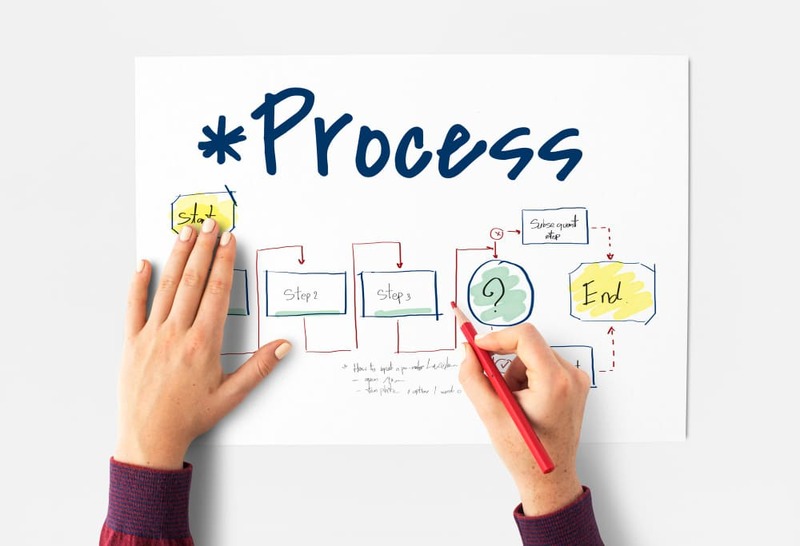
At the enterprise level, MTPE plays a different role. MTPE is positioned within a controlled translation workflow focused on quality and control. This approach makes MTPE a strategic workflow decision, supported by linguistic standards, glossaries, and layered quality control to maintain consistency, accuracy, and brand voice on an ongoing basis.
How important is MTPE, and how can it be used effectively? We will discuss this in this article. Broadly speaking, the discussion covers the MTPE workflow context, uncontrolled MTPE failures, controlled workflow governance, MTPE usage boundaries, and enterprise MTPE integration.
Why MTPE Fails Outside a Controlled Translation Workflow

Source: Freepik.com
Have you ever read translated content that felt awkward? The language may be correct, but the meaning doesn’t quite hit home. This often happens when translation relies solely on Machine Translation Post-Editing (MTPE). Without clear control, MTPE simply transfers machine errors to humans. Editors correct the surface of the text, but the context, nuances, and communication objectives are often overlooked.
In fact, communicating in a user’s native language plays a critical role in how messages are perceived and trusted. According to CSA Research, 76% of consumers prefer products in their local language. Many companies try to adapt their marketing content to local languages. MTPE seems like a quick solution, but quick does not necessarily mean accurate.
This shows that not all content is suitable for MTPE. Creative content, marketing materials, and brand messaging require a deeper understanding of context. The same applies to legal or health documents. If forced, the results sound flat, lose meaning, and can even be misinterpreted. For example, Pepsi’s slogan “Come alive with the Pepsi Generation” was translated into Chinese as “Pepsi brings your ancestors back from the grave.”
In addition, the lack of quality standards in MTPE makes it difficult to account for results. Without a controlled workflow, style guidelines, terminology, and quality benchmarks are inconsistent. Each editor works based on their own interpretation, so the final result is prone to inconsistency and repeated errors.
Unfortunately, many companies only realize the failure of MTPE after its impact has already emerged. For example, misinterpreted brand messages, confusing internal documents, or customer complaints due to incorrect instructions. This is why the cost of correction and remediation is significantly higher.
What a Controlled Translation Workflow Actually Controls
A controlled translation workflow is a framework that ensures every step in the translation process is managed with precision. In practice, this workflow focuses not only on the result but also on how each element of language, context, and terminology is systematically controlled before, during, and after translation. With the right settings, this process minimizes the risk of errors, maintains quality, and facilitates coordination between humans and machines, especially when using MTPE.
1. Context and terminology governance
Before MTPE is run, technical terms and specific contexts are clearly defined. This control allows the system and human editors to produce more accurate, consistent, and relevant translations. With the right guidance, ambiguity in the original text can be reduced, enabling MTPE to operate more optimally.
2. Determining the level of post-editing
The workflow also regulates the level of post-editing based on the type of content. For example, marketing content requires a creative touch, while technical or legal documents demand high accuracy. With this control, the MTPE process can balance speed and quality according to the specific needs of the content.
3. Cross-document and cross-language consistency
A controlled workflow ensures consistency in terminology, style, and sentence structure across multiple documents and languages. For example, a product manual translated into several languages will continue to use the same technical terms, ensuring a consistent and professional reader experience.
4. Accountability for linguistic decisions
Every change or correction is transparently recorded, so that editors or translators are accountable for every language choice. This makes it easier to track revisions and maintain overall translation quality.
Where MTPE Fits—and Where It Should Never Be Used
MTPE (Machine Translation Post-Editing) is highly effective for repetitive, low-risk content. Content such as e-commerce product descriptions or routine marketing materials often has consistent patterns and does not contain sensitive information. In this case, MTPE allows teams to work faster and more efficiently. This is because the machine provides a basic translation that a human editor then refines. As a result, combining machine speed with human accuracy can deliver optimal results without sacrificing quality.
However, not all types of content are suitable for MTPE. Legal documents, compliance materials, or high-stakes communications require extra precision. This is because even the smallest error can pose serious legal or operational risks. For example, business contracts cannot rely solely on machines because legal nuances are often complex and specific. If MTPE is applied carelessly, translation errors can lead to misinterpretation or even financial loss.
In addition, risk considerations are a major factor in determining the use of MTPE. Decisions should not be based solely on content volume, even if the amount is large. Priority should always be given to the potential impact of translation errors on business outcomes. Low-risk content can be processed quickly, while sensitive content requires full human review.
With this risk-based approach, companies can balance efficiency and accuracy. MTPE is a powerful tool when used appropriately, but it can lead to serious consequences when applied in the wrong areas.
How Enterprise Translation and Localization Integrate MTPE
MTPE is one of the most important layers in modern translation systems. With MTPE, the initial translation process can be done quickly by machines, which helps business professionals meet tight deadlines and stay competitive. Human translators then ensure that quality, accuracy, and context are maintained. This approach allows enterprises to handle large volumes of content without compromising the professional standards required by global businesses.
However, translation alone is not enough. Localization is a crucial step to ensure that MTPE results are not only linguistically correct but also culturally and contextually relevant. For example, certain terms or idioms that are appropriate in one country may be confusing in another. By integrating localization, enterprises can make content feel more natural and resonate better with local audiences, fostering trust and engagement.
SpeeQual understands the importance of synergy between translation and localization. With a cutting-edge, workflow-driven approach, every enterprise project is executed with an efficient and structured flow. This collaboration enables companies to deliver accurate and relevant content, supporting global expansion with confidence in quality.
Conclusion: MTPE Delivers Value Only When Control Comes First

Source: Freepik.com
In the enterprise world, the need for translation and localization is becoming increasingly complex due to diverse target audiences and high-quality expectations. Machine Translation Post-Editing (MTPE) provides an efficient solution to speed up the translation process, but still requires a human touch to maintain context, nuance, and quality. With MTPE, companies can gain speed and cost efficiency, but without proper control, the risk of errors and inconsistencies remains high.
The key to MTPE’s success in an enterprise context is the seamless integration of technology and a team of experts. Translation and localization are not just about transferring words; they are about accurately conveying messages to a global audience. The post-editing process allows companies to tailor machine results to brand standards, maintaining consistent tone and style across languages and markets. This makes MTPE a smart strategy when implemented with strict oversight.
Therefore, MTPE delivers optimal value only when control is embedded within a structured enterprise workflow. With proper management, MTPE can increase efficiency without sacrificing quality. SpeeQual Translation & Localization is ready to help companies become relevant through MTPE. Not only that, every piece of content is curated by our certified translation team, ensuring that every message is conveyed accurately and professionally.